- All
- Product Name
- Product Keyword
- Product Model
- Product Summary
- Product Description
- Multi Field Search

Views: 222 Author: Ann Publish Time: 2025-11-25 Origin: Site


Content Menu
● Advanced Material Selection and Metallurgical Quality Assurance
● Precision Blade Engineering and Functional Design Features
● Ergonomic Handle Design and Assembly Quality
● Multistage Manufacturing and Quality Inspections
>> 2. Stress relief and heat treatment:
>> 3. Grinding and sharpening:
>> 4. Polishing and coating application:
>> 5. Handle shaping and assembly:
>> 6. Functional performance testing:
>> 7. Final visual inspection and packaging:
● Consumer Benefits and Brand Competitiveness
● In-Depth Look at Forging Versus Stock Removal
● Final Edge Sharpening and Coating Techniques
● Full Lifecycle Quality Management
>> 1. How is blade hardness optimized in cheese knives?
>> 2. Why are perforated blades better for soft cheeses?
>> 3. What ergonomic factors improve cheese knife safety and comfort?
>> 4. What advantages does forging have over stock removal?
>> 5. How do coatings affect cheese knife performance?
Quality control is vital for manufacturing cheese knives that deliver excellent performance, durability, and user experience. Every step—from raw material selection, blade crafting, handle ergonomics, to final inspections—is stringently controlled to produce knives that slice cleanly, resist wear and corrosion, and provide comfortable, safe handling. This comprehensive article presents an integrated view of how quality control shapes cheese knife performance by detailing manufacturing processes, materials, design aspects, ergonomic considerations, and finishing quality.
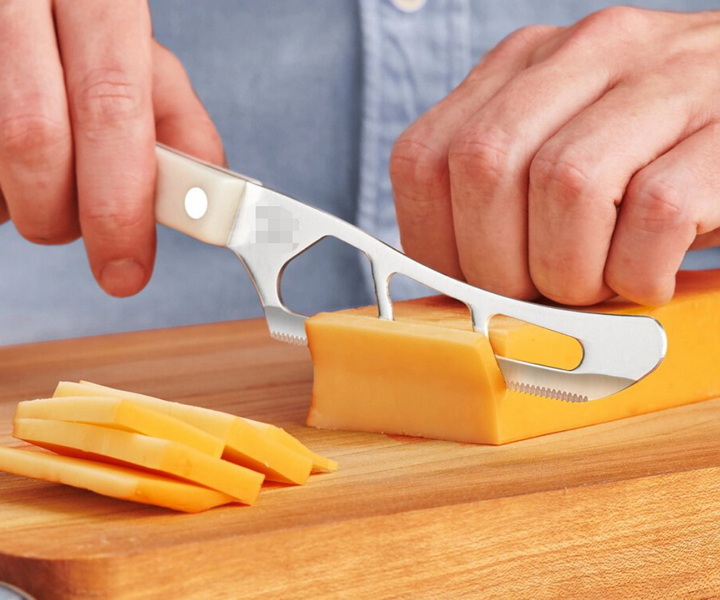
Cheese knives require blades with the right balance of sharpness, edge retention, and corrosion resistance. High-carbon stainless steel is the industry standard, chosen for its hardness (typically 52-58 HRC) and durability. Quality control begins by analyzing the steel's chemical composition with spectrometers and measuring hardness to ensure compliance with specifications.
Heat treatment is critical and includes annealing, quenching, and tempering. Blades undergo strict temperature controls to optimize toughness without brittleness. Salt spray tests simulate kitchen moisture exposure to verify corrosion resistance. Manufacturing methods use forging or stock removal, each with detailed checkpoints. Forging refines grain structures through repeated heating and hammering; stock removal cuts profiles from steel sheets and needs stress relief heat treatments to maintain blade integrity.
Cheese knife designs incorporate features tailored for cutting different cheese types without sticking or crumbling. Quality standards govern:
- Perforations or holes that reduce surface contact, preventing soft cheeses from adhering.
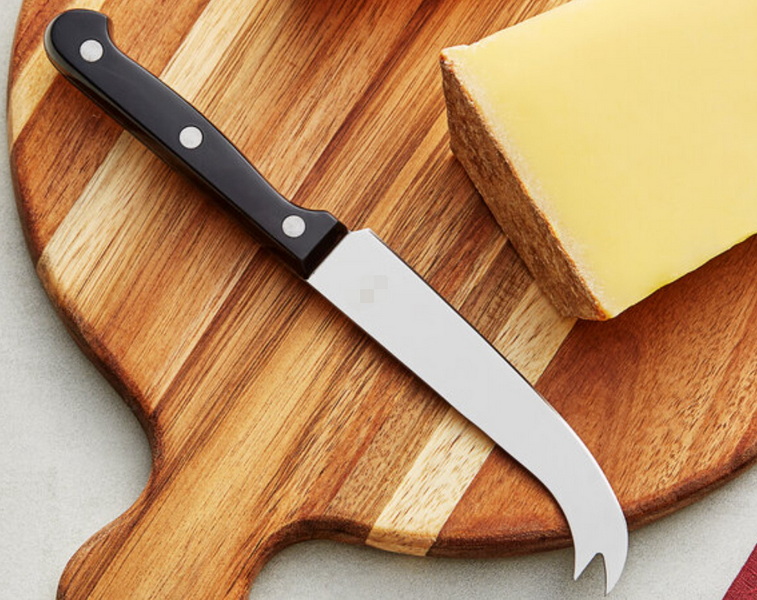
- Pronged tips for cleanly picking up slices.
- Cleaver-style blades engineered for hard cheese slicing with minimal effort.
- Optimized bevel angles (15-20 degrees) for efficient cutting action.
- Polishing to eliminate microscopic burrs, facilitating smooth cutting and easy cleaning.
- Application of non-stick coatings in some models to further reduce adhesion.
- Balance tests ensuring even weight distribution, enhancing user control.
Handles impact the safety, grip comfort, and aesthetics of the knife. Materials used, such as stabilized hardwoods, durable resin composites, or stainless steel, undergo moisture resistance and durability testing. Visual inspections verify material consistency and finish quality.
Handle assembly involves secure mating of blade tang and handle material to avoid looseness or water ingress. Ergonomic testing focuses on grip shape, slip resistance, and fatigue reduction to maximize comfort during use. Handle surfaces are finely sanded, finished, and sealed to maintain smoothness and prevent deterioration.
Laser or waterjet cutting creates precise blade profiles with minimal waste.
Controlled annealing and tempering remove internal stresses and optimize material properties.
Combination of automated and hand finishing achieves razor-sharp edges, validated by calibrated gauges.
Burrs are removed; optional coatings improve non-stick functionality.
Precision alignment and torque testing maintain structural integrity.
Knives are evaluated slicing soft and hard cheeses to confirm sharpness, edge retention, and non-stick performance.
Defect checks and protective packaging ensure product quality during shipping.
ISO 9001 certification and full traceability documentation support consistent quality and safety.
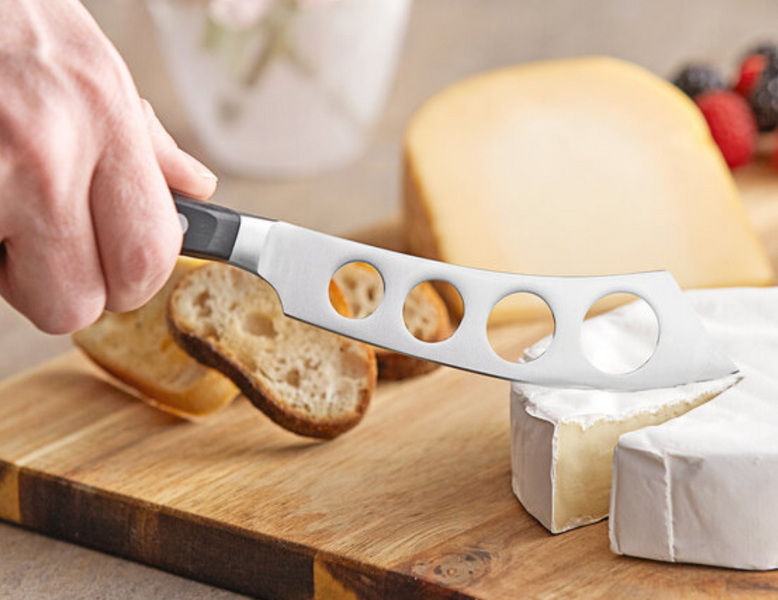
Strict quality control leads to cheese knives that offer precise, effortless slicing without cheese adherence or crumbling, enhancing consumer satisfaction. Ergonomic handles reduce user fatigue and slipping hazards, improving safety. Robust corrosion resistance and edge retention extend product lifespan. High-standard OEM manufacturers produce knives comparable to or surpassing branded products, establishing trust in global markets.
Forging involves repeatedly heating and hammering steel billets to shape blades, which enhances grain alignment and mechanical strength, resulting in superior durability and edge retention. Forged blades often allow integral features like bolsters to be formed, adding balance and strength.
Stock removal starts with flat steel plates from which blade profiles are laser-cut or stamped. The blades then undergo grinding and heat treatment to achieve the final shape and hardness. This method is less labor-intensive and more suited for mass production but demands rigorous heat treatments and stress relief to prevent warping and brittleness.
A finely sharpened edge is critical for slicing cheese cleanly. Multi-step sharpening involves coarse grinding to set the bevel, followed by progressively finer belts and hand stropping with diamond compounds to finish a razor-sharp edge. Edge angles around 15-20 degrees optimize cutting efficiency for different cheese textures.
Applying advanced coatings like PTFE or ceramic-based layers helps reduce friction and cheese adhesion on the blade surface, contributing to easier slicing and cleaning.
Quality control extends beyond manufacturing to packaging and post-sale care. Packaging protects knives from physical damage and moisture during shipping. Instruction manuals and care guides educate users on sharpening and cleaning to prolong tool life. Feedback loops from customer service provide data to continuously improve manufacturing processes.
Comprehensive, rigorous quality control in cheese knife manufacturing—from steel selection and heat treatment, through blade design, ergonomic handle assembly, and finishing inspections—ensures knives that are sharp, durable, comfortable, and non-stick. These qualities provide superior user experiences and foster strong OEM brand reputations globally.
- Through chemical analysis and precisely controlled heat treatment processes verified by hardness and corrosion tests.
- They reduce contact surfaces, minimizing cheese sticking and enabling cleaner, smoother slicing.
- Handle shapes fit natural grips, surface finishes prevent slipping, and material choices reduce fatigue during extended use.
- Forging produces tougher, more durable blades with better grain structure and integrated bolsters, enhancing balance and strength.
- Non-stick coatings reduce friction and cheese adhesion, making slices cleaner and cleanup easier.


