
Views: 288 Author: Kitty-SAAFI Publish Time: 2026-04-16 Origin: Site


Understand the real difference between 3Cr and 5Cr stainless steel in kitchen knives. Compare performance, cost, and market positioning to choose the right material for your business.

For importers, wholesalers, and private label buyers, choosing the right steel is one of the most important decisions in kitchen knife sourcing. Among the most common options in the market, 3Cr stainless steel and 5Cr stainless steel are frequently compared.
While both materials are widely used in kitchen knives, they serve different market needs. The right choice is not simply about which steel is “better,” but which steel fits your target customers, product positioning, and price strategy.

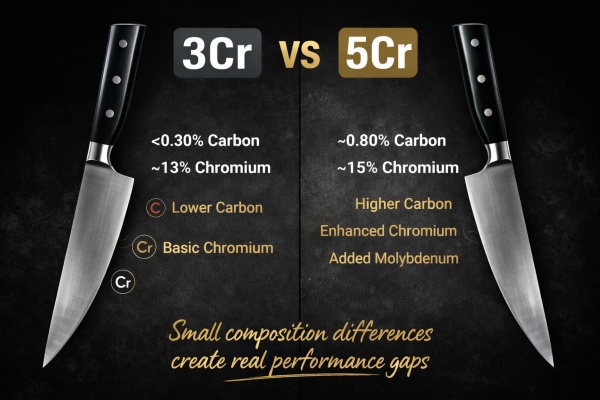
3Cr stainless steel, commonly known as 3Cr13, is an entry-level stainless steel widely used in affordable kitchen knives. It typically contains around 0.3% carbon and about 13% chromium.
This material offers good corrosion resistance, stable manufacturability, and lower production cost, making it suitable for large-volume orders and price-sensitive markets.
Best suited for: promotional knives, wholesale distribution, and budget-friendly product lines.
5Cr stainless steel, often referred to as 5Cr15, is an upgraded material with better cutting performance and improved edge retention. It generally contains 0.5% carbon, 15% chromium, and may include other alloying elements such as molybdenum.
Compared with 3Cr, 5Cr is harder, more wear-resistant, and provides a better user experience in daily kitchen use.
Best suited for: retail brands, mid-range kitchen knives, and buyers looking for better product positioning.

| Feature | 3Cr Stainless Steel | 5Cr Stainless Steel |
|---|---|---|
| Carbon Content | Lower (~0.3%) | Higher (~0.5%) |
| Chromium Content | ~13% | ~15% |
| Hardness | 52–55 HRC | 55–58 HRC |
| Edge Retention | Basic | Better |
| Corrosion Resistance | Good | Very Good |
| Ease of Sharpening | Easier | Moderate |
| Cost Level | Lower | Medium |
In practical kitchen environments, the difference between 3Cr and 5Cr is most noticeable in cutting feel, durability, and maintenance frequency.
A 3Cr kitchen knife is easier to sharpen and more affordable, but it usually needs sharpening more often after repeated use. A 5Cr kitchen knife, on the other hand, keeps its edge longer and offers a more refined cutting experience.
For end users, 5Cr often feels more premium. For wholesale buyers, 3Cr remains highly attractive when cost control and fast turnover are the priority.
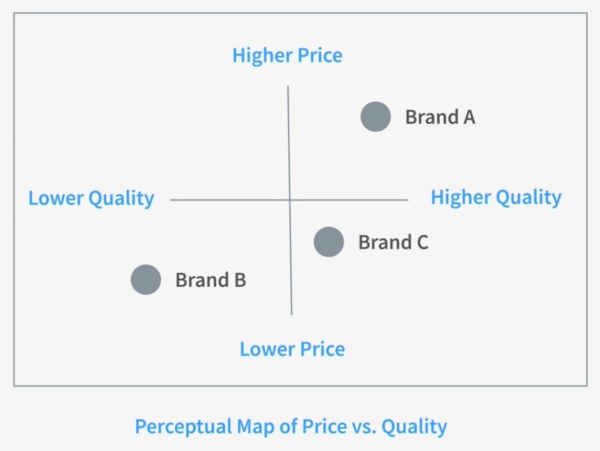
For importers and distributors, material choice is not only technical—it is also a business decision.
| Steel Type | Cost Level | Target Market | Business Value |
|---|---|---|---|
| 3Cr13 | Low | Wholesale / Promotions / Entry-level | Fast turnover, competitive pricing |
| 5Cr15 | Medium | Retail / Brand-focused / Mid-range | Higher perceived value, better margins |
Your market is highly price-sensitive
You prioritize large-volume orders
You need faster stock turnover
You focus on entry-level or promotional lines
You want stronger product positioning
You sell to retail or branded channels
You care about edge retention and user experience
You aim for better long-term value perception

Material is important, but steel alone does not determine final knife quality. Heat treatment, grinding precision, polishing, and finishing all directly affect performance.
A well-manufactured 3Cr knife can perform more reliably than a poorly processed 5Cr knife.
That is why working with an experienced OEM kitchen knife supplier is essential for stable quality.
Not always. 5Cr offers better hardness and edge retention, but 3Cr may be the better choice for budget markets and high-volume wholesale.
Yes. 3Cr is widely used in entry-level kitchen knives because it provides good corrosion resistance, easy maintenance, and cost efficiency.
The main advantage of 5Cr is improved hardness and longer edge retention, which can enhance cutting performance and product value.
It depends on your market strategy. 3Cr is ideal for volume-driven business, while 5Cr is more suitable for mid-range and brand-oriented markets.
Higher carbon content can improve hardness, but the final result still depends on heat treatment and manufacturing quality.
When comparing 3Cr vs 5Cr stainless steel in kitchen knives, the most important factor is not simply the specification sheet. The real question is how the material aligns with your market, pricing strategy, and customer expectations.
For B2B buyers, the right steel is the one that supports both product performance and business success.
We support OEM and wholesale kitchen knife projects with flexible material options, stable quality control, and professional manufacturing experience.
Contact Us


