- All
- Product Name
- Product Keyword
- Product Model
- Product Summary
- Product Description
- Multi Field Search

Views: 280 Author: Kitty-SAAFI Publish Time: 2026-04-01 Origin: Site


Cutting straight with a kitchen knife is one of the most important basic skills in food preparation. Whether you are slicing vegetables, trimming meat, or preparing ingredients for commercial kitchens, straight and even cuts improve presentation, consistency, and efficiency.
In this guide, we share practical knife handling tips, professional cutting techniques, and simple habits that help beginners and professionals achieve cleaner and straighter cuts every time.
Contact Us for Kitchen Knives
Straight cutting is not only about making food look neat. It also affects cooking performance, processing speed, and kitchen safety. Ingredients cut into even shapes cook more uniformly, look more professional, and are easier to portion in restaurants, butcher shops, and food service operations.
For B2B buyers, knife performance directly influences user satisfaction. A kitchen knife that supports stable and straight cutting is more suitable for frequent daily use in commercial kitchens and retail markets.

A straight cut begins with a reliable knife. If the blade is dull, too light, poorly balanced, or uncomfortable to hold, it becomes much harder to maintain control during slicing.
A good kitchen knife for straight cutting should have a sharp edge, balanced construction, and an ergonomic handle. Stainless steel blades with durable plastic handles are especially practical for commercial kitchen and butcher applications.
Sharp blade for smooth slicing
Balanced weight for better control
Comfortable handle for a stable grip
Consistent blade geometry for uniform cutting


One of the most effective ways to improve cutting accuracy is to hold the knife correctly. Professional chefs often use the pinch grip, where the thumb and index finger lightly grip the blade while the other fingers wrap around the handle.
This grip offers better control than holding the handle alone. It keeps the knife stable and reduces unnecessary wrist movement, making it easier to cut in a straight line.
A secure grip also helps reduce hand fatigue during repeated cutting work.
The guiding hand plays a major role in keeping cuts straight. Curl your fingertips inward and use your knuckles as a guide for the knife blade. This technique is commonly called the claw grip.

Keeping fingertips tucked away reduces the risk of accidental cuts.
Your knuckles create a natural guide that helps maintain even spacing between slices.
The knife moves with more confidence and accuracy when the ingredient is firmly guided.
Many people try to cut by pressing the knife straight down. This often leads to crushed ingredients and uneven cutting lines. Instead, use a smooth slicing motion.
Let the blade move forward or backward through the ingredient. This action uses more of the cutting-edge and creates cleaner, straighter results.
Use long, smooth strokes for larger items
Use a gentle rocking motion for daily prep work
Avoid forcing the blade straight downward


Cutting straight becomes much easier when the ingredient is stable. Round or uneven foods often roll or shift during cutting, causing crooked slices.
The easiest solution is to create a flat surface first. For example, cut onions in half before slicing, or trim one side of carrots and cucumbers so they rest firmly on the cutting board.
Stable ingredients support cleaner cuts, safer handling, and better slicing rhythm.
Straight cutting is easier when your motion is smooth and controlled. Do not rush. Beginners often gain better results by slowing down and focusing on even movement instead of speed.

Dull edges require more pressure and make the blade harder to guide accurately.
Poor grip reduces control and often leads to unstable blade movement.
Food that rolls or shifts on the board makes straight cutting almost impossible.
Speed without control usually creates uneven slices and increases risk.
If you are sourcing knives for supermarkets, restaurant supply, butcher tools, or kitchenware distribution, choose products with stable blade quality, ergonomic handle design, and reliable edge retention. These details directly affect cutting performance in daily use.

Supports smooth slicing and cleaner food presentation.

Improves grip stability and reduces fatigue during repeated cutting.

Helps maintain cutting control for commercial and retail use.
Cutting straight with a kitchen knife is a combination of the right tool, proper grip, stable movement, and regular practice. Once you build the correct habits, your cuts will become cleaner, safer, and more consistent.
For professional kitchens, retailers, and distributors, choosing a well-designed knife is just as important as learning the technique.
The most common reasons are incorrect grip, dull blades, and unstable ingredients. Improving your knife control and using proper techniques like the pinch grip and claw grip can significantly help.
A well-balanced chef knife with a sharp stainless steel blade is ideal. For commercial use, knives with ergonomic plastic handles and consistent blade thickness offer better stability.
Yes. Sharp knives require less force, giving you better control and reducing the chance of slipping during cutting.
Practice consistent slicing motion, maintain a steady rhythm, and focus on control rather than speed. Repetition with proper technique is key.
Uniform cuts ensure even cooking, better presentation, and faster preparation, which are essential for efficiency in commercial kitchens.

Learn how different chef knife sizes affect control, cutting efficiency, and daily kitchen use.
Read More →
Understand how blade finishes influence durability, appearance, corrosion resistance, and maintenance.
Read More →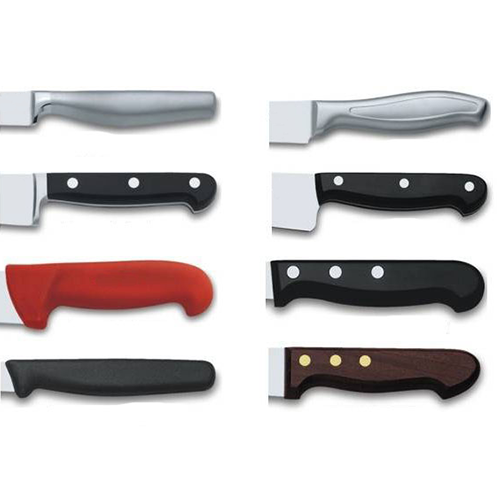
Explore handle materials, ergonomic shapes, and grip design for better comfort and cutting control.
Read More →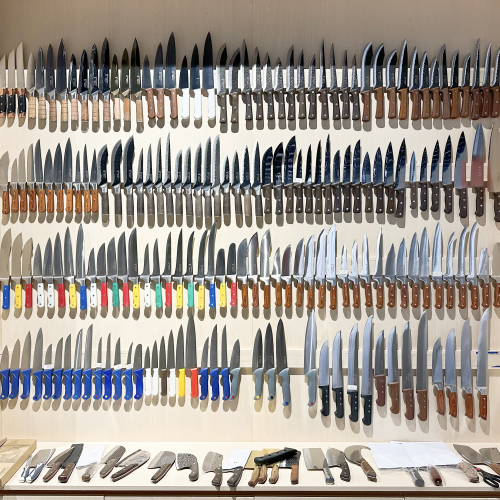
Give buyers a clearer view of your knife series, materials, OEM options, and manufacturing capability.
Read More →Understanding how to cut straight with a kitchen knife is an essential skill for both home cooks and professional chefs. Proper knife handling improves precision, reduces waste, and enhances food presentation.
In commercial environments such as restaurants, butcher shops, and food processing operations, consistent cutting performance directly affects productivity and product quality. Choosing the right knife and mastering correct techniques are equally important.
As a professional kitchen knife manufacturer, we focus on producing high-quality knives with stable performance, ergonomic design, and reliable durability for global B2B customers.
As a professional kitchen knife manufacturer in Yangjiang, China, we offer stable quality, low MOQ, fast restock, and factory direct prices for global B2B buyers.
Contact us for product catalogs, quotations, and OEM / ODM cooperation.
Contact Us Today 


