- All
- Product Name
- Product Keyword
- Product Model
- Product Summary
- Product Description
- Multi Field Search

Views: 222 Author: Ann Publish Time: 2025-11-20 Origin: Site


Content Menu
>> Key Features of a Cheese Knife
● Cheese Knife vs. Cheese Slicer: Main Differences
>> Best Situations for a Cheese Knife
>> Best Situations for a Cheese Slicer
● Advantages of Using a Cheese Knife
● Advantages of Using a Cheese Slicer
● Choosing the Right Tool for Each Cheese Type
● Material and Design Considerations
● Pairing With Other Cheese Tools
● Innovative Cheese Knife and Slicer Features in Modern Designs
● Cheese Knife or Cheese Slicer: Which One Should You Choose?
● Frequently Asked Questions (FAQ)
>> 1. Can a Cheese Knife be used as a substitute for a Cheese Slicer?
>> 2. Are Cheese Slicers dishwasher safe?
>> 3. What's the best Cheese Knife for soft cheese?
>> 4. Can a Cheese Slicer cut very hard cheese like Parmesan?
>> 5. Is stainless steel better than ceramic for Cheese Knives?
Cheese is one of the world's most beloved foods—creamy, crumbly, or firm, every variety deserves the right cutting tool. Many home cooks and professional chefs wonder: should you use a Cheese Knife or a Cheese Slicer? This article explores their differences, uses, designs, and best applications to help you choose the perfect tool for every cheese type.

A Cheese Knife is a specialized knife designed to cut cheese cleanly without sticking to the blade. Its unique design often includes perforations, hollow edges, or narrow blades that minimize friction. Some Cheese Knives have forked tips for serving, while others come with offset handles for precision control.
- Thin or perforated blade to reduce sticking.
- Available in stainless steel, ceramic, or Damascus steel for sharpness and durability.
- Designed with specific shapes for soft, semi-soft, or hard cheeses.
- Often includes ergonomic handles for comfortable cutting.
A Cheese Slicer is a kitchen tool that uses a blade or wire to create thin, even slices of cheese. It's ideal for semi-hard to hard cheeses like Gouda, Cheddar, or Swiss. While it lacks the versatility of a Cheese Knife, it offers unmatched precision for portion control and sandwich preparation.
1. Wire Cheese Slicer – Best for soft to medium-hard cheeses. Uses a thin wire stretched across a frame.
2. Plane Cheese Slicer – Often made from steel with a flat surface and a slotted blade. Great for hard cheeses.
3. Rolling Cheese Slicer – Features a roller and wire for smooth, continuous slicing action.
| Feature | Cheese Knife | Cheese Slicer |
|---|---|---|
| Blade Type | Thin, perforated, or solid | Wire or plane blade |
| Best For | Soft, crumbly, or semi-hard cheeses | Hard, semi-hard cheeses |
| Precision | Good for portions and serving | Excellent for uniform slices |
| Ease of Cleaning | Requires blade cleaning | Easier to clean |
| Recommended Use | Cheese boards, gourmet displays | Sandwiches, cheese platters |
Choosing when to use a Cheese Knife depends on cheese texture and presentation goals. For creamy Brie, Camembert, or blue cheese, a narrow knife blade keeps slices neat without deforming the cheese. For crumbly feta or Parmesan chunks, a pointed or double-handled knife ensures clean breaks.
- Preparing elegant cheese boards.
- Cutting soft or sticky cheeses without tearing them.
- Serving at wine tastings or gourmet buffets.
- Offering uniform cubes or wedges for display.
If your goal is to achieve thin, uniform slices for sandwiches, burgers, or charcuterie platters, a Cheese Slicer is your best choice. It's the preferred tool for everyday cheese cutting due to its simplicity, consistency, and speed.
- Preparing cheese for sandwiches or cold platters.
- Cutting through medium-hard cheeses like Swiss or Edam.
- Creating precise slices for garnishing dishes.
- Consistent slicing for packaging or presentation.
A Cheese Knife offers versatility and control. Its design adapts to various cheese types and textures, making it handy for culinary professionals and home entertainers alike.
- Prevents cheese from sticking to the blade.
- Works for both slicing and serving.
- Delivers controlled cuts even on uneven cheese surfaces.
- Adds elegance to cheese-tasting presentations.
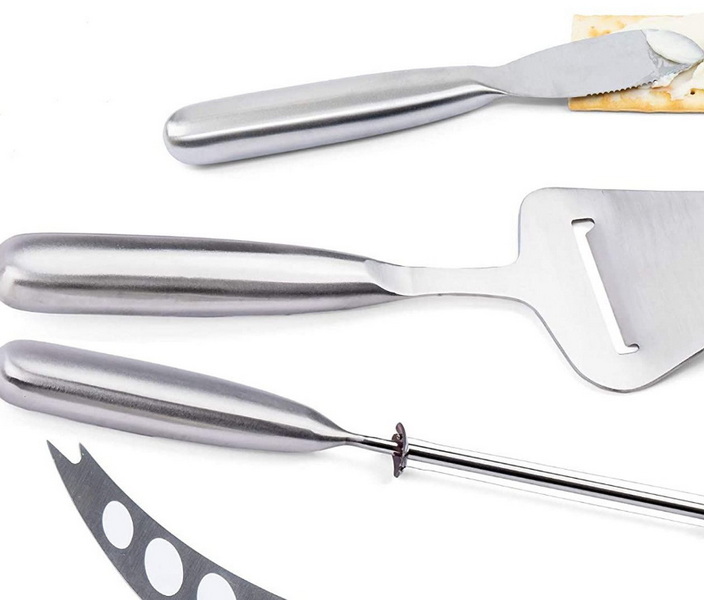
The Cheese Slicer shines in precision and convenience. It ensures aesthetic and consistent results—an essential factor for cooking, catering, or plating.
- Ensures equal thickness for every slice.
- Speeds up food preparation.
- Easy to clean and maintain.
- Compact design for easy storage.
Different cheeses demand different tools. Use this quick guide to match the right Cheese Knife or Cheese Slicer based on cheese hardness.
| Cheese Type | Recommended Tool | Example Cheeses |
|---|---|---|
| Soft | Cheese Knife | Brie, Camembert, Goat |
| Semi-Soft | Cheese Knife or Slicer | Havarti, Monterey Jack |
| Semi-Hard | Cheese Slicer | Gouda, Edam, Cheddar |
| Hard | Cheese Knife | Parmesan, Pecorino |
The performance of both tools depends heavily on materials and craftsmanship. Stainless steel Cheese Knives provide corrosion resistance, while Damascus steel versions offer superior sharpness and prestige. Cheese Slicers with ergonomic handles and adjustable wires cater to professional kitchens.
Both Cheese Knives and Slicers require basic care for long lifespan and hygiene.
- Wash tools immediately after use with warm, soapy water.
- Avoid dishwashers for wooden-handle Cheese Knives.
- Dry thoroughly to prevent corrosion.
- Sharpen Cheese Knives regularly using a fine honing rod.
- Replace Cheese Slicer wires when stretched or dull.
Enhance your cheese experience by combining a Cheese Knife or Cheese Slicer with other accessories:
- Cheese board or platter
- Serving forks and spreaders
- Wire cutters for crumbly cheeses
- Storage domes to preserve freshness
Modern Cheese Knives sometimes feature non-stick coatings like titanium-nitride to reduce stickiness further, while some Cheese Slicers come with adjustable thickness controls for tailor-cut slices. Ergonomic handles with materials like military-grade G10 resin enhance grip, and dishwasher-safe designs improve convenience in professional kitchens.
The rise in culinary enthusiasm has driven innovations like multi-functional cheese tools integrating cheese splinters, spreaders, and knives in one set, streamlining cheese service in both casual and gourmet settings.
The decision depends largely on your cheese preferences and usage. If you enjoy a wide variety of cheeses and want precision in cutting soft or crumbly types, a Cheese Knife is indispensable. If you frequently prepare sandwiches or plates requiring uniform slices—especially of harder cheeses—a Cheese Slicer saves time and guarantees consistency.
For enthusiasts and professionals alike, owning both tools is ideal, ensuring optimal results regardless of cheese texture or serving need.
Both the Cheese Knife and the Cheese Slicer play essential roles in cutting and serving cheese. A Cheese Knife offers versatility and finesse for soft and crumbly varieties, while a Cheese Slicer delivers perfect uniformity for hard and semi-hard cheeses. For a complete cheese experience—especially in professional kitchens or premium cheese sets—owning both tools ensures perfect presentation, convenience, and satisfaction for every occasion.
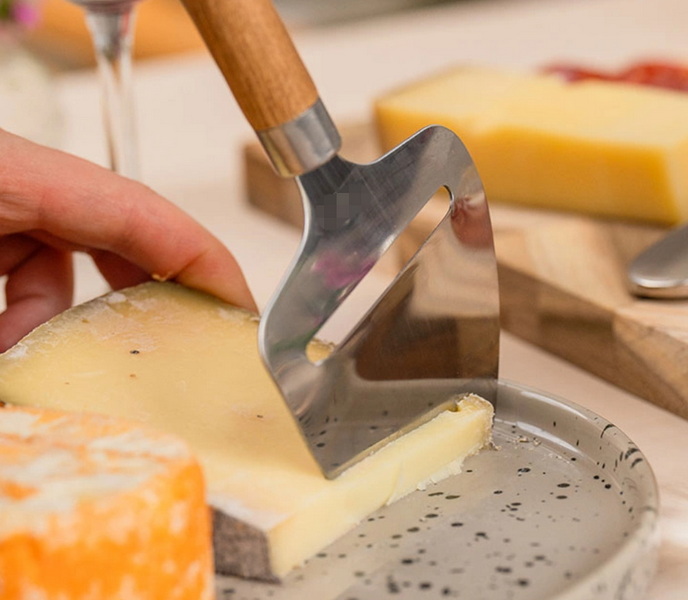
A Cheese Knife can cut thick slices, but it doesn't guarantee precise, thin layers like a slicer. For uniform sandwich slices, a slicer remains superior.
Most stainless steel slicers are dishwasher safe, but handwashing extends their wire strength and shine.
Use a Cheese Knife with perforations or a narrow blade—it reduces stickiness when cutting Brie or Camembert.
Not effectively. Parmesan's hardness requires a sturdy Cheese Knife or a specialized breaking knife.
Stainless steel is more durable and resistant to chipping, while ceramic offers excellent sharpness but less robustness.


