- All
- Product Name
- Product Keyword
- Product Model
- Product Summary
- Product Description
- Multi Field Search

Views: 222 Author: Ann Publish Time: 2025-11-18 Origin: Site


Content Menu
● Understanding the Cheese Knife
>> What Makes a Cheese Knife Unique?
● The Anatomy of a Cheese Knife
>> 2. Perforations and Surface Finish
>> 3. Forked Tip Functionality
● The Science Behind Why Cheese Knives Work
● Material Choices for Cheese Knives
● Exploring the Types of Cheese Knives
>> Cheese Plane
● Handling and Mastering Cutting Techniques
● How to Maintain a Cheese Knife
>> Sharpening
● The Role of Cheese Knives in Culinary Presentation
● Cheese Knives in the OEM Manufacturing Market
● The Evolution and History of Cheese Knives
● Why Owning a Cheese Knife Matters
● Choosing the Right Cheese Knife for Your Kitchen
● Modern Innovations in Cheese Knife Design
>> 1. What makes a Cheese Knife different from a regular knife?
>> 2. Why are there holes in Cheese Knives?
>> 3. Can a Cheese Knife be used for other foods?
>> 4. Are Cheese Knives dishwasher safe?
>> 5. What's the ideal OEM customization for Cheese Knives?
In every well-equipped kitchen, knives form the foundation of culinary success. Yet, among all knife varieties, the Cheese Knife holds a special place. It is designed with precision and purpose—to handle one of the most delicate and complex foods: cheese.
At first glance, one might assume a regular kitchen knife can cut cheese easily. However, anyone who has attempted to slice soft Brie or crumbly blue cheese with a chef's knife knows that it usually leads to sticking, tearing, or crushing. The Cheese Knife solves this problem with specialized features that ensure clean cuts while preserving the natural texture and flavor of the cheese.
This article explores the unique differences between a Cheese Knife and a regular knife, the science behind their design, how to use and maintain them properly, and why they are invaluable to both home cooks and professional kitchens.

A Cheese Knife is not simply a modified version of a chef's knife—it is a purpose-built cutting instrument engineered to work harmoniously with cheese's unique textures and fat content. Since cheese can vary from soft and creamy to firm and aged, each knife design caters to a specific function.
Unlike a regular knife, which has a solid blade for all-purpose slicing, a cheese knife often includes holes, non-stick coatings, and forked tips that make it highly efficient for its task.
A typical Cheese Knife has a thin, lightweight blade that glides smoothly through cheese without applying unnecessary pressure. The reduced blade mass minimizes resistance, allowing for cleaner slices.
Some cheese knives, designed for hard cheese, feature shorter yet thicker blades. This added strength provides better leverage when cutting aged varieties like Parmesan or Pecorino.
The most recognizable characteristic is the series of holes or slots along the blade. These cut-outs reduce the surface area touching the cheese, which prevents it from sticking. Additionally, some models use a fine polished or fluoropolymer-coated surface for improved release.
Many Cheese Knives end with a dual-pronged tip resembling a fork. This elegant feature allows the user to lift and serve the sliced pieces without switching tools—a small but convenient advantage for presentation and hygiene.
Comfortable handle design is vital, particularly for professional chefs or servers who handle cheese boards frequently. Manufacturers often use ergonomic wooden, resin, or composite handles that provide balance and slip resistance, ensuring smooth and controlled slicing.
Cheese contains varying levels of moisture, fat, and protein. When cut with a regular knife, the dense blade and flat surface cause friction and heat, making soft cheese stick or deform. The Cheese Knife, by contrast, counteracts these effects through:
- Reduced contact area (thanks to holes or a narrow blade).
- Cooler cutting due to less drag and surface heat.
- Specialized edge geometry that divides rather than crushes the cheese.
These small details combine engineering with culinary science to deliver consistent, mess-free slices that preserve the cheese's structure, presentation, and flavor.
Optimal performance depends significantly on the materials used in the blade and handle.
- Stainless Steel: Durable, rust-resistant, and easy to maintain. Ideal for professional use and OEM manufacturing.
- High-Carbon Steel: Extremely sharp, though prone to corrosion if not cared for. Suitable for artisanal knives.
- Damascus Steel: Premium appearance with layered steel patterns, offering both performance and aesthetics.
- Ceramic: Lightweight and non-reactive, perfect for soft cheeses but not suited for hard varieties.
- Pakka Wood: Combines strength, moisture resistance, and visual elegance.
- ABS Plastic: Practical, hygienic, and used in industrial OEM production.
- Natural Wood: Offers traditional charm and grip comfort for high-end designs.
There are multiple varieties of Cheese Knives tailored for different cheese hardness levels. Understanding their use enhances your cutting performance.
Often recognized by its thin blade and multiple holes, this knife is ideal for Brie, Camembert, or Blue cheese. Its blade slides easily through creamy textures without adhering.
Built with a sturdy, reinforced blade, this type handles firm cheeses like Parmesan or Manchego. Some designs come with two handles for leverage when splitting large wheels.
A compact and square shape similar to a mini meat cleaver. Used for semi-hard cheeses like Gouda or Colby, offering control and precision.
Looks like a small spatula with a cutting slot. It shaves thin, paper-like slices from hard blocks for cheese platters or sandwiches.
Features a dual-tipped end for both slicing and serving pieces directly from the board. Perfect for elegant culinary presentation.
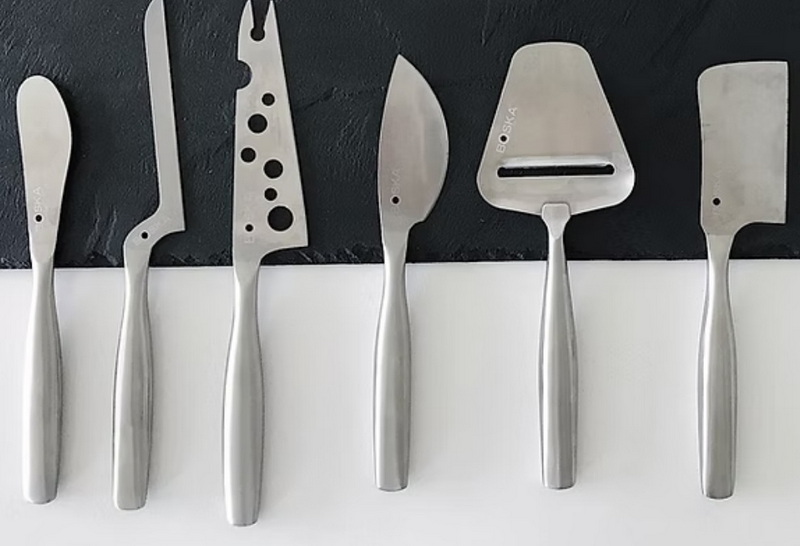
Using a Cheese Knife properly enhances both your culinary presentation and ease of cutting.
1. Chill the cheese slightly before cutting—it reduces stickiness.
2. Match the knife to cheese type, as improper selection can cause crumbling.
3. Use a gentle rocking motion for smooth cuts rather than pushing hard.
4. Clean the blade between slices to remove oils or residue.
5. Avoid cross-use with other foods to preserve blade sharpness and hygiene.
Always wash the knife with warm, soapy water right after use. Avoid prolonged soaking. Dishwashers can dull blades or damage wooden handles, so handwashing is preferred.
Though Cheese Knives rarely need frequent sharpening, honing them gently every few months maintains efficiency. Use fine-grit sharpening stones or professional services.
Proper storage ensures safety and longevity. Options include:
- Magnetic knife racks.
- Knife blocks with protective inserts.
- Blade guards for drawer storage.
In fine dining and wine tasting events, visual appeal is essential. A Cheese Knife ensures every slice appears neat, preserving texture and aroma. It prevents unnecessary pressure, which can alter a cheese's flavor by releasing excess fat.
Retailers, caterers, and sommelier-style events often showcase professional cheese knife sets to elevate presentation and brand prestige.
For OEM factories like those in China, Cheese Knives represent a valuable and growing niche category. The combination of design aesthetics, utility, and custom branding potential appeals to both large retailers and boutique kitchen brands.
Key OEM customization options include:
- Material selection (stainless steel, Damascus, or ceramic).
- Logo engraving or laser etching on blades or handles.
- Packaging choices such as luxury gift boxes, blister packs, or eco-friendly kraft packaging.
- Product set combinations pairing cheese knives with forks, spreaders, or boards.
This growing global demand for creative kitchenware makes cheese knives an attractive export product. For clients, emphasizing ergonomic design, non-stick coating, and modern aesthetics can significantly enhance brand identity.
Cheese cutting tools trace back to ancient Europe, where artisans utilized stone or bronze blades for semi-soft dairy products. During the Middle Ages, as hard cheeses became common, metal forging advanced, allowing the development of specialized knives.
By the 19th century, France and Italy popularized fork-tipped and plane-style Cheese Knives, symbols of sophisticated dining. Modern stainless steel variants emerged post-World War II, aligning with industrial precision and mass OEM manufacturing.
Today's Cheese Knives blend centuries of culinary heritage with advanced engineering, uniting village tradition with sleek, machine-forged elegance.
A cheese knife is not only for professionals. Home users also benefit from the convenience and finesse it offers. Key reasons to own at least one include:
- Better portion control for serving guests.
- Clean, visually appealing slices for cheese boards or platters.
- Easier storage and specialized hygiene—dedicated to dairy products.
- Ideal gifting item within premium kitchenware sets.
Additionally, premium versions appeal to design enthusiasts and collectors alike, acting as both a functional tool and a display-worthy piece of kitchen art.
When selecting a Cheese Knife, balance aesthetics with function. Consider the following:
- Type of cheese most frequently served.
- Blade flexibility and edge geometry.
- Whether you prefer modern stainless steel or artisan wooden designs.
- The maintenance routine—some prefer dishwasher-safe options.
- Match your existing knife block or tableware set for cohesive design.
For brands sourcing from manufacturers, creating an exclusive line of Cheese Knives can enhance collection diversity and align with targeted culinary markets abroad.
Recent years have seen new advancements in Cheese Knife engineering:
- Non-stick coatings using titanium or PVD for smoother cuts.
- Multi-purpose hybrid knives combining cheese slicing and spreading.
- Custom laser perforations for decorative yet functional aesthetics.
- Sustainable handle materials such as bamboo, rice husk, or recycled composites.
These designs cater to eco-conscious consumers and premium markets simultaneously. For producers, integrating such features in OEM projects offers a strong competitive edge.
The Cheese Knife embodies a perfect fusion of form and function. Unlike regular kitchen knives, it is tailored to slice cheese cleanly, minimizing friction and sticking while preserving texture and flavor. Its unique design—featuring holes, a forked tip, and a slender blade—makes it indispensable in both household and professional kitchens.
From elegant entertaining to industrial OEM production, Cheese Knives continue to symbolize craftsmanship and culinary refinement. Whether you're a food enthusiast seeking precision or a brand developing new kitchenware, understanding the difference between a Cheese Knife and a regular knife ensures lasting value in both functionality and style.
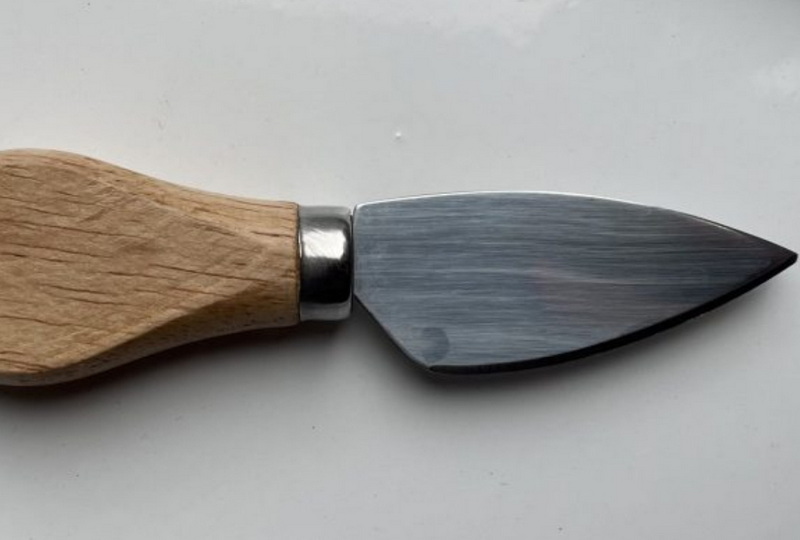
Its perforated thin blade and forked tip reduce sticking and improve control, unlike a regular knife designed for general cutting tasks.
The holes reduce friction and surface contact, making it easier to cut soft cheeses cleanly.
Yes, it can handle soft butter, cakes, or spreads but performs best with cheese.
High-quality stainless steel ones are, although handwashing is always safer for wooden or decorative handles.
Brand engraving, packaging personalization, and selection of materials like PVD-coated steel or crafted wooden handles add market appeal.


