- All
- Product Name
- Product Keyword
- Product Model
- Product Summary
- Product Description
- Multi Field Search

Views: 222 Author: Ann Publish Time: 2025-11-07 Origin: Site


Content Menu
● Why Bread Knife Maintenance Matters
● Tools and Materials You'll Need
● Sharpening a Bread Knife: Serration-Focused Techniques
● FQA
>> How often should a Bread Knife be sharpened?
>> What is the best tool to sharpen serrated Bread Knives?
>> Can a Bread Knife be sharpened at home, or should it be sent to a professional service?
>> How should Bread Knives be cleaned and dried after use?
>> What are signs that a Bread Knife needs maintenance?
Bread knives are indispensable tools in professional kitchens and home setups alike. A well-maintained Bread Knife slices bread cleanly, preserves the crumb, and reduces fatigue during busy service. Proper maintenance and regular sharpening extend the life of the Bread Knife, ensuring consistent performance across crusty loaves, baguettes, and artisanal breads. This guide offers practical, field-ready methods tailored for chefs, culinary students, and manufacturers offering OEM Bread Knife solutions. Throughout, Bread Knife performance remains the central focus, with actionable tips you can apply in kitchen workflows, product demonstrations, and training materials. The guidance that follows supports long-term edge retention, hygiene, and safe handling in high-demand environments.

A Bread Knife is a serrated blade designed to saw through crusts while preserving the soft interior of bread. The distinctive tooth geometry, blade length, and handle design influence cutting efficiency and user comfort. High-quality Bread Knives often employ stainless steel or high-carbon stainless steel, balancing corrosion resistance with edge retention. Serrations are precision features; proper maintenance keeps each tooth aligned for clean, uniform slices. A well-chosen Bread Knife supports consistent performance in busy kitchens and retail settings alike.
- Serrated edges require specialized care. Serrations dull differently from flat blades, and uneven wear can produce jagged cuts. Regular, tooth-focused maintenance keeps every tooth performing optimally.
- Hygiene and corrosion prevention are critical. Regular cleaning after use and thorough drying prevent rust and pitting, preserving cutting efficiency and extending life in damp or saline environments common in bakery operations.
- Proper storage protects serrations and tips. A dedicated sheath, magnetic strip, or blade block minimizes accidental damage, maintaining geometry and prolonging service life.
- Serrated knife sharpener or ceramic rod designed for serrations
- Optional: sharpening stone for occasional touch-ups
- Mild dish soap, warm water for cleaning
- Soft cloth or microfiber towel for drying
- Blade-safe storage solution (sheath, magnetic strip, or blade holder)
- Clean after use: Rinse Bread Knife under warm water and wipe with a soft cloth to remove crumbs and residue. Dry thoroughly to prevent corrosion and staining. Regular cleaning reduces residue that can hinder serrations and edge geometry.
- Inspect for damage: Check serrations for nicks, chips, or bending. Any irregularity can lead to uneven slicing and further damage if ignored. For minor issues, gentle re-sharpening may suffice; for major damage, consult your internal maintenance SOP or an authorized service provider.
- Store properly: Use a dedicated sheath or slot, or store on a magnetic strip away from other metal tools. Proper storage minimizes accidental dulling and keeps handles dry and safe.
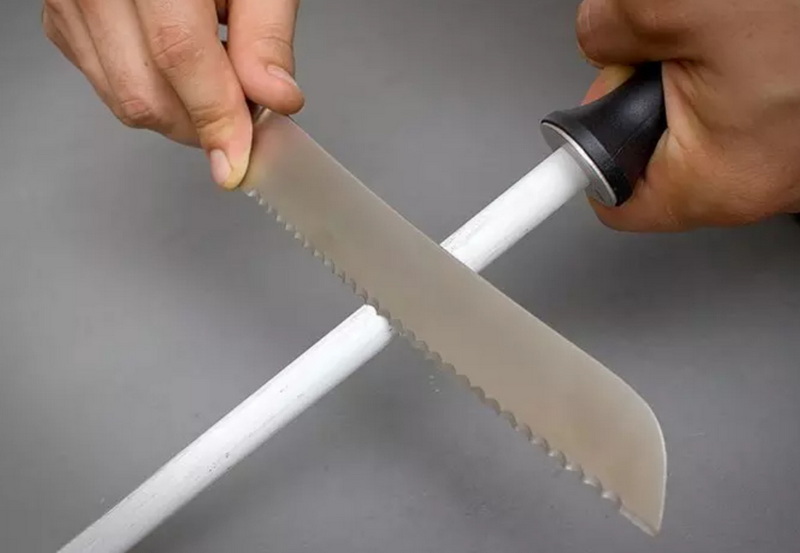
- Ceramic rod method (recommended): Choose a ceramic rod that matches the serration size. Gently align and insert the rod into each serration, applying light, steady pressure along the tooth groove. Move along all teeth, ensuring even engagement. Wipe clean after a few passes to remove metal filings. This method sustains tooth geometry and minimizes material removal.
- When to use sharpening stone: A fine-grit stone can be used for targeted touch-ups on individual serrations, but it requires careful control and can be time-consuming. For OEM bread knife lines intended for broad distribution, a dedicated serration-focused tool yields consistent results across models.
- Assessing progress: Periodically test the blade by slicing through bread or a bread-like test loaf. If slices drift or tear, re-check the tooth-by-tooth engagement and maintain a consistent angle and pressure across all teeth.
- Burr management: Serration sharpening can produce a burr along the flat back; remove this burr with a light pass or a quick run along the rod again. Avoid over-grinding, which can weaken the blade edge. If scratches appear, pause and reassess technique.
- Maintenance cadence: Bread Knives typically require less frequent sharpening than straight-edged knives, but routine checks are crucial in high-usage environments. In professional kitchens, quarterly maintenance or after several weeks of heavy service is reasonable. Home users may opt for annual checks with more frequent touch-ups as needed.
- Material-aware care: Stainless steel resists corrosion, while high-carbon variants offer sharper edge retention but demand thorough drying to prevent rust. If OEM Bread Knives use special alloys, tailor maintenance steps to the alloy's needs to maximize longevity.
- Ergonomics and handling: A comfortable handle reduces fatigue and supports precise control when guiding the blade through crusts. Ensure the knife's balance and grip surface are designed for stable maintenance routines as well as daily use.
- Training and SOPs: Provide a simple standard operating procedure (SOP) for cooks and staff that covers cleaning, sharpening, and storage. A clear SOP reduces the risk of improper sharpening and protects the Bread Knife line across OEM deployments.
Maintaining a Bread Knife properly yields consistent, clean slices, reduces waste, and enhances kitchen efficiency. By following serration-focused sharpening techniques, routine cleaning, thoughtful storage, and simple SOPs, both professional kitchens and home cooks can maximize the life and performance of their Bread Knife collections. For brands and manufacturers, clear maintenance guidance strengthens customer trust and supports durable, value-driven OEM Bread Knife offerings.
- Answer: For high-use commercial kitchens, sharpen every week or every two weeks; for lighter home use, every few months or as needed. Regular maintenance keeps edges aligned and slicing smooth.
- Answer: Use a sharpening rod designed for serrated edges, or a dedicated serrated knife sharpener. These tools preserve tooth geometry better than general sharpeners and minimize material removal.
- Answer: It can be sharpened at home with proper technique and tools. For severe damage, high-end OEM models, or if unsure, seek professional service to avoid damaging the blade.
- Answer: Hand wash with mild soap and warm water, rinse, then dry thoroughly with a soft cloth. Avoid dishwashers to prevent heat and movement from dulling the serrations; apply a light food-safe oil if needed.
- Answer: Difficulty slicing bread, tearing rather than clean cuts, irregular blade feel, or visible dullness and loss of edge on inspection indicate maintenance is due.


