- All
- Product Name
- Product Keyword
- Product Model
- Product Summary
- Product Description
- Multi Field Search

Views: 222 Author: Ann Publish Time: 2025-11-01 Origin: Site


Content Menu
● Steak Knife Styles and Their Table Signatures
● Material Choice Matters for Look and Feel
● Designing the Table to Showcase Steak Knives
● OEM Collaboration and Asset Strategy
>> Marketing and SEO Alignment
>> FAQ 1
>> FAQ 2
>> FAQ 3
>> FAQ 4
>> FAQ 5
The way steak knives relate to flatware and table décor can elevate a dining experience from ordinary to memorable, and in the context of OEM partnerships, it is a powerful storytelling tool. This article guides kitchenware manufacturers and OEM suppliers through a comprehensive approach to pairing a Steak Knife with flatware patterns, table linens, lighting, and centerpieces, ensuring cohesive brand narratives for international clients. The guidance covers style families, material and finish harmonization, visual alignment with flatware, table décor integration, and practical strategies for asset creation that attract distributors, wholesalers, and end-brand buyers. Throughout, the emphasis remains on crafting a consistent look and feel that reinforces product quality, craftsmanship, and value.

A well-curated collection starts with understanding how different steak knife styles communicate with various flatware patterns and table décor. This section outlines four primary design families and the cues they provide for effective matching.
- Design cues: slender silhouettes, refined lines, highly polished surfaces, and traditional proportions.
- Matching guidance: pair with European or formal flatware patterns featuring similar blade brightness and handle elegance. Opt for blades with mirror finishes and slim, ergonomic handles to mirror the understated luxury of classic flatware.
- Design cues: geometric form, clean profiles, matte or satin finishes, restrained ornamentation.
- Matching guidance: coordinate with minimal flatware patterns that share a simple silhouette and low-gloss finishes. Choose knives with understated handles and neutral blade finishes to maintain a cohesive contemporary table.
- Design cues: warm tones, natural textures, hand-finished touches, wood-inspired handles.
- Matching guidance: align with flatware that uses organic lines or rustic textures; materials like simulated wood or resin grips pair well with warm-toned linens and natural centerpieces.
- Design cues: premium materials such as Damascus-like patterns, textured blades, fine-grain handles, and meticulous engineering.
- Matching guidance: couple with high-end flatware and luxury table décor—iridium gleam, precious metal accents, and elegant centerpieces. The storytelling here emphasizes craftsmanship and timeless quality.
Material selection drives perceived quality and how well a knife sits within a table's overall aesthetic. This section explores blade materials, handle options, and finishes, with OEM considerations for consistency across product lines.
- Stainless steel and high-carbon stainless steel offer durability, corrosion resistance, and bright finishes that read well with polished flatware.
- Damascus-inspired patterns or layered blade designs introduce texture and visual interest that can complement patterned flatware or statement knives.
- Serrated vs straight-edge blades affect not only performance but also the perceived formality of the table; serrations tend to suit casual or rustic settings, while straight edges align with formal or heritage looks.
- Stainless steel handles provide a cohesive metal-on-metal aesthetic with many flatware patterns.
- Wood, pakkawood, or composite handles introduce warmth and tactility, aligning with natural or rustic décor themes.
- The balance between blade and handle weight influences the user experience and overall table presentation; ensure consistent ergonomics across OEM lines.
- Mirror finishes maximize light reflection and can harmonize with highly polished flatware; satin and bead-blasted finishes offer a subdued aesthetic that better pair with matte flatware.
- PVD-coated blades or colored finishes can be used strategically to echo table décor accents (e.g., dark tones with blackened flatware, bronze hues with warm-toned accessories).
- For OEM programs, provide finish swatches and color-matching guides to help clients pair knives with their flatware families.
- Ensure the blade's silhouette and the handle's profile echo the flatware's rhythm. A knife with a slender blade and a slim handle pairs best with patterns that share the same visual language.
- For patterned or engraved flatware, consider a knife with a clean blade surface to avoid competing textures.
- Coordinate blade finishes with the flatware's finishes. A polished blade works well with shiny flatware; brushed or matte blades harmonize with brushed or satin flatware.
- When mixing metals, choose a neutral blade color (e.g., stainless silver) that complements various flatware hues rather than competing with ornate patterns.
- Knife length should be proportionate to dinner knives and forks in the chosen flatware set. Plates of larger diameter may justify slightly longer knives, whereas smaller place settings benefit from more compact blade profiles.
- Consider the table's overall geometry: thin table edges benefit from lighter knives, while robust flatware sets on larger tables can handle more substantial knife profiles.
- If flatware includes accents of gold, copper, or black PVD finishes, decide whether the steak knife should pick up a corresponding accent (careful to maintain legibility of branding on the blade) or adopt a neutral finish to avoid color clashes.
- For international markets, standardize a core neutral palette for global SKUs while enabling regional customization with accent options.
- Use a consistent narrative: heritage blades paired with artisanal flatware tell a compelling story of craftsmanship, export readiness, and premium OEM partnerships. Document this story in client-facing catalogs and digital assets to reinforce the value proposition.
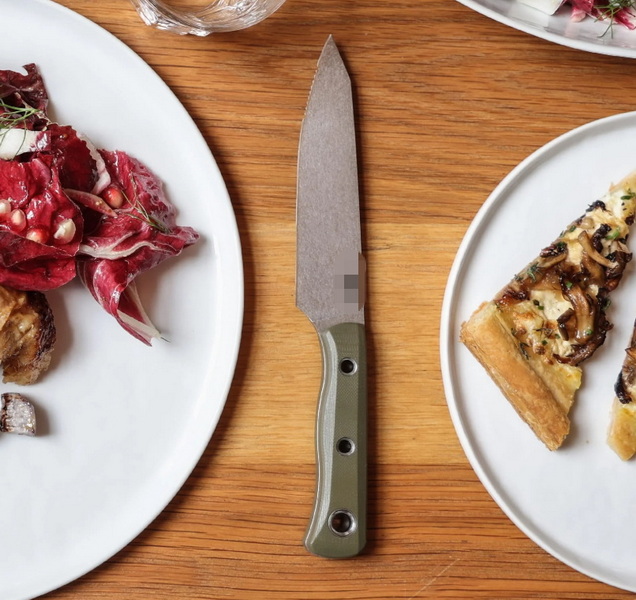
A well-designed table not only presents the cutlery but also communicates the brand's design language. This section provides practical décor strategies to maximize knife visibility and aesthetic impact.
- Napkin colors influence the knife's perceived contrast; light napkins under darker blades create dramatic silhouettes, while dark linens can enhance the shine of polished blades.
- Fabric texture matters: smooth linens emphasize sleek knife lines; textured fabrics (lace, weave) add depth and can highlight the handle's detailing.
- Centerpieces should be low enough to keep the knives visible and unobstructed. Materials like wood, ceramic, and glass should harmonize with handle materials to reinforce a cohesive design language.
- Accent colors drawn from tableware or linens can be echoed in small décor items (placemats, menu cards, or napkin rings) to weave a consistent story.
- Warm lighting (2700–3000K) enhances the luster of polished blades, while cooler lighting can reveal blade texture details more clearly. Use diffusers or soft shadows to avoid glare that hides knife features.
- Lighting moments can be part of a marketing shoot: staged dining scenes that show the knife glint in action and its interaction with flatware.
- For multi-course service, keep a logical progression of utensils. The steak knife often replaces the dinner knife for main courses, but its placement should reflect instruction and ceremony consistent with the target market's etiquette.
- Consider region-specific dining norms when designing place settings for OEM clients across Europe, North America, and Asia. Provide region-tailored asset sets to support regional marketing campaigns.
OEM partnerships thrive when product, packaging, and marketing materials are harmonized. This section highlights practical steps for manufacturers to deliver assets that communicate value to foreign brands and distributors.
- Offer engraving, logo placement, blade finishes, and handle material variations as standard OEM options. Provide a modular design approach to allow easy customization without sacrificing production efficiency.
- Develop a global color-matching library to ensure consistency across markets, helping clients select knife finishes that align with their flatware families.
- Create packaging that reflects the table's visual language: insert cards describing the knife's design motifs, care tips, and compatibility with specific flatware patterns.
- Consider together-pack options with knife blocks, magnetic bars, or printed recipe cards that reinforce the overall brand story.
- Develop content clusters centered on “Steak Knife” and related terms such as “Flatware Matching,” “Table Décor,” and “OEM Kitchen Tools.” Ensure keyword density is optimized without sacrificing readability.
- Localize imagery and copy for key markets; provide language-localized alt text to improve discoverability.
A deliberate approach to matching steak knives with flatware and table décor strengthens OEM value propositions by delivering a cohesive brand story, elevating perceived quality, and enhancing market appeal across international buyers. Material choices, finish harmonization, and a robust visual asset strategy are core drivers. By embracing style families, aligning blade and handle aesthetics with flatware patterns, and presenting well-curated table décor narratives, manufacturers can create compelling, sell-ready content for global markets.
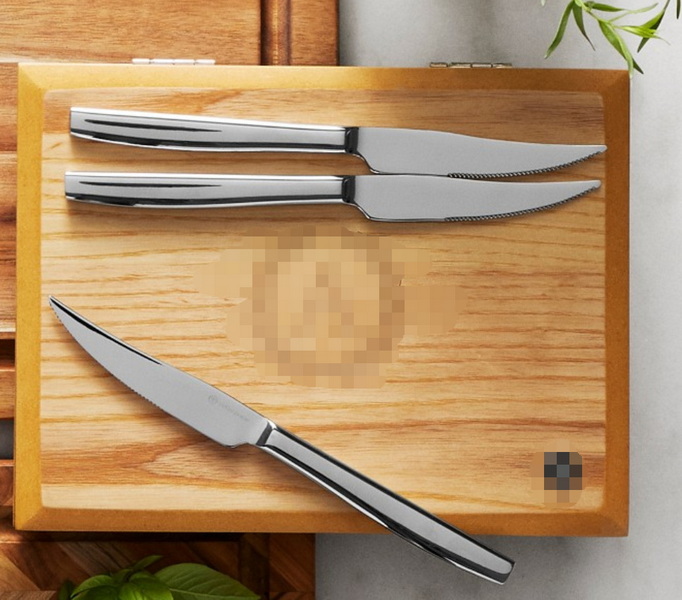
- Question: What makes a steak knife visually cohesive with flatware?
- Answer: Visual cohesion comes from aligned silhouette, matching blade finishes, and complementary handle materials. A harmonized appearance reinforces brand identity and table aesthetics.
- Question: Should steak knives be serrated or straight-edge for OEM marketing?
- Answer: The choice depends on the meat texture and service style; serrated blades are practical for certain cuts and casual settings, while straight-edge blades convey precision and luxury for fine dining contexts.
- Question: How important is finish consistency across product lines?
- Answer: Finish consistency across blade and handle surfaces is critical for OEM partners to present a uniform family look, especially when knives are bundled with flatware sets. Provide finish swatches and standardized color codes.
- Question: What considerations exist for international buyers?
- Answer: Provide region-specific asset packs, localized care guides, material specifications, and imagery that reflect local dining etiquette and table décor preferences.
- Question: How can OEM manufacturers demonstrate the table-ready value of steak knives?
- Answer: Create marketing assets that show complete place settings, including knives, flatware, linens, and centerpieces; include performance demonstrations and care instructions to reinforce durability and usability.


