- All
- Product Name
- Product Keyword
- Product Model
- Product Summary
- Product Description
- Multi Field Search

Views: 222 Author: Ann Publish Time: 2025-11-28 Origin: Site


Content Menu
● Traditional Household Knife Sets and Their Environmental Toll
● Sustainable Materials for Blades in Household Knife Sets
● Eco-Friendly Handles Revolutionizing Household Knife Sets
● Green Manufacturing Processes for Household Knife Sets
● Packaging and Transportation Impacts on Household Knife Sets
● Lifecycle Analysis of Eco Household Knife Sets
● Maintenance Tips for Long-Lasting Household Knife Sets
>> 1. What materials make household knife sets most eco-friendly?
>> 2. How much energy does recycled steel save in household knife sets?
>> 3. Are bio-handles on household knife sets dishwasher-safe?
>> 4. What packaging reduces household knife set impacts?
>> 5. How do eco household knife sets compare in lifecycle emissions?
Household knife sets form the backbone of kitchen functionality, yet their lifecycle—from raw material extraction to disposal—carries a substantial environmental burden, including high energy use and waste generation. Eco-friendly household knife sets, crafted with recycled materials and sustainable processes, slash emissions by up to 75% while delivering lasting performance. As a Chinese OEM factory serving foreign brands, wholesalers, and manufacturers, we specialize in producing customizable household knife sets that prioritize planetary health alongside precision engineering.

Conventional household knife sets depend on virgin stainless steel blades, where mining iron ore, chromium, and nickel pollutes air and water, contributing to 7-9% of global CO2 emissions from steel production alone. Petroleum-based plastic handles in these household knife sets persist in landfills for centuries, releasing microplastics that infiltrate food chains and oceans. Energy-hungry forging at 1200°C+ for household knife sets demands fossil fuels, while grinding consumes millions of liters of water annually without recycling in outdated facilities.
Packaging exacerbates issues for household knife sets, with polystyrene foam and plastic wraps accounting for 40% of kitchenware waste by volume. Short-lived household knife sets from inferior alloys lead to frequent replacements, amplifying resource depletion—global knife manufacturing alone generates thousands of tons of scrap yearly. Habitat loss from metal mining disrupts ecosystems, making everyday household knife sets unwitting drivers of deforestation and biodiversity decline.
Wooden blocks for storing household knife sets often stem from unsustainably logged trees, adding to carbon footprints through shipping and manufacturing. These cumulative impacts reveal why transitioning from standard household knife sets to greener alternatives proves essential for eco-conscious consumers and brands.
Recycled stainless steel redefines blades in eco household knife sets, reclaiming 90% of material from scrap to bypass mining and cut energy by 75%. Chinese OEM factories integrate post-industrial steel into household knife sets, yielding corrosion-resistant edges that rival virgin metal. Low-carbon alloys in these household knife sets minimize alloying elements like nickel, reducing toxic runoff.
Carbon steel variants from renewable-powered mills enhance household knife sets with natural patina formation, deterring rust without chemicals. Ceramic-infused recycled blades offer hardness up to 8.5 Mohs for household knife sets, though recycling challenges highlight steel's superiority at 90% recovery rates. These innovations ensure household knife sets endure 10-15 years, curbing waste cycles.
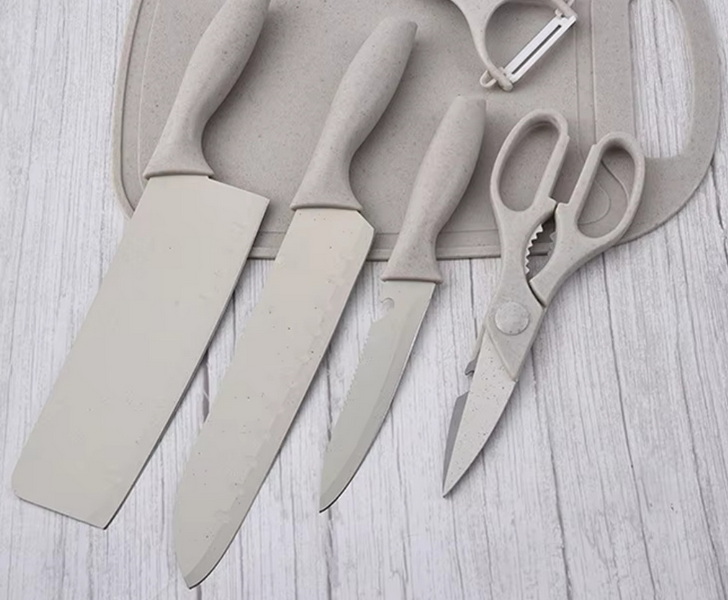
FSC-certified wood and fast-growing bamboo craft handles for household knife sets, renewing in 3-5 years versus decades for tropical hardwoods. Wheat straw composites, abundant agricultural byproducts, form lightweight handles in household knife sets, binding with bio-resins at 30% lower temperatures. Rice husk or ocean-recovered plastic grips divert 1 ton of waste per 10,000 household knife sets produced.
Cork, harvested without tree felling, provides shock-absorbing, antimicrobial surfaces for household knife sets used in humid kitchens. Bio-based polyamides from castor oil replace petroleum plastics in premium household knife sets, degrading 80% faster in compost. OEM customization allows brands to specify these for unique household knife sets that appeal to green markets.
Solar and wind-powered forges cut electricity for household knife sets by 40%, with CNC precision minimizing metal loss to under 5%. Closed-loop water systems recycle 95% during grinding for household knife sets, preserving freshwater in water-stressed regions. Additive manufacturing prototypes handles for household knife sets, slashing material use by 20% in trials.
Low-emission heat treatments using hydrogen instead of gas transform household knife set production, aligning with net-zero goals. Chinese factories lead in scaling these for high-volume OEM household knife sets, incorporating AI for defect-free yields. Zero-waste initiatives repurpose offcuts into smaller tools, closing loops for household knife sets.
FSC cardboard with soy inks packages household knife sets, reducing weight by 50% for lower shipping emissions.[web://30] Plant-starch blade sheaths biodegrade in 90 days, replacing PVC guards in household knife sets. Reusable OEM pallets ship bulk household knife sets overseas, cutting single-use wood by 70%.
Carbon-neutral sea freight consolidates household knife sets from China, offsetting air travel's 10x footprint. Designs repurposing boxes as knife organizers extend utility post-unboxing for household knife sets.
Cradle-to-grave studies show eco household knife sets emit 60% less CO2, with blades recyclable at 90% efficiency. Bio-handles compost into soil enhancers, while steel re-enters forges indefinitely. Extended durability—twice that of plastics—drops per-use impact for household knife sets.
End-of-life programs collect worn household knife sets, recovering alloys for new production and preventing 80% landfill diversion. Versus disposables, eco household knife sets save 500kg CO2 per set over a decade.
Hone blades bi-weekly with ceramic rods to maintain 15-20° edges on household knife sets, avoiding sharpeners that waste metal. Dry immediately after use to protect bio-handles in household knife sets from moisture. Store via magnetic rails over blocks to save wood for household knife sets.
Oil wooden handles monthly with food-grade mineral oil for household knife sets, preventing cracks. These habits extend household knife set life by 50%, maximizing eco-investments.
Eco-friendly household knife sets merge culinary excellence with environmental stewardship, drastically cutting emissions, waste, and resource strain across lifecycles. Our Chinese OEM factory crafts tailored household knife sets for global brands, wholesalers, and manufacturers using recycled steels, bio-materials, and green processes. Elevate your lineup—contact us for sustainable household knife set solutions that captivate eco-buyers and sharpen your market edge.
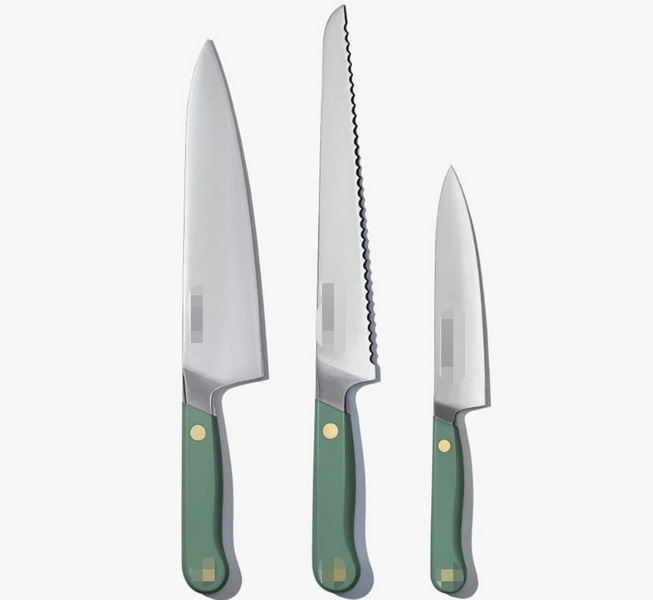
Recycled stainless steel blades (90% recyclable), FSC bamboo/wood or wheat straw handles, and bio-resins minimize mining and plastic pollution in household knife sets.
Up to 75% less energy versus virgin steel, slashing CO2 in household knife set production.
Many like wheat composites withstand 105°C cycles, but wood needs hand-washing for household knife sets.
Compostable starch guards and recyclable FSC boxes eliminate plastics for household knife sets.
50-70% lower CO2, with full recyclability/compostability outperforming traditional household knife sets.


