- All
- Product Name
- Product Keyword
- Product Model
- Product Summary
- Product Description
- Multi Field Search

Views: 222 Author: Ann Publish Time: 2025-10-31 Origin: Site


Content Menu
● Design Philosophy: Form Meets Function in Steak Knife Development
● Materials and Construction: Why Steel Choice Matters for Steaks and Service
● Ergonomics and Handling: Crafting a Knife That Feels Right
● Production Workflow: From Concept to Customer
● Customization Options for Steak Knife Programs
● Quality Assurance and Food Safety: Confidence from Source to Table
● The Market Case for Steak Knives: From Home Kitchens to Professional Settings
● Packaging, Branding, and Global Compliance
● Innovation Threads: Future-Proofing Your Steak Knife Program
● Customization Case Studies (Illustrative Scenarios)
● FAQs
>> Q: What makes a great Steak Knife blade?
>> Q: How should handle material be chosen for a Steak Knife?
>> Q: What maintenance steps extend the life of a Steak Knife?
>> Q: Can Steak Knives be used for vegetables or bread?
>> Q: What customization options does the OEM program offer?
In modern kitchens, the right steak knife is more than a tool; it is a statement of quality, performance, and culinary confidence. A precision-crafted steak knife elevates the dining experience by delivering effortless slices, clean edge retention, and ergonomic handling that reduces fatigue during long meals. For brands seeking reliable OEM partners, the opportunity lies in collaborating with a factory that can translate concept into consistent, scalable, and compliant products. This article outlines how a Chinese kitchen knife factory has built an end-to-end program to serve international clients with a focus on “Steak Knife” excellence, material science, manufacturing discipline, and flexible customization options.

In the realm of premium cutlery, a successful steak knife balances sharpness, balance, and tactile feedback. The design philosophy centers on three pillars: edge geometry, handle ergonomics, and overall balance. Edge geometry dictates how the blade engages the meat, while balance affects control and comfort during hand-held use. The ergonomic handle design considers grip texture, palm swell, and finger positioning to reduce micro-motion and improve precision when carving at the table or in a kitchen. For OEM collaborations, it is essential to establish design parameters early: blade length and thickness, tip geometry, grind type, tang construction, and finish options. The factory's capacity to translate brand guidelines into reproducible tooling—while preserving the intended tactile and visual aesthetics—serves as a competitive differentiator in global markets. This section underscores the importance of a shared design language that aligns with international food-safety expectations and consumer preferences.
Steak Knife performance hinges on blade steel selection, heat treatment, and corrosion resistance. The factory's article-ready program emphasizes commonly chosen steels such as high-carbon stainless steel grades, powder metallurgy variants, and, in select lines, Damascus-inspired patterns for aesthetic appeal. Each steel class offers a trade-off between wear resistance, edge retention, corrosion resistance, and ease of sharpening. For example, a high-carbon stainless steel provides good edge retention and corrosion resistance while maintaining reasonable wear resistance, whereas powder metallurgy steels may deliver superior hardness and edge stability at a potential cost in sharpenability and price. The tempering regime—controlled heating and cooling—shapes hardness and toughness, directly affecting edge retention under repeated slicing of raw beef, bone handling, or fibrous tissues.
Handle materials contribute to comfort and durability. Options range from pakkawood, resin-based composites, G10, micarta, to solid stainless steel with textured surfaces. Each handle material influences grip security, moisture management, and maintenance needs. Finishes such as satin, mirror polish, or DLC (diamond-like carbon) coatings provide both aesthetics and corrosion protection, though coatings may alter edge feel and re-sharpening behavior. For OEM programs, a careful materials specification sheet ties together blade steel, tempering, heat treatment cycles, surface finishes, and handle modules, ensuring consistent performance across production lots and supply chain variations.
Beyond raw materials, the human experience of using a steak knife hinges on ergonomics. A well-balanced knife places the center of gravity near the hand to minimize fatigue. The blade thickness and spine radii influence how the knife slices through meat with minimal tearing. Textured scales, contouring, and finger grooves are not merely cosmetic features; they influence tactile feedback and confidence in cutting. The OEM process includes optional grip textures such as micro-sandblasting, laser etching, or patterned inlays that enhance grip under wet conditions. A properly designed handle contributes to safety by reducing slippage and enabling better control during carving tasks at the dinner table or in professional settings.
End-to-end OEM capabilities begin with concept refinement and CAD-driven design, followed by prototype creation, tooling, and controlled production. The workflow typically encompasses:
- Design and engineering: establishing blade geometry, edge type, tunable parameters, and manufacturability constraints.
- Tooling and mold creation: producing precise fixtures for blade grinding, heat treatment, and handle assembly.
- Forging or stamping: depending on the product line, with forging often providing superior strength and grain structure for high-performance blades.
- Heat treatment: carefully staged austenitizing, quenching, and tempering to achieve desired hardness and toughness.
- Surface finishing: precision grinding, edge honing, and surface finishes that meet food-safety and visual standards.
- Handle assembly: secure tang integration, alignment checks, and finish consistency.
- Quality assurance: dimensional checks, hardness testing, corrosion resistance, sharpness testing, and safety evaluations.
- Packaging and labeling: branding, protective packaging, and compliance-ready documentation for international markets.
- Logistics and post-sale support: lead times, shipping options, and after-sales guidance.
The strength of an OEM partnership lies in customization depth. Brands may request variations in blade length (e.g., 4.5 to 6.5 inches for steak knives), blade geometry (slender vs. robust), grind type (flat, hollow, or convex), edge finishing (polished bevels vs. tactile micro-bevels), and steel grade. Handle customization includes material, color, texture, and branding options such as laser engraving on the blade spine or butt cap. Packaging customization ranges from retail blister packs to gift sets with branded sleeves, pouches, and care guides. Certifications for food-safety and regulatory compliance (such as FDA approvals or LFGB equivalents) may be pursued to meet target markets. The OEM approach can scale from low-volume pilot runs to mass production, with transparent costing structures and clear lead-time projections. A well-documented customization matrix helps brands select features while keeping manufacturing efficiency high.
Quality assurance begins at incoming material inspection and continues through every processing stage. The factory adheres to strict QA protocols that cover:
- Material verification: supplier certificates and traceability for blade steel and handle components.
- Process controls: documented heat-treatment profiles, grinding tolerances, and jig alignment checks.
- Dimensional accuracy: blade length, thickness at specified zones, edge bevel consistency, and tang alignment.
- Hardness and toughness: calibrated hardness tests (e.g., Rockwell or equivalent) to ensure the blade meets design specs.
- Surface integrity: consistent finishes, absence of burrs, and corrosion resistance tests under simulated kitchen environments.
- Food-safety compliance: cleanroom-like handling for assembly, use of food-grade lubricants or fastening components, and alignment with regional food-safety standards.
Quality documentation travels with each batch, enabling traceability for consumer safety and brand accountability.
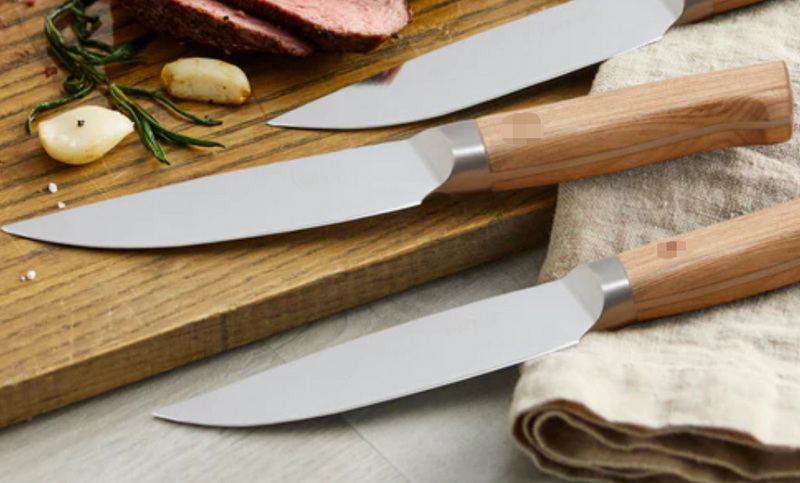
The modern consumer seeks steak knives that combine precision with aesthetics. For households, a visually appealing knife with a comfortable grip enhances meals with friends and family, while in restaurants and hotels, reliability and consistent performance underpin guest satisfaction and operational efficiency. The article-worthy approach for OEM programs includes collabs with lifestyle branding, premium packaging, and value-added bundles (knife with sharpening steel, cutting boards, or care kits). A campaign can leverage real-world use cases, chef endorsements, and culinary demos to showcase the knife's performance in slicing meats, vegetables, and bread with minimal tearing. The narrative emphasizes that a properly engineered steak knife supports culinary excellence at every dining occasion.
Packaging plays a critical role in brand perception. The factory can provide packaging options aligned with regional preferences and regulatory requirements. Branded packaging helps differentiate a steak knife line on e-commerce platforms and in brick-and-mortar retail. Compliance considerations include materials safety, labeling accuracy, and compliance documentation for different markets (e.g., EU, US, Asia-Pacific). The OEM model supports multilingual care guides and warranty statements, with a focus on a seamless unboxing experience that communicates quality from first glance.
Ongoing innovation is essential to staying competitive. Potential avenues include:
- Advanced edge technologies: laser-precise bevels, micro-bevel optimization, and edge geometry refinement to reduce resistance and increase precision.
- Sustainable materials: alternative handle materials with lower environmental impact and recyclable packaging solutions.
- Smart packaging: QR-enabled manuals and care instructions that link to online resources and warranty registration.
- Collaborative design sprints: short, iterative sessions with brand teams to rapidly align on aesthetics, performance targets, and regulatory requirements.
- Case A: A European brand requests a 5.5-inch steak knife with a satin-finished blade, pakkawood handle, and laser-engraved branding on the blade spine, with a compact retail packaging approach. The factory delivers a pilot batch in four weeks, followed by scale-up production within two months.
- Case B: A North American distributor requires a robust, high-hardness steel with a textured G10 handle for superior grip in wet conditions. After engineering validation, the program transitions to full-scale production with a three-month lead time and a dedicated QA checkpoint.
- Case C: An Asia-Pacific culinary brand seeks a Damascus-inspired pattern for presentation and limited-edition releases, along with branded gift-box packaging.
In summary, precision-crafted steak knives emerge from a holistic approach that integrates material science, engineering precision, ergonomic design, and meticulous quality assurance. A strong OEM partner can translate brand concepts into consistent, scalable products that perform reliably across diverse markets. By combining controlled forging or stamping processes, tailored heat-treatment profiles, and user-centric handle construction, the factory can deliver steak knife programs that support premium branding, compelling packaging, and a positive consumer experience. The result is a mutually beneficial partnership that accelerates time-to-market, reduces risk, and enhances global competitiveness in the steak knife category.
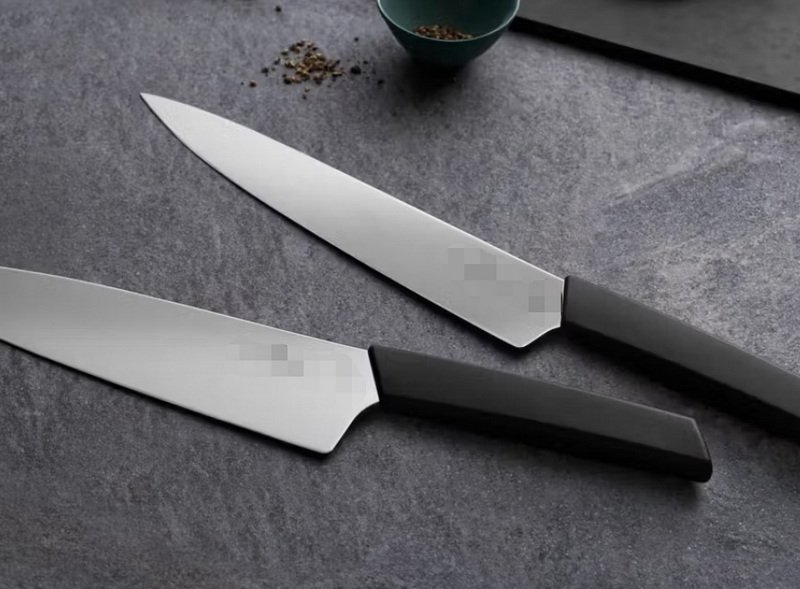
A: A great steak knife balances blade geometry, edge retention, and toughness, with considerations for steel grade, heat treatment, and sharpening ease. It should slice through meat smoothly, minimize tearing, and maintain a stable edge under repeated use. The selected steel and tempering regime influence long-term performance, while geometry defines bite and control. This aligns with brand requirements for both performance and consistency across production lots.
A: Handle material affects grip comfort, moisture management, durability, and maintenance. Options range from wood-based scales to synthetic composites and textured metals. For OEM projects, the choice should reflect brand positioning (premium vs. value) and end-user expectations, while ensuring food-safety compatibility and ease of cleaning.
A: Regular hand washing and thorough drying are recommended to prevent corrosion or staining, especially for carbon steel variants. Periodic light sharpening or honing helps maintain edge sharpness between professional resharpening cycles. Avoid harsh solvents and abrasive cleaners that can degrade surfaces or coatings. Proper storage and drying after use are essential.
A: While designed for meat, many steak knives are versatile enough to handle certain vegetables and bread, depending on blade geometry and edge type. However, the blade's geometry is optimized for meat, and multi-purpose blades may compromise performance for specialized tasks.
A: Brands can specify blade length, geometry, edge type, steel grade, handle material, finishes, branding (engraving or inlays), packaging, and certifications. The program typically includes prototypes, sample approvals, defined lead times, MOQs, and scalable production plans that align with international market requirements.


