- All
- Product Name
- Product Keyword
- Product Model
- Product Summary
- Product Description
- Multi Field Search

Views: 222 Author: Ann Publish Time: 2025-11-24 Origin: Site


Content Menu
● Understanding the Cheese Knife
● Maintaining Sharpness and Performance
>> Recommended Storage Options
● Caring for Wooden Handles and Special Blades
● Troubleshooting Common Issues
● Preventing Cross-Contamination
● Safety Tips for Cheese Knife Use
● Extending Cheese Knife Lifespan
● Frequently Asked Questions (FAQ)
>> Q1: Can cheese knives be washed in the dishwasher?
>> Q2: How often should I sharpen my cheese knife?
>> Q3: How do I care for a wooden handle?
>> Q4: What is the best way to store cheese knives?
>> Q5: How can I prevent my cheese knife from rusting?
Cheese knives are essential kitchen tools specifically designed to make slicing and serving different types of cheese easy and enjoyable. Whether you're handling soft Brie, crumbly blue cheese, or hard aged varieties, having a well-maintained cheese knife ensures cleaner cuts, less sticking, and a better presentation. Proper care, cleaning, sharpening, and storage will extend your cheese knife's life and keep it performing safely and hygienically. This comprehensive guide covers everything you need to know about taking care of your cheese knife.

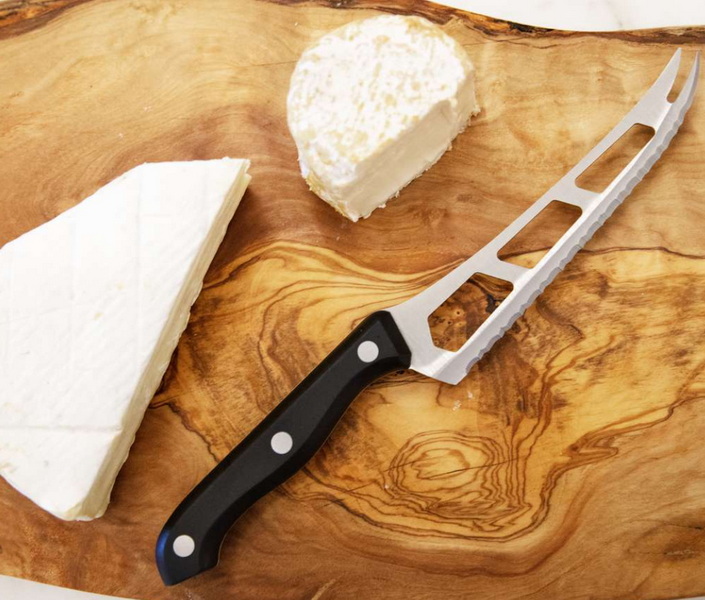
Cheese knives differ from regular kitchen knives due to their specialized design tailored to various cheese textures and cutting needs. Key features include:
- Blade Shapes: Some cheese knives have narrow, curved blades to slice soft cheeses smoothly, while others feature serrated edges or sharp points to handle hard cheeses.
- Perforations and Holes: To prevent cheese from sticking to the blade, many cheese knives have holes or perforations that reduce surface contact.
- Forked Tips: Many cheese knives end in a forked tip designed for picking up and serving slices.
- Materials: Blades are most commonly stainless steel for sharpness and rust resistance, and handles range from wood, plastic, to metal, each requiring different care.
Understanding these features helps in selecting the right cheese knife for your needs and caring for it appropriately.
Proper cleaning is critical to preventing cheese residue buildup, staining, and bacterial growth on your cheese knife.
1. Rinse Immediately: After cutting cheese, rinse the blade under warm running water to remove loose cheese particles.
2. Use Mild Soap: Gently clean the knife with a mild dish detergent and soft sponge or cloth. Avoid abrasive pads or scrubbers that can scratch the blade.
3. Pay Attention to Holes and Crevices: For knives with holes and perforations, use a soft brush or toothpick to remove trapped cheese.
4. Handle Care: For wooden handles, never soak; wipe them carefully with a damp cloth and dry immediately.
5. Rinse Thoroughly: Ensure all detergent is removed to prevent residue buildup.
6. Dry Completely: Use a soft towel to dry the knife thoroughly to avoid rust and corrosion.
- Do handwash cheese knives promptly after use.
- Don't put cheese knives in the dishwasher as high heat and harsh detergents can damage blades and handles.
- Avoid soaking knives, especially those with wooden components.
A sharp cheese knife offers cleaner cuts with less effort and reduces the chance of accidents caused by slipping.
- Use a honing steel to realign your knife's edge regularly.
- Sharpen blades using a whetstone or seek professional sharpening 1-2 times per year, depending on usage.
- Maintain a consistent sharpening angle of about 15-20 degrees.
- Avoid sharpening holes or perforations; focus on solid blade edges only.
- Frequent users should sharpen monthly or bi-monthly.
- Occasional users can sharpen every 6 months or as needed.
- Inspect blades before each use for signs of dullness.
Storage is crucial to protect blade edges, prevent corrosion, and maintain user safety.
- Knife Blocks: Keeps knives separate and protected from damage.
- Magnetic Strips: Convenient and space-saving, but ensure knives do not touch each other.
- Blade Guards: Especially useful for travel or drawer storage to prevent dulling and injury.
- Knife Rolls or Cases: Ideal for collections or transport.
- Keep in a dry, well-ventilated area away from humidity and sunlight.
- Avoid loose storage in crowded drawers to prevent blade damage and accidents.
- Store knives with handles up for easy and safe access.
Wooden handles and coated blades need tailored care to retain appearance and function.
- Avoid soaking handles in water.
- After cleaning, dry immediately and thoroughly.
- Periodically apply food-safe mineral oil to prevent cracking and drying.
- Repair or replace handles if cracks or looseness occur to maintain safety.
- Clean gently with soft sponges and mild detergents.
- Avoid harsh chemicals or abrasive scrubbers.
- Dry promptly to prevent damage to the coating.
- Rust: Remove with fine steel wool or baking soda paste; oil blade afterward.
- Loose Handles: Tighten screws/rivets promptly for safety.
- Dulling Blades: Increase sharpening frequency or consult professional services.
- Chipped Blades: Avoid using knives on inappropriate surfaces or hard objects.
Maintaining hygiene is vital for both food safety and flavor purity.
- Use dedicated knives for specific cheese types.
- Clean and sanitize knives immediately after use.
- Use color-coded knives or labeling systems.
- Dry knives thoroughly before storage to prevent mold.
- Inspect knives for damage that could harbor bacteria.
- Always use on stable cutting surfaces.
- Keep knives sharp to minimize slipping and accidents.
- Store away from children and in safe locations.
- Wear protective gloves during sharpening if necessary.
- Follow manufacturer's maintenance and care guidelines.
- Avoid cutting frozen or extremely hard foods.
- Use only for intended cheese-cutting purposes.
- Clean, sharpen, dry, and oil regularly.
- Rotate usage to avoid uneven wear.
A cheese knife is a specialized and valuable kitchen tool that greatly improves your cheese serving experience. Proper cleaning, regular sharpening, careful storage, and attentive maintenance ensure your cheese knife stays sharp, hygienic, and durable for years. Following the guidelines in this comprehensive care guide will help you enjoy flawless cheese slicing with safety and style every time.
A1: No, handwashing is recommended to protect the blade's sharpness and the handle's condition.
A2: Hone regularly after each use and sharpen every 1-3 months depending on frequency of use.
A3: Avoid soaking, wipe dry immediately, and periodically apply food-safe mineral oil.
A4: Use knife blocks, magnetic strips, or blade guards in a dry, ventilated area.
A5: Dry thoroughly after washing and occasionally apply a thin layer of food-safe mineral oil.


