- All
- Product Name
- Product Keyword
- Product Model
- Product Summary
- Product Description
- Multi Field Search

Views: 222 Author: Ann Publish Time: 2025-11-19 Origin: Site


Content Menu
● Understanding Cheese Knife Design
● Cheese Knife Types by Function
>> Cheese Plane
● High-Performance Materials in OEM Cheese Knives
● Cheese Knife Manufacturing Process
● Customization and Branding Options
● How to Care for Your Cheese Knife
● Trends in Modern Cheese Knife Design
● Frequently Asked Questions (FAQ)
>> 1. Why do some Cheese Knives have holes in the blade?
>> 2. What materials make the best Cheese Knife blades?
>> 3. How often should I sharpen a Cheese Knife?
>> 4. Can one Cheese Knife handle all cheese types?
>> 5. Are Cheese Knives dishwasher safe?
A Cheese Knife is a specialized tool designed to cut various types of cheese without crushing or sticking. Unlike standard kitchen knives, Cheese Knives have unique blade shapes and features—such as perforations, forked tips, or offset handles—that minimize friction and help deliver clean, uniform slices.
This guide explains everything about Cheese Knife design, including blade engineering, material choices, handle ergonomics, and OEM manufacturing customization.

Cheese Knife is a specialized tool designed to cut various types of cheese without crushing or sticking. Unlike standard kitchen knives, Cheese Knives have unique blade shapes and features—such as perforations, forked tips, or offset handles—that minimize friction and help deliver clean, uniform slices.
Cheese knives are categorized by cheese hardness:
- Soft cheese knives for brie, camembert, mozzarella
- Semi-soft cheese knives for gouda, havarti, fontina
- Hard cheese knives for cheddar, gruyère, parmesan
- Wire and cleaver-style knives for serving and portioning blocks
The efficiency of a Cheese Knife depends on the perfect balance of blade geometry, thickness, material hardness, handle comfort, and edge sharpness. Each element influences slicing precision and user safety.
Blade shape determines how the knife interacts with cheese texture. Common designs include:
- Perforated blades to prevent sticking
- Forked tips for easy serving of soft cheese
- Offset blades to keep cheese off the cutting board
- Cleaver-type blades for heavy-duty cutting of hard cheese
Soft cheese knives have thin, sharp blades for minimal contact, while hard cheese knives have thicker blades with micro-serrated edges or wedge-shaped points to tackle dense textures.
The steel selected impacts sharpness retention, corrosion resistance, and durability. Popular materials include:
| Material Type | Advantages | Ideal For |
|---|---|---|
| Stainless steel (420, 430, 440C) | Rust resistance and easy maintenance | General cheese cutting |
| High-carbon steel | Excellent edge sharpness and rigidity | Professional and hard cheese knives |
| Damascus steel | Visual appeal and superior edge retention | Premium OEM collections |
Non-stick coatings such as titanium or Teflon reduce friction, especially for hospitality use.
Cheese Knife wooden handle close-up comfort with control and can be made from wood, pakkawood, ABS, PP, or stainless steel. Features include:
- Balanced weight distribution for effortless slicing
- Non-slip textures for safety in kitchens
- Full-tang construction for durability under heavy use
Ergonomic handles reduce wrist strain, essential for restaurant or catering professionals.
Cheese Knives need equilibrium between blade weight and handle length. Soft cheese knives tend toward lightweight, flexible blades; hard cheese knives require heavier, sturdier construction. The typical balance point is near the bolster or blade midpoint to minimize fatigue.
Precision grinding maintains cutting efficiency using:
- Hollow grinds for minimal slicing resistance
- Flat grinds for balanced durability and sharpness
- Convex grinds for robustness on hard cheeses
Edges sharpen between 15° and 20° per side optimize smooth, effortless slicing.
Knives serve various purposes:
Small, wide blades with holes prevent sticking and forked tips help serve soft cheeses like brie or feta.
Heavy, thick blades or cleaver styles slice dense cheeses such as parmesan or aged gouda.
Blunt, flexible edges designed for spreading soft cheeses and spreads.
Flat blades shave uniform slices from firm cheeses, popular in Scandinavian kitchens.
Robust knives for efficiently portioning block cheeses in commercial kitchens.
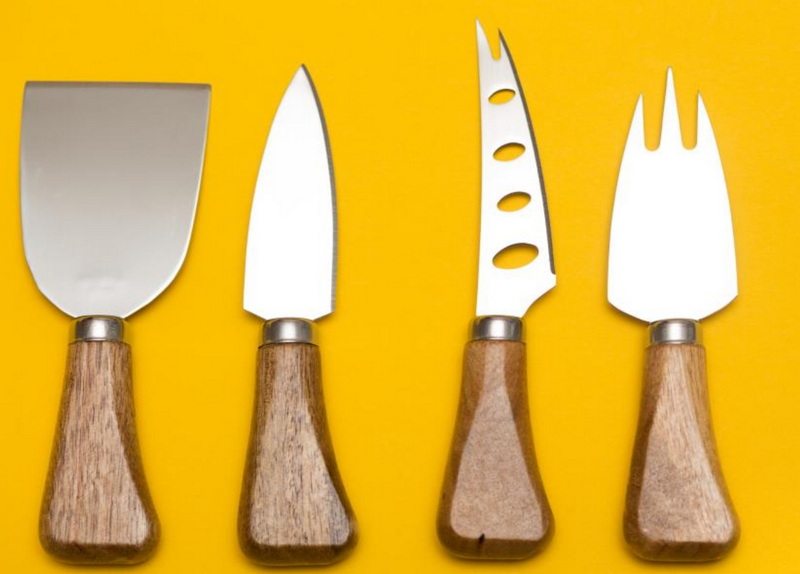
Chinese OEM kitchen knife manufacturer, meticulous material selection and forging define every Cheese Knife made for global markets. Features include:
- Forged stainless steel blades for strength and sharpness
- Mirror or satin finishes for hygiene and style
- Vacuum heat treatment ensuring hardness levels around HRC 55–58
- Laser-guided edge shaping for uniformity
Composite handles like pakkawood or G10 provide durability and moisture resistance for professional use.
1.Blade Forging or Stamping
Steel is cut or forged into initial shapes. Forged blades offer better balance; stamped blades are economical for mass production.
2. Heat Treatment
Controlled baking and cooling optimize blade hardness.
3. Grinding and Sharpening
CNC machines refine edge angles and polish.
4. Handle Assembly
Handles are riveted or molded depending on design.
5. Polishing and Inspection
Final polishing and quality control ensure consistency for global standards.
OEM customization enables:
- Laser branding and logos on blades
- Custom packaging from luxury boxes to retail-ready cards
- Varied handle materials and colors matching brand identity
- Decorative Damascus patterns for premium lines
Such options elevate the Cheese Knife into a signature culinary product.
Proper maintenance includes:
- Immediate hand washing with mild detergent
- Avoiding soaking wooden handles
- Thorough drying after cleaning
- Periodic honing with whetstones
- Storing knives individually to protect edges
Pairing knives with matching boards or storage further enhances product appeal.
Contemporary trends blend function with minimalistic aesthetics:
- Seamless stainless steel with ergonomic curves
- Eco-friendly materials like bamboo and recycled steel
- Multi-function knives combining cutting and serving
- QR-coded packaging telling brand stories sustainably
Sustainability and innovative designs drive consumer preferences, especially in global premium markets.
An exceptional Cheese Knife balances precision, comfort, and aesthetics. Thoughtfully engineered knives cater to the full range of cheese textures, from soft to hard. For OEM manufacturers, delivering customizable, durable, and elegant Cheese Knives strengthens international brand partnerships and enhances culinary experiences worldwide.
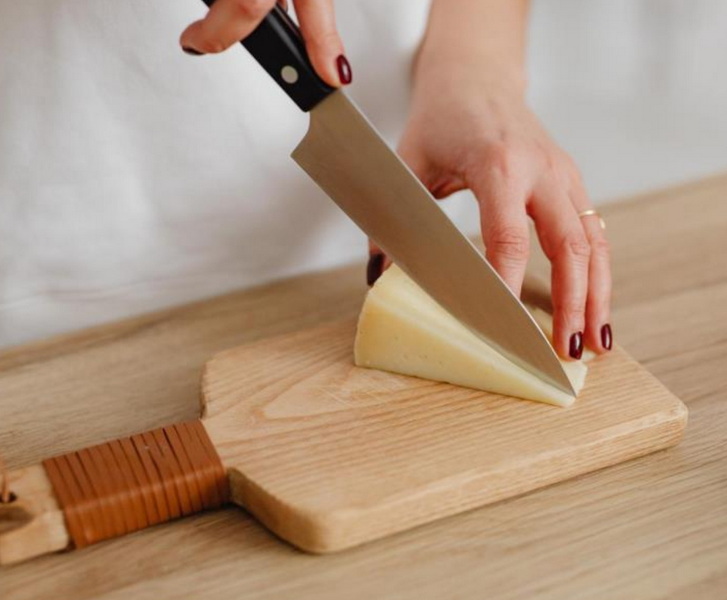
Holes reduce surface friction which prevents sticky cheeses from clinging, delivering clean slices without mess.
High-grade stainless steel, especially types 420, 430, or 440C, offers corrosion resistance and sharpness retention ideal for cheese cutting.
For home use, sharpen every 3 to 6 months; commercial kitchens may require monthly sharpening to maintain performance.
Although possible, using knives designed for specific cheese textures ensures cleaner cuts and better user experience.
Though some are, hand washing is recommended to protect sharp edges and preserve handle integrity over time.


