- All
- Product Name
- Product Keyword
- Product Model
- Product Summary
- Product Description
- Multi Field Search

Views: 222 Author: Ann Publish Time: 2025-11-23 Origin: Site


Content Menu
● Understanding Cheese Knives and Their Uses
● Safe Handling Practices for Cheese Knives
● Cleaning and Maintenance for Safety and Longevity
● Storage Tips to Prevent Accidents
● Cutting Techniques for Different Cheese Types
● Additional Safety Recommendations
● Frequently Asked Questions (FAQs)
>> Q1: Can regular kitchen knives replace cheese knives safely?
>> Q2: How often should I sharpen my cheese knives?
>> Q3: Is dishwasher cleaning safe for cheese knives?
>> Q4: What surfaces are best for cutting cheese?
>> Q5: How can I safely store cheese knives?
Cheese knives are much more than simple kitchen tools—they are specialized instruments designed to enhance the cheese-cutting and serving experience while maintaining safety. Proper handling, cleaning, maintenance, and storage are critical to avoiding injuries and prolonging the lifespan of cheese knives. This expanded guide covers all essential safety aspects and practical tips with detailed explanations and recommendations.

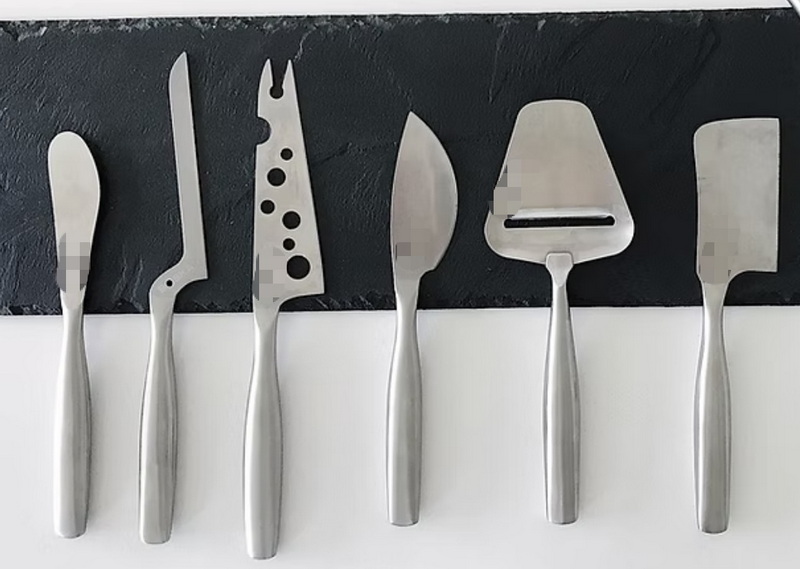
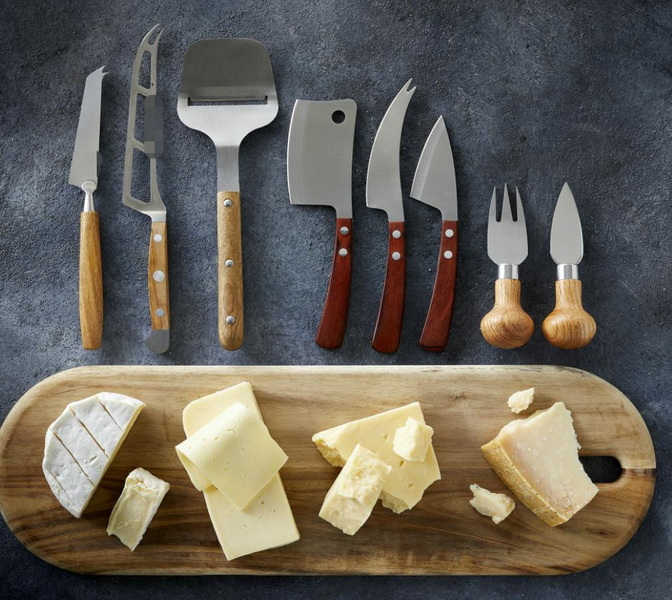
Cheese knives vary widely in design based on cheese types and cutting needs:
- Soft Cheese Knives: These knives often have thin, narrow, or perforated blades to minimize the cheese sticking to the blade. They work well with creamy cheeses such as Brie, Camembert, and mozzarella.
- Hard Cheese Knives: Robust with sharp edges and sturdy blades, suitable for cutting hard cheeses like Parmesan and aged cheddar without crumbling.
- Wire Cheese Cutters: Employ a strong stainless steel wire tightened on a frame to slice cheese cleanly without crushing it, especially useful for semi-soft cheeses.
- Forked Tip Knives: Feature a pointed twin-pronged tip to lift and serve cheese slices hygienically.
- Spreaders: Small blunt knives used to spread soft cheeses on crackers or bread.
Each knife serves a unique purpose, and having the correct type reduces the force and awkward motions that can cause slips or cuts. Multi-functional all-purpose cheese knives are also available for general cheese handling.
Safety begins with confident and proper handling techniques:
- Use a pinch grip: Pinch the blade just above the handle with your thumb and forefinger; this grip offers precise control and reduces blade wobble.
- Curl your remaining fingers around the handle securely to maintain grip stability.
- Keep fingers and thumbs clear of the cutting edge at all times.
- Always cut with the blade angled away from your body to protect yourself in case of slippage.
- Use a heavy, stable cutting board made of wood; avoid smooth glass, marble, or ceramic surfaces that can cause the blade to slip.
- Stabilize the cutting board with a damp cloth or rubber mat to prevent movement.
- Cut cheese starting at one edge and proceed with smooth, deliberate strokes rather than forceful hacks.
- Do not use excessive pressure; let the knife sharpness do the work.
Proper cutting surfaces and slow, mindful cuts greatly reduce risks of accidents.
Maintaining your cheese knives affects both safety and knife quality:
- Always hand wash knives immediately after use with warm water and a mild detergent; avoid dishwashers since high heat and chemicals can dull blades and damage handles.
- Use a soft sponge or cloth to gently clean cheese residue, paying special attention to crevices or holes.
- Dry knives thoroughly with a soft towel to prevent rust or corrosion.
- Regularly check knives for damage such as loose handles or bent blades and do not use damaged knives.
- Sharpen cheese knives periodically; a sharp knife reduces the force needed and minimizes slipping hazards. Whetstones, honing rods, or professional services ensure proper sharpening.
- Store knives separately or with blade guards to protect edges and prevent accidental contact with fingers or other utensils.
- Avoid storing cheese knives loosely in drawers, which can dull blades and cause injuries.
- Use magnetic strips to display knives safely, keeping blades covered.
- Consider knife blocks designed for cheese knives or individual sheath protectors.
- Keep knives in a dry, temperature-stable environment away from direct sunlight or moisture.
- Regularly inspect and clean storage systems to maintain hygiene.
Appropriate storage extends knife lifespan and protects users.
Adapting cutting methods to cheese type ensures neat slices and user safety:
- Soft Cheeses: Use knives with holes or wires to reduce sticking; slice gently to preserve creamy texture.
- Semi-Hard Cheeses: Apply steady pressure using a sharp knife; cut lengthwise for consistent slice size and shape.
- Hard Cheeses: Employ strong knives or cheese hammers to segment crumbly blocks safely; avoid twisting motions.
- Blue Cheeses: Use short, perforated blades to cut without crushing the cheese.
- Spreadable Cheeses: Use blunt spreaders to avoid cutting hazards.
Using the appropriate knife and technique improves cut quality and safety.
- Do not multitask while using knives; stay focused.
- Keep knives out of children's reach.
- Avoid distractions—never cut cheese while talking or walking.
- Clean and dry knives immediately after use to maintain hygiene.
- Hold the cheese firmly to prevent slips.
- Wear cut-resistant gloves if you are inexperienced.
Cheese knives, when used and cared for properly, are safe and effective tools for cheese lovers worldwide. Mastering safe handling, cutting methods, cleaning, and storage practices ensures an enjoyable, accident-free cheese experience. Respecting the sharpness of your cheese knife, using the right knife for each cheese type, and maintaining your knives regularly will help you serve cheese with elegance and safety.
A1: Regular knives lack design features for efficient cheese cutting and increase risk of slips and sticking. Cheese knives are safer and more effective.
A2: Sharpen when the blade dulls or requires extra force, typically every few months based on usage.
A3: No, dishwashers dull blades and damage handles. Hand washing is recommended.
A4: Wooden cutting boards provide grip and protect blades, reducing injury risks.
A5: Use magnetic strips, knife blocks, or blade guards to prevent blade damage and accidental cuts.


