- All
- Product Name
- Product Keyword
- Product Model
- Product Summary
- Product Description
- Multi Field Search

Views: 222 Author: Ann Publish Time: 2025-11-25 Origin: Site


Content Menu
● Overview of Household Knife Sets
● Characteristics of Professional Chef Knives
● In-Depth Comparison of Household Knife Sets and Professional Chef Knives
● Essential Knives in Each Category
>> Household Knife Set Essentials
>> Professional Chef Knife Set Essentials
● Maintenance and Care Differences
● Practical Usage and Value Considerations
>> What knives are included in a typical household knife set?
>> Can household knives meet professional kitchen needs?
>> How often should professional chef knives be sharpened?
>> Are professional knives worth the investment for home cooks?
>> How should I care for my household knife set?
Choosing the right kitchen knives is essential for any cook, whether a home enthusiast or a professional chef. The distinction between a household knife set and professional chef knives goes beyond mere appearance—it impacts cooking efficiency, safety, and food preparation quality. This comprehensive guide explores their differences, helping you decide which suits your kitchen needs best.
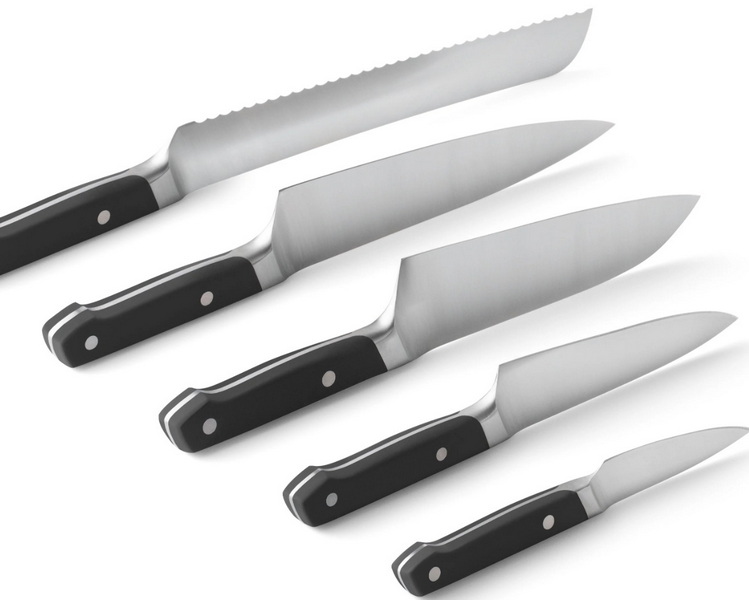
Household knife sets are designed for everyday cooking use at home. These sets typically include basic knives to cover common kitchen tasks: a chef's knife, paring knife, bread knife, and sometimes a utility or carving knife. They focus on versatility, ease of use, affordability, and low maintenance to accommodate casual cooks.
Household knives usually feature stainless steel blades, providing rust resistance and straightforward upkeep. The blades have edge angles between 15 and 20 degrees, balancing sharpness with durability. Handles prioritize comfort and safety, crafted from materials like plastic, composite, or wood. These knives suit users preparing meals several times a week, offering lightweight and user-friendly tools.
Advantages of household knife sets include affordability, multifunctionality, manageable maintenance needs, and suitability for beginner and intermediate cooks. These sets enable efficient food preparation without heavy investment.
Professional chef knives are purpose-built tools for culinary experts requiring precision, durability, and specialized performance. Constructed with high-carbon stainless steel or premium Japanese steels such as VG10 or AUS-10V, they offer exceptional edge retention and cutting precision. Their blade bevels are typically between 8 to 15 degrees, resulting in sharper edges that demand attentive maintenance.
Ergonomics and balance are crucial in professional knives, designed to reduce fatigue during extended chopping sessions. Handles use durable, moisture-resistant materials like G10 resin or stabilized wood, often ergonomically contoured. Professional sets are more extensive, including knives like the Gyuto (Japanese chef's knife), Santoku, Nakiri vegetable knife, boning knife, fillet knife, cleaver, and more—allowing chefs to choose the most effective tool per ingredient or technique.
Key benefits are superior cutting precision, durability for high-volume use, ergonomic comfort, and the ability to specialize tasks with various knife types.
| Aspect | Household Knife Set | Professional Chef Knife |
|---|---|---|
| Target user | Home cooks; casual to intermediate users | Culinary professionals and enthusiasts |
| Material | Stainless steel; focus on low maintenance | High-carbon or specialty steel; focused on sharpness and durability |
| Edge angle | 15-20 degrees | 8-15 degrees |
| Variety | Basic set (3-6 knives) | Comprehensive range (6-12+ knives) |
| Handle material | Plastic, composite, wood | G10 resin, stabilized wood, or high-grade composites |
| Weight & Balance | Lightweight; general balance | Heavier; ergonomically balanced for control |
| Maintenance | Low care; dishwasher safe | Frequent honing and sharpening required |
| Price | Affordable | Higher price reflecting materials and craftsmanship |
- Chef's knife: Multipurpose for chopping, slicing, dicing.
- Paring knife: Small tasks like peeling and trimming.
- Bread knife: Serrated blade for slicing bread and cakes.
- Utility knife (optional): For miscellaneous cutting tasks.
- Gyuto (Japanese all-purpose chef knife): Versatile for meat and vegetable prep.
- Santoku: Designed for fast vegetable prep with precision.
- Nakiri: Straight blade for thin vegetable slices.
- Boning knife: Separates meat cleanly from bones.
- Fillet knife: Specialized for delicate fish slicing.
- Cleaver/butcher knife: For breaking down large cuts and tougher tasks.
- Yanagiba: Single-bevel knife used in precise sushi/sashimi work.
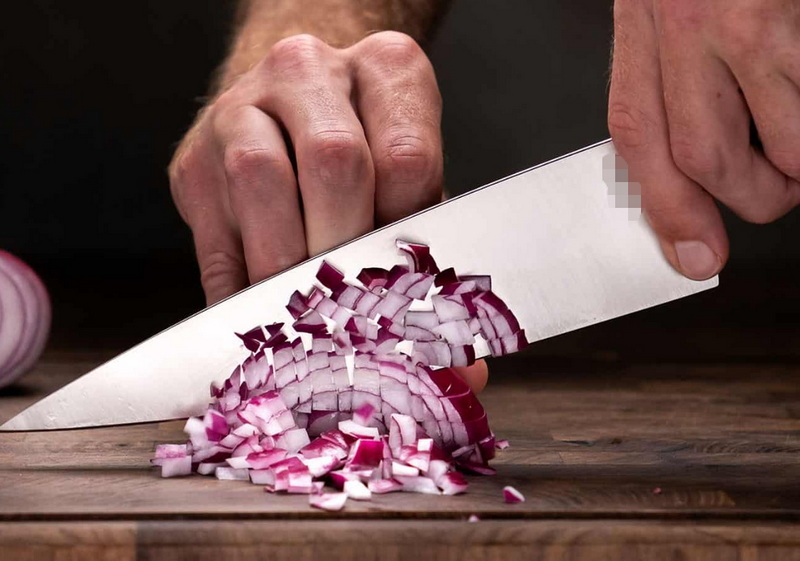
Professional knives provide well-balanced weight distribution and ergonomically designed handles that minimize wrist and hand fatigue during continual use. Household knives focus on being lightweight and comfortable for casual users but may lack fine-tuned balance and grip design needed for prolonged chopping.
Professional blades have thinner, sharper edges that allow precise cuts and efficient prep but need more maintenance and careful handling, while household blades maintain durability with less demanding care.
Household knives require less upkeep. They tolerate dishwasher use, though hand washing is preferred to conserve sharpness. Light honing and occasional sharpening maintain performance for occasional and daily home use.
Professional knives must be honed frequently to maintain the sharper edge angles and regularly sharpened on whetstones or professional sharpening systems. They require hand washing and must be stored carefully—knife rolls or magnetic strips prevent damage and maintain blade integrity.
For everyday family cooking, household knife sets offer great value with sufficient variety and ease of care. They fulfill general kitchen needs without overwhelming the user or budget.
For chefs or cooking aficionados who prepare food extensively, professional knives deliver increased speed, precision, comfort, and durability. These features justify the higher initial and maintenance investment by enhancing kitchen performance and food presentation.
Some cooking enthusiasts prefer combining both: using a household set for routine meals and keeping specialty professional knives for detailed prep or entertaining.
In sum, household knife sets and professional chef knives cater to distinct user groups with diverse requirements. Household sets focus on versatility, durability, and accessibility for home cooking, while professional knives excel in specialization, precision, and ergonomics for intensive culinary performance. Aligning your knife choice with your cooking habits, skills, and maintenance willingness ensures a rewarding kitchen experience. Both types of knives play vital roles in their respective environments, empowering you to prepare food confidently and efficiently.
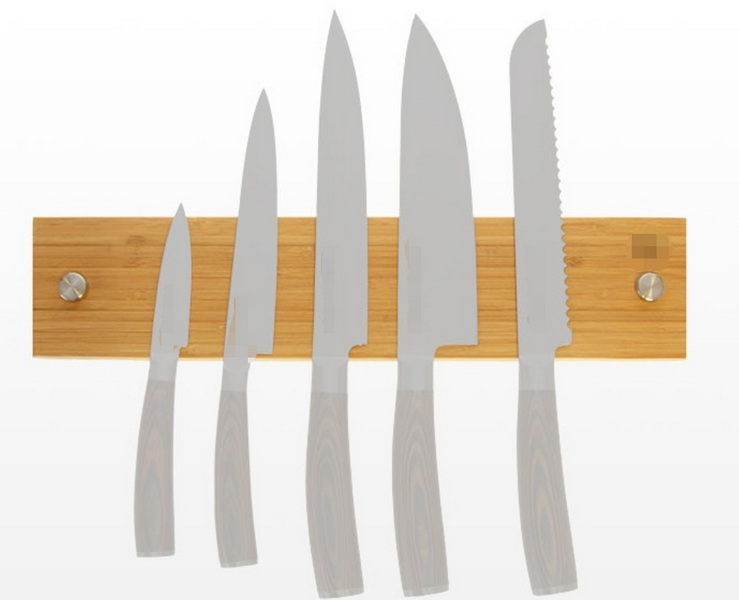
A household set usually includes a chef's knife, paring knife, bread knife, and sometimes a utility knife.
Household knives may suffice for light duties but lack the durability, precision, and ergonomic design required in professional kitchens.
Professional knives need frequent honing and occasional sharpening depending on usage, often weekly or biweekly in busy kitchens.
For serious home chefs who cook often and seek precision, investing in professional knives can improve cooking experience and results.
Hand washing, drying immediately, regular honing, and storing safely prolongs the life and sharpness of household knives.


