- All
- Product Name
- Product Keyword
- Product Model
- Product Summary
- Product Description
- Multi Field Search

Views: 222 Author: Ann Publish Time: 2025-11-21 Origin: Site


Content Menu
● Key Cheese Knife Types and Shapes
>> Pronged Knife (Fork-Tipped Knife)
>> Hard Cheese Knife (Spade/Chisel/Parm Knife)
>> Cheese Plane
● Specialty Cheese Knives: Chisel, Slim-Blade, and Plane/Flat Knives
● Why Shape and Edge Matter: Tactile Science
● Materials and Handle Ergonomics
● Cheese Knife Sets: Bundles for Brand Value
● How to Care for Cheese Knives
● Styling and Presenting Cheese with the Right Knife
● Customization and OEM Opportunities in Cheese Knives
● The Evolution of Cheese Knives: From Utility to Artisan Tool
● Sustainable and Innovative Cheese Knife Trends
>> 1. Why do some Cheese Knives have holes in the blade?
>> 2. Can a single Cheese Knife handle all cheese types?
>> 3. What material is best for Cheese Knives?
>> 4. How do I maintain my Cheese Knives?
>> 5. Can Cheese Knives be customized for brands or giveaways?
Cheese is celebrated worldwide and comes in endless variety—from dense Parmigiano-Reggiano to ultra-creamy Brie. Yet few home cooks or even professionals realize how crucial the right Cheese Knife is for both performance and presentation. The right blade shape preserves visual appeal, achieves precise cuts, and turns cheese serving into an art.

Every cheese reacts differently to being cut. While hard cheese needs strength and leverage, soft cheese calls for delicacy so it doesn't stick, collapse, or lose its shape. That's why Cheese Knife designers and manufacturers—particularly those serving OEM markets—invest in diverse blade shapes and materials tailored to these challenges.
Let's explore the most commonly used Cheese Knives and how each shape fits the needs of different cheese types and occasions.
- Features: Thin, narrow blade with perforations (holes), sometimes forked tip.
- Function: Prevents soft, sticky cheeses like Brie, Camembert, and triple-creme goat cheese from sticking to the blade.
- Tip: The forked end allows easy serving of slices without using hands.
- Features: Wide, blunt blade—sometimes rounded or heart-shaped.
- Function: Perfect for spreading soft, moist cheeses like ricotta, cream cheese, or chèvre.
- Tip: Allows smooth, even spreading over crackers and bread.
- Features: Slim, sharp blade ending in two prongs.
- Function: Cuts through semi-soft cheeses and serves them; prongs can pick up slices or crumble blue and feta cheese.
- Best For: Muenster, Morbier, blue cheese, mozzarella.
- Features: Short, strong, pointed or wedge-like blade; often called a spade, chisel, heart, or almond knife.
- Function: Designed for breaking into very hard, aged cheese; splits or “chips” Parmigiano-Reggiano, Pecorino, and Grana Padano.
- Tip: The pointed end is perfect for piercing firm rinds or breaking cheese into shards.
- Features: Resembles a mini meat cleaver; broad, hefty, rectangular blade.
- Function: Applies substantial pressure for slicing sizable blocks of hard or semi-hard cheese (Cheddar, Gouda, Edam).
- Tip: The weight and width allow for controlled, even slices or cubes.
- Features: Flat blade with a slot near the edge—shaves cheese into paper-thin slices.
- Function: Makes decorative slices for sandwiches, platters, or garnishing; best for semi-hard and semi-soft cheeses (Swiss, Havarti, Gouda).
- Tip: Consistent thickness enhances flavor release and presentation.
- Features: Taut wire stretched over a handle or attached to a cutting board.
- Function: Perfect for crumbly or moist cheeses that might crush under a blade (blue cheese, feta, soft goat cheese).
- Tip: Wire cuts with minimal pressure, preserving the original texture.
- Features: Long straight blade with a handle at each end.
- Function: Used for large wheels or blocks; maximizes even, controlled pressure—ideal for delis and industrial uses (Cheddar wheels, Edam).
- Tip: Both hands leverage the knife, facilitating uniform cuts across big cheeses.
- Chisel Knife: Similar to the hard cheese knife but also utilized for spreading or chunking semi-soft cheese.
- Slim-Blade Knife: Ultra-thin, offset handle—best for delicate, sticky cheeses to minimize sticking and keep hands clear.
- Plane (Flat) Knife: Sharp on sides and tip, this multi-use style is good for semi-firm cheeses like cheddar or pepper jack.
Blade shape isn't just about visual appeal—it determines:
- Friction: Holes and slim profiles reduce drag, especially in sticky cheeses.
- Cutting force: Wide or thick blades provide leverage, especially for hard cheeses.
- Precision: Sharpness and profile control how thinly a cheese can be sliced without deforming.
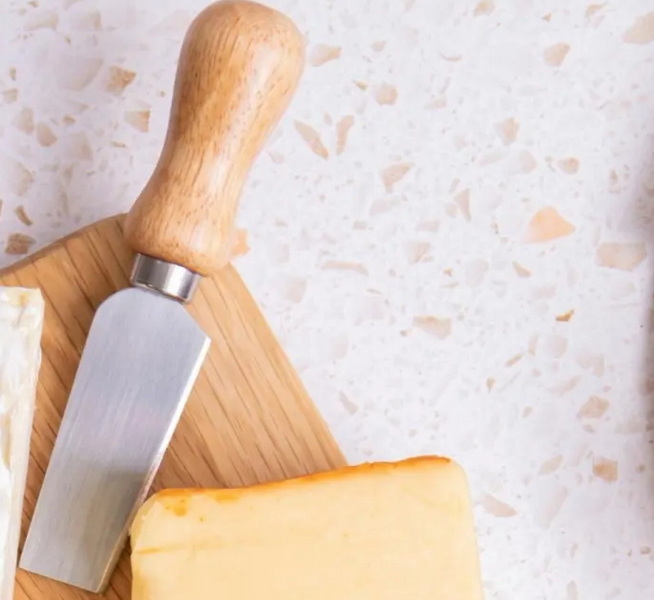
A world-class Cheese Knife goes beyond the blade—it needs a handle that is secure, balanced, and comfortable:
- Stainless Steel: Preferred for corrosion resistance and lasting sharpness.
- Wood/ABS/Resin: Offer warmth and grip; easy to customize for OEM branding.
- Anti-stick coatings and unique patterns: Especially beneficial for soft cheese knives.
Cheese knives are often sold in sets—combining pronged, plane, cleaver, and spreader styles in one package for versatility and appeal. OEM manufacturers can tailor sets for specific markets, adding custom engraving, luxury packaging, or even custom blade finishes (like Damascus patterns) to boost brand perception.
- Hand Wash Preferred: Prevents dulling and corrosion.
- Dry Immediately: Cheeses can be acidic, so prompt drying avoids tarnish.
- Store with Guards: Use blade covers or blocks—especially when knives have ultra-sharp points or fine wires.
- Sharpen Regularly: Some knives (spades, planes) benefit from periodic sharpening on a honing stone or by professionals.
A clean, sharp cut highlights the interplay of a cheese's rind, body, and texture. Proper knives maximize aesthetic appeal on platters—boosting the perceived value and “Instagram-worthiness” of a cheese board. Restaurants, caterers, and retailers all know that superior cuts mean more satisfied customers and better reviews.
For wholesalers and brands, Cheese Knife customization is a critical differentiator:
- Private label engraving (logo, slogans, patterns)
- Custom packaging (gift boxes, magnetic closures)
- Special edge grinds, blade coatings, or handle materials
- Matching sets tailored for dairy companies, delis, and food gifting
Centuries ago, rudimentary knives sufficed for cheese. Today's gourmet culture has elevated cheese to art, and professional-grade Cheese Knives are celebrated for their blend of engineering and elegance. Customers expect quality, brands expect reliability, and OEM partners are crucial for both.
Eco-friendly materials, modular handles, and recycled steel are gaining traction with eco-conscious buyers. Some high-end Cheese Knives now feature anti-microbial coatings, ergonomic silicone handles, or even heated blades for ultra-smooth slicing. Forward-thinking manufacturers can use these innovations as strong selling points.
Cheese Knives are far more than kitchen tools—they are the bridge between cheese craftsmanship and culinary enjoyment. The right blade shape achieves clean cuts, preserves texture, and elevates visual presentation. For brands and OEM suppliers, variety in design, material, and customization unlocks new market opportunities and customer loyalty. Whether for home, restaurant, or industrial use, investing in quality Cheese Knives pays off in every smooth, perfect slice.
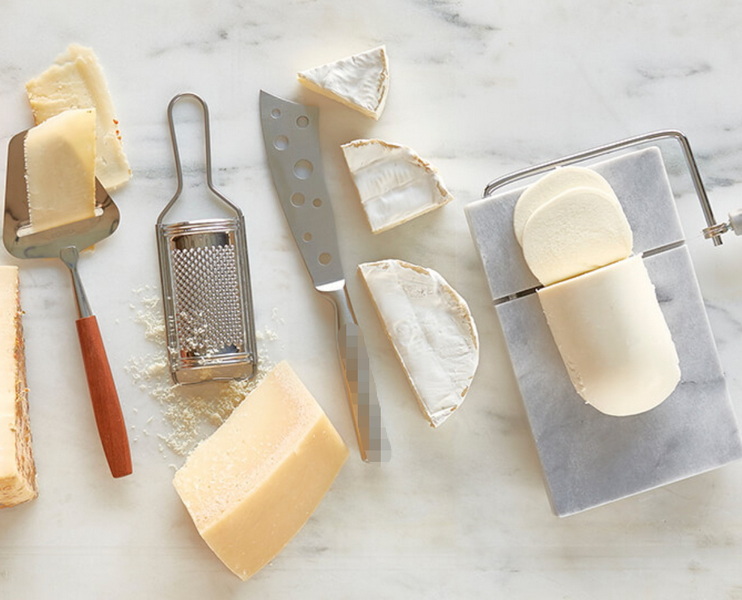
Holes minimize sticking when cutting soft and creamy cheeses by reducing the contact area between cheese and blade.
One knife can be used, but performance suffers. Hard cheeses may damage thin blades, and soft cheeses can stick to non-perforated knives. Specialized shapes optimize results.
High-carbon stainless steel is durable and rust-resistant, while some cheese knives use wire, ceramic, or non-stick coatings for specific cheese types.
Handwash, dry immediately, store separately or sheathed, and sharpen occasionally to preserve both safety and edge quality.
Absolutely! OEM manufacturers offer bespoke engraving, handle finishes, multi-piece sets, and premium packaging.


