- All
- Product Name
- Product Keyword
- Product Model
- Product Summary
- Product Description
- Multi Field Search

Views: 222 Author: Ann Publish Time: 2025-11-19 Origin: Site


Content Menu
● Why You Need the Right Cheese Knife
● Types of Cheese Knives and Their Uses
● Blade Materials: What Makes the Best Cheese Knife
● Handles: Comfort and Control Matter
● How to Choose Based on Cheese Type
● Maintenance Tips for Your Cheese Knife
>> Cleaning
>> Sharpening
>> Storage
● Choosing the Best Cheese Knife for Your Kitchen
>> 1. Why do some cheese knives have holes?
>> 2. Can I use one cheese knife for all types of cheese?
>> 3. How should I clean my Cheese Knife?
>> 4. What's the best material for a Cheese Knife?
>> 5. Are Cheese Knife sets suitable for OEM production?
A well-crafted Cheese Knife elevates every cheese-tasting moment, whether you're entertaining guests or preparing a light snack. With the variety of cheese textures and types—soft, semi-soft, hard, or aged—using the right Cheese Knife is essential for precision, hygiene, and presentation.

Choosing the right Cheese Knife isn't just about looks—it's about ensuring clean, professional cuts and a stress-free experience.
- Maintains cheese texture and form.
- Prevents soft cheese from sticking to the blade.
- Enhances the serving presentation.
- Extends the knife's lifespan through proper usage.
- Complements your kitchen tool collection aesthetically.
Different cheeses require specific knives. Let's explore the main types used in modern households and professional kitchens.
Knife has holes along the blade to minimize surface contact, preventing sticky cheeses like brie, camembert, or gorgonzola from adhering. The narrow, tapered blade encourages clean slicing without distortion.
Best for: Brie, Camembert, Blue Cheese, Goat Cheese
Blade tip: Often has two prongs to lift cheese slices easily.
A Hard Cheese Knife is made with a strong, thick blade for applying downward pressure on aged and firm cheeses like Parmesan or Pecorino. The reinforced design ensures safe handling and even slicing.
Best for: Parmesan, Romano, Aged Cheddar
Blade shape: Often short and wide to provide maximum leverage.
Known for its short, pointed blade, this Cheese Knife is ideal for breaking crumbly or crystalized cheeses into bite-sized chunks rather than clean slices.
Best for: Parmesan, Grana Padano
Blade tip: Wide base with a spade-like point for control.
A mini version of a meat cleaver, the Cheese Cleaver cuts firm blocks easily. Its rectangular shape combines power and precision, perfect for semi-hard cheeses.
Best for: Gouda, Cheddar, Swiss Cheese
Handle design: Ergonomic to balance force and stability.
For ultra-soft cheeses, a wire-style Cheese Knife delivers unparalleled smoothness. It slices without tearing, ideal for goat cheese or mozzarella.
Best for: Fresh Mozzarella, Goat Cheese, Soft Brie
Design: Stainless steel frame with taut cutting wire.
Often seen in Scandinavian kitchens, a Cheese Knife Plane shaves thin cheese slices directly from the block. A must-have for breakfast or sandwiches.
Best for: Semi-hard Cheese, Edam, Havarti
Design: Flat blade with a slot that lifts each slice cleanly.
Selecting the right Cheese Knife material affects not only longevity but also the cutting experience. Let's examine common blade materials.
The most common and practical option, stainless steel offers excellent corrosion resistance and razor-sharp durability. Ideal for both professional chefs and home users.
Pros: Rust-resistant, easy to clean.
Cons: Heavier than other materials if solid blade.
Carbon-steel Cheese Knives hold an ultra-sharp edge, perfect for slicing firm or aged cheese precisely. However, they require regular maintenance to prevent discoloration.
Pros: Superior edge retention.
Cons: Need oiling to prevent rust.
Lightweight and stylish, ceramic Cheese Knives glide smoothly through softer cheeses but can be brittle if dropped.
Pros: Doesn't react with cheese acids or oils.
Cons: Not ideal for hard cheeses.
A luxury choice blending performance and elegance. Damascus steel Cheese Knives feature layered patterns, combining aesthetic appeal with long-lasting sharpness.
Pros: Strong, corrosion-resistant, visually distinctive.
Cons: Expensive and mainly for enthusiasts or premium collections.
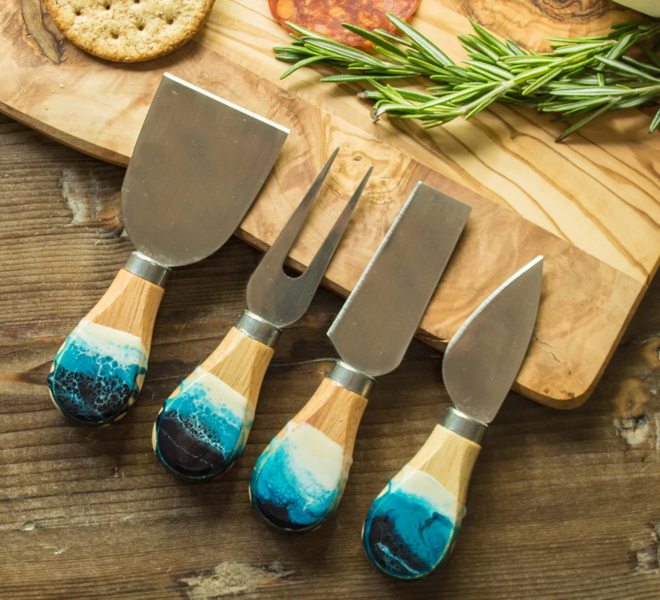
A perfect Cheese Knife isn't only about the blade—the handle plays an equally vital role.
- Wood Handle: Warm, traditional appearance, often used in rustic cheese sets.
- Stainless Steel Handle: Sleek, modern, and durable with hygienic benefits.
- Resin or Plastic Handle: Lightweight, cost-effective, and easy to maintain.
An ergonomic handle aligns your wrist naturally, reducing fatigue during long use. When choosing OEM or custom Cheese Knives, handle balance is a major selling point for premium kitchenware markets.
| Cheese Type | Recommended Knife | Key Feature |
|---|---|---|
| Brie, Camembert | Soft Cheese Knife | Blade holes reduce sticking |
| Gouda, Edam | Cheese Cleaver | Thick rectangular blade |
| Parmesan, Grana Padano | Spade Knife | Pointed tip for cracking |
| Swiss, Provolone | Cheese Plane | Creates thin slices |
| Mozzarella, Goat Cheese | Wire Knife | Smooth, tear-free cuts |
Keeping your Cheese Knife in top form ensures long-term performance and food safety.
- Always hand-wash with warm water and mild detergent.
- Avoid dishwashers to prevent handle or edge damage.
- Wipe dry immediately after washing to prevent oxidation.
- Sharpen only hard-blade models (stainless or carbon steel) using a fine whetstone.
- Avoid sharpening perforated or wire-style blades—they're designed for soft cheeses.
Use a knife block, magnetic strip, or protective sheath to maintain edge quality and avoid moisture exposure.
High-quality Cheese Knife Sets are excellent for gifting, catering, and professional cheese boards. They can include:
- 4-piece Set: Soft knife, hard knife, cleaver, and spade.
- 6-piece Set: Adds a plane and fork-tipped spreader.
- Premium Set: Includes decorative cheese board and stainless steel accessories.
OEM customization options include engraved logos, specialized handle colors, and high-end packaging for brand differentiation.
Your ideal Cheese Knife depends on how often you serve cheese and what kinds you favor:
- Frequent entertainers should invest in a full set.
- Casual users can start with a dual-pronged soft/hard combo knife.
- Kitchen design enthusiasts can opt for stainless steel or Damascus options for visual appeal.
OEM consumers and distributors should consider matching sets to expand brand collections.
A Cheese Knife is more than a slicing tool—it's a companion for culinary enjoyment, precision, and kitchen artistry. The perfect knife ensures that each cheese retains its unique character while upgrading your presentation and dining experience.
When choosing the best Cheese Knife, consider blade material, handle comfort, and cheese texture compatibility. Whether for home use, hospitality, or OEM export, quality craftsmanship will always make the difference.
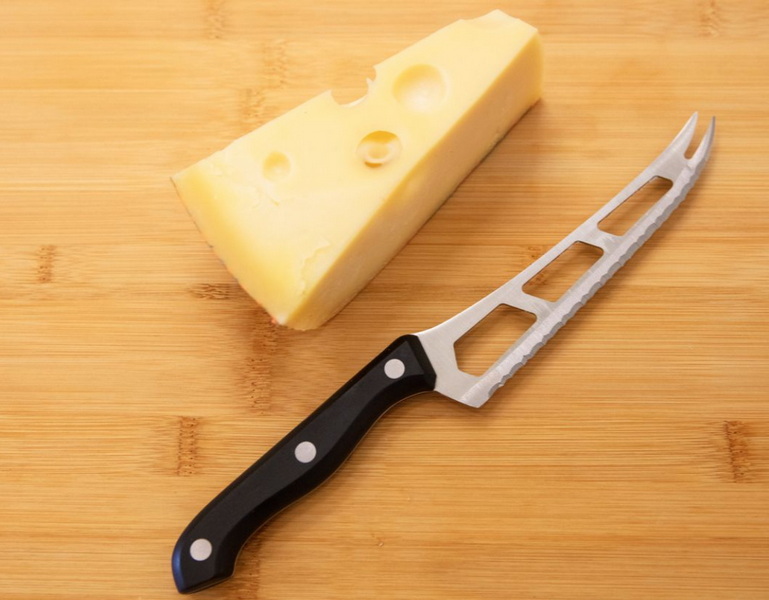
The holes reduce surface area, preventing soft cheese from sticking to the blade.
While possible, dedicated knives preserve each cheese's texture and flavor better.
Always hand-wash with mild soap, rinse thoroughly, and dry immediately.
Stainless or high-carbon steel offers the ideal balance between durability and sharpness.
Yes—custom logo engraving, packaging, and handle design are popular OEM features for international markets.


