- All
- Product Name
- Product Keyword
- Product Model
- Product Summary
- Product Description
- Multi Field Search

Views: 222 Author: Ann Publish Time: 2025-11-16 Origin: Site


Content Menu
● Understanding the Core Tools and Their Varieties
>> Guarded and Detachable Designs
● Selecting the Right Pizza Cutter for Your Market
● How to Use a Pizza Cutter Without Damaging Your Pizza
● Cleaning, Care, and Longevity in International Markets
● OEM Customization, Education, and Market Positioning
● FQA
>> FAQ 1
>> FAQ 2
>> FAQ 3
>> FAQ 4
>> FAQ 5
Pizza Cutter is more than a kitchen gadget; it is a precision tool that determines how cleanly a pizza is portioned, how toppings stay in place, and how appealing the final presentation looks to customers. For an OEM factory serving international brands, wholesalers, and manufacturers, communicating the right blade material, ergonomic design, cutting technique, and maintenance protocol can significantly strengthen value propositions in global markets. This article blends practical cutting techniques, material considerations, and maintenance best practices with OEM-ready messaging to help you position high-performance Pizza Cutters across cuisines and regions.
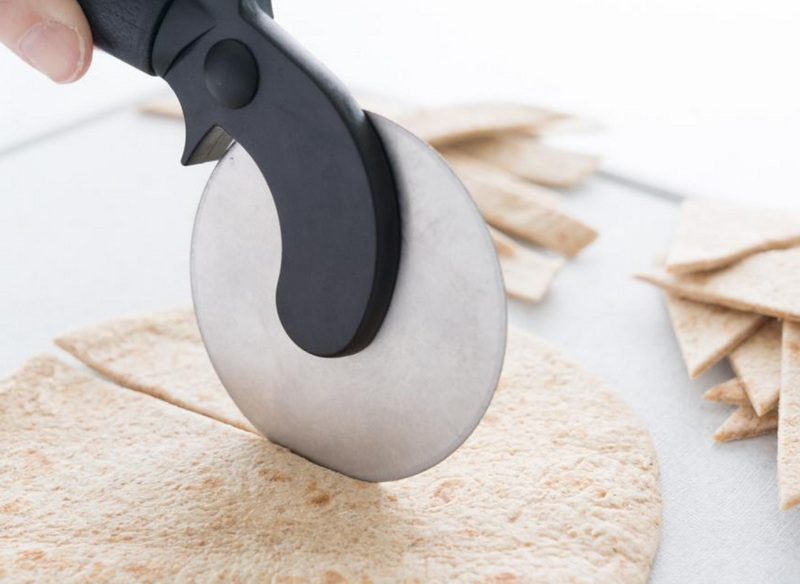
Pizza cutters come in several widely used formats. The most common are wheel cutters, rocker cutters, and guarded/detachable-blade designs. Each format has its own strengths, depending on crust type, toppings, and service speed—key considerations when pitching to international buyers who demand reliability and hygienic design.
Wheel cutters use a round blade that rolls across the crust, delivering straight, uniform slices. They are ideal for quick service and large-volume environments. Material choices influence hygiene, edge retention, and longevity: stainless steel blades resist rust and are often dishwasher-safe; high-carbon steels may retain sharper edges but require more care to prevent corrosion. For OEM narratives, emphasize edge life, corrosion resistance, ease of cleaning, and compatibility with standard sanitization processes.
Rocker-style cutters feature a curved blade that you rock across the pizza. They excel on thick crusts and pies with heavy toppings, distributing force over a larger surface area and potentially reducing crust tearing. Material and mounting quality matter here as well; a robust handle connection and a durable blade edge help stand up to repetitive use. In marketing content, highlight ergonomics, reduced wrist strain, and suitability for busy kitchens.
Some cutters include blade guards or allow blade detachment for safer handling and easier cleaning. In professional kitchens and multi-unit operations, detachable blades speed sanitation workflows and minimize cross-contamination risk. For OEM programs, offering modular blades, interchangeable handles, and rust-resistant fasteners can be strong differentiators in global markets with high hygiene standards.
- Blade material and edge retention: Stainless steel blades offer a balanced combination of corrosion resistance and maintainable sharpness. Carbon steel blades can offer superior edge life but require diligent drying and occasional sharpening to prevent rust. Ceramic blades stay sharp for a long time but are brittle and less suited for very thick crusts or frozen dough. In OEM literature, present clear lifecycle costs, maintenance expectations, and regional care guidelines to help buyers make informed choices.
- Blade geometry and diameter: Larger wheels cover more area per pass, benefiting fast-service operations; smaller wheels provide precision for personal pizzas or delicate toppings. Consider offering multiple diameter options or dual-cut configurations to satisfy diverse customer needs in different markets.
- Handle ergonomics and safety: Ergonomic, non-slip handles with finger guards improve control and safety during long service hours. Detachable or dishwasher-safe components reduce downtime and simplify sanitation, a critical selling point for restaurant chains and wholesalers.
- Cleaning and maintenance ease: Detachable blades and simple disassembly support rigorous hygiene practices across international facilities. Emphasize compatibility with standard detergents, rust-preventive coatings, and straightforward reassembly.
- Branding and packaging: International buyers look for clear care instructions, warranty terms, and branding that communicates durability. Multilingual manuals and QR codes linking to video guides can significantly boost comprehension and confidence.
- Prep the pie correctly: After baking, allow a brief rest to reduce steam. A pie that is too hot may smear toppings or deform crust; a slightly cooled slice holds structure for clean cuts.
- Choose the right cutter for the job: For thin to medium crusts, a sharp wheel cutter works well. For thick crusts or heavy toppings, a rocker cutter can distribute pressure more evenly and minimize tearing. For some specialty pizzas, a serrated edge or a hybrid tool might be appropriate.
- Position and grip: Grip the handle comfortably, keeping the blade perpendicular to the surface. Use a straight, continuous motion from edge to edge, rather than a back-and-forth or sawing motion, to prevent toppings from shifting.
- Apply even pressure: Strike a balance between sufficient force to penetrate the crust and avoid crushing toppings. Apply steady pressure along the full length of the blade to maintain uniform slice thickness.
- Cutting sequence for large pizzas: Start with a guide cut near the edge to establish a clean starting point, then create subsequent cuts at consistent angles to preserve slice uniformity. This practice reduces crust ripping and yields consistent portions.
- Edge care and blade maintenance: A dull blade increases cutting force and raises the risk of tearing. Regularly inspect edges and replace or sharpen as recommended by the OEM. Share maintenance schedules with distributors so their customers have clear expectations.
- Safety practices: Use blade guards during storage and transport, and store cutters in a dedicated block or sheath to avoid accidental contact. After cleaning, ensure the blade is thoroughly dry before reassembly to prevent rust initiation.
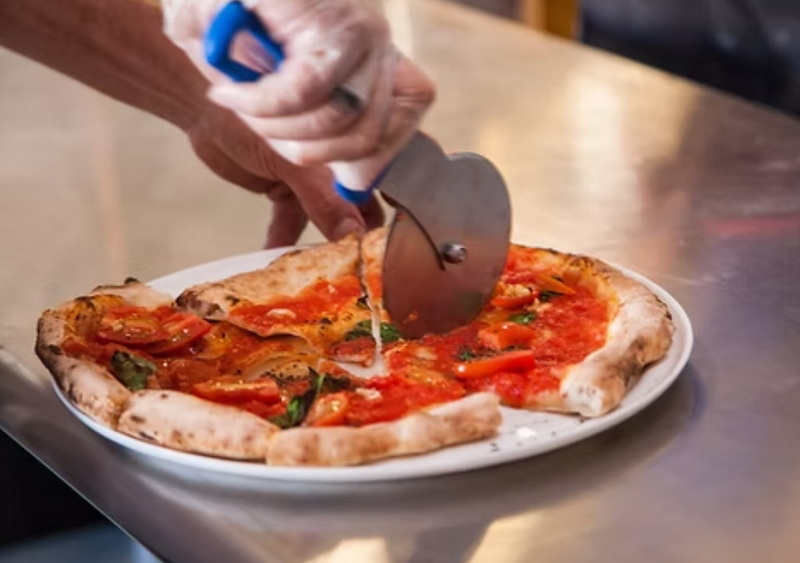
- Immediate post-use care: Rinse away residues with warm water, dry completely, and store in a dry environment. For detachable blades, follow manufacturer instructions to disassemble, clean, and reassemble.
- Dishwasher considerations: If dishwasher-safe, verify cycles, detergents, and whether guards should be removed. Some blades and handles are better protected by hand washing to preserve sharpness and coatings.
- Dry storage and humidity: Keep cutters away from humidity and corrosive environments. Use shielded storage or blade guards to prevent accidental contact with other tools.
- Routine maintenance: Check screws, mounting hardware, and hinge mechanisms (for rocker designs) regularly. Use food-grade lubricants only as directed by the OEM, ensuring no residue on the cutting edge.
- Material-specific guidance: Stainless steel blades resist rust and are user-friendly for international markets. Carbon steel blades require drying and periodic sharpening. Ceramic blades demand careful handling due to brittleness. Ensure your maintenance literature clearly communicates these differences to buyers.
- Compliance and documentation: Provide clear, multilingual care instructions, warranty terms, and safety notices that align with international food-contact standards. This helps distributors educate customers and reduces after-sales friction.
- Custom blade materials and geometries: Offer a spectrum of blade materials, wheel sizes, and handle styles to fit regional cooking styles and professional needs. Custom branding, colorways, and packaging can help products stand out in crowded markets.
- After-sales support: A robust warranty program, easy access to replacement parts, and detailed maintenance guides enhance the perceived value of OEM partnerships. Create training resources and quick-start guides for distributors and end-users.
- Education-rich marketing: Develop multimedia content—how-to videos, step-by-step photo guides, and interactive FAQs—that demonstrates real-world usage and maintenance. This supports SEO and strengthens confidence among international buyers.
- Proof points: Document improvements in efficiency, waste reduction, and customer satisfaction from OEM collaborations in various regions. Use these case studies to demonstrate tangible value to potential partners.
- Global distribution readiness: Provide translated product sheets, videos, and manuals, ensuring alignment with local compliance requirements, labeling laws, and safety standards.
A high-quality Pizza Cutter is a reliable partner for delivering consistent, clean slices across diverse crusts and toppings. For OEM programs, emphasizing blade material durability, ergonomic design, ease of maintenance, and safety features resonates with international brands, wholesalers, and manufacturers seeking scalable, dependable solutions. By pairing precise cutting techniques with robust maintenance guidance and media-rich content, the article not only informs readers but also demonstrates your factory's capability to deliver tailored, high-performance Pizza Cutters for global markets. A well-structured piece with a strong call to action will drive engagement, support distributor training, and foster lasting partnerships.
Q1: What is the best material for a pizza cutter blade for international markets?
A1: The most versatile choice is stainless steel for its balanced corrosion resistance, edge retention, and ease of cleaning, which aligns with diverse restaurant sanitization practices across regions. For buyers prioritizing extreme edge life, high-carbon stainless steels offer sharper initial edges with good corrosion resistance, while ceramic blades provide superb hardness but are more brittle and less forgiving with thick crusts or frozen dough. When communicating to international partners, highlight lifecycle cost, maintenance requirements, and compatibility with common detergents and sanitizers.
Q2: How can a pizza cutter help reduce toppings sliding off during cutting?
A2: Ensure the crust is properly baked and cooled to reduce steam, use a sharp blade to minimize tearing, and cut with a clean, straight motion rather than sawing. Maintaining even pressure along the full blade length helps toppings stay in place. For OEM messaging, emphasize blade sharpness, ergonomic grip, and appropriate wheel diameter as elements that support tidy slices across various crust types.
Q3: Can pizza cutters be used for doughs other than pizza?
A3: Yes, many wheel and rocker cutters work well for rolled pastry doughs, flatbreads, and certain delicate pastries, provided the blade geometry and hardness suit the dough's elasticity and thickness. For heavy doughs, a rocker cutter can offer better control and even pressure distribution. Recommend clear guidance in product literature about which blade types suit which doughs to aid OEM customers in market-specific applications.
Q4: How should a pizza cutter be cleaned and stored to maximize longevity?
A4: Rinse off residues promptly with warm water, dry completely, and disassemble detachable blades for thorough cleaning if the design allows. Avoid prolonged contact with moisture on non-immune components, and store in a dry area with blade guards or in a designated cutlery rack to prevent accidental contact. For OEM materials, provide multilingual maintenance sheets and easy-to-follow reassembly diagrams to support distributors globally.
Q5: What maintenance practices extend the life of a pizza cutter in busy commercial settings?
A5: Regular blade inspection and replacement sharpen or refresh as needed, ensure fasteners and hinges (for rocker or guarded designs) are secure, and keep moving parts lightly lubricated with food-grade lubricants per OEM guidelines. Emphasize in your product literature how maintenance intervals translate to lower total cost of ownership and higher uptime for restaurant chains and multi-unit operators.


