- All
- Product Name
- Product Keyword
- Product Model
- Product Summary
- Product Description
- Multi Field Search

Views: 222 Author: Ann Publish Time: 2025-11-20 Origin: Site


Content Menu
● Why Choosing the Right Cheese Knife Matters
● Essential Types of Cheese Knives
>> 7. Parmesan Knife (Spade Knife)
>> Cheese Fork
● Materials and Handle Designs
● Caring for Your Cheese Knife Set
● Cheese Knife Storage and Presentation
● The Cultural Role of Cheese Knives
● Frequently Asked Questions (FAQs)
>> 1. What distinguishes a Cheese Knife from a typical kitchen knife?
>> 2. How many types of Cheese Knives should a home set include?
>> 3. Are Cheese Knives sharpenable?
>> 4. Which blade materials are best for professional Cheese Knives?
>> 5. How should Cheese Knives be stored?
Cheese isn't merely food — it's a culture, an art, and an experience. Whether preparing a rustic charcuterie board or outfitting a professional kitchen, the right Cheese Knife profoundly elevates both function and presentation. Each cheese type, from creamy Brie to aged Parmigiano-Reggiano, demands a specifically designed knife. Understanding these tools not only enhances cutting precision but also preserves texture and flavor, turning cheese serving into an elegant ritual.

A Cheese Knife is a specialized blade crafted for cutting, slicing, shaving, or serving various cheeses with minimal sticking or crumbling. Unlike general kitchen knives, cheese knives adapt to the hardness and texture of cheese. Soft cheese knives have perforated or thin blades to avoid cheese sticking, while hard cheese knives are built sturdily for forceful cutting or breaking through tough rinds.
Cheeses vary tremendously in texture, moisture, and firmness. Using an unsuitable knife can crush, tear, or stick, spoiling the cheese's integrity and the dining experience. The right Cheese Knife:
- Slices cleanly without crushing or tearing.
- Preserves cheese texture and flavor profile.
- Prevents sticking, allowing neat presentation.
- Facilitates precise portioning for serving or sampling.
A well-rounded Cheese Knife collection features multiple specialized knives tailored to different cheese categories.
Best for: Brie, Camembert, goat cheese, and other soft, creamy varieties.
Design: Often has holes or perforations in the blade that reduce surface area touching the cheese, minimizing sticking. The blade is sharp but delicate, sometimes with a forked tip to serve pieces.
Best for: Parmigiano-Reggiano, Pecorino Romano, aged Gouda, and other firm cheeses.
Design: Heavier blade with a pointed tip or chisel edge to cut or chip hard rinds and crumbly interiors.
Best for: Semi-soft to firm cheeses such as Cheddar, Manchego, and Havarti.
Design: Narrow blade with a forked or pronged tip used for picking up sliced pieces to serve.
Best for: Firm and semi-hard cheeses like Asiago, Gruyère, and aged Cheddar.
Design: Mini cleaver with a broad, sturdy blade designed to chop or cube firm blocks.
Ideal for safely slicing thicker portions without crumbling.
Best for: Soft, spreadable cheeses such as cream cheese, ricotta, and chèvre.
Design: Rounded, blunt blade providing smooth spreading on breads or crackers.
Best for: Semi-hard cheeses like Swiss, Havarti, or Fontina.
Design: Flat blade with a slot to shave thin, even slices from blocks, perfect for sandwiches or platters.
Invented in Norway, the cheese plane helps produce beautiful, delicate slices.
Best for: Very hard cheeses like Parmesan or Pecorino.
Design: Short, pointed spade-shaped blade designed to break off bite-sized chunks, instead of slicing.
Its pointed tip pierces hard rinds and releases crystalline cheese granules.
Best for: Soft to semi-hard cheeses like fresh Mozzarella.
Function: A taut wire that slices without crushing, ideal for delicate textures.
Best for: Serving cubes or slices of firm or semi-firm cheeses.
Design: Two or three-pronged fork to plate cheese elegantly.
The choice of materials affects durability, hygiene, and appearance.
- Blade Materials: Stainless steel is common for rust resistance and sharpness. Damascus steel is prized for strength and decorative patterns. Ceramic offers a sharp edge and anti-stick surface for soft cheeses.
- Handle Options: Wood (classic and warm), resin (durable and colorful), metal (sleek and modern). Ergonomics and slip resistance are critical for safety and comfort.
- Finish: Mirror polish or matte textures suit different aesthetics and reduce glare or fingerprints.
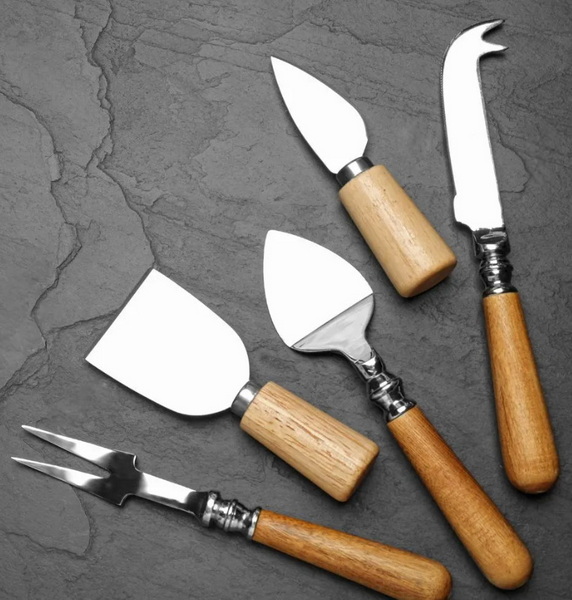
Proper maintenance ensures your knives stay sharp and sanitary:
1. Hand wash promptly with warm, soapy water—avoid dishwashers that can dull blades or damage handles.
2. Dry thoroughly after washing to prevent rust or staining.
3. Sharpen metal blades using a honing rod or whetstone as needed. Ceramic blades require professional sharpening or specific tools.
4. Store away from other knives in dedicated blocks, magnetic strips, or protective sheaths.
Stylish storage solutions complement the artistry of cheese serving:
- Wooden boards with integrated slots for knives.
- Magnetic rack displays for quick access and aesthetics.
- Acrylic or wooden gift boxes, popular for retail or OEM packaging.
- Portable knife rolls for catering and events.
In modern dining, cheese knives symbolize hospitality and refinement. Expertly crafted knife sets appeal to:
- Home entertainers wanting sophisticated tablescapes.
- Professional chefs and caterers enhancing presentation.
- Retailers offering customizable, high-end branded sets.
- Consumers looking for sustainable materials and ergonomic designs.
For global brands and wholesalers, OEM manufacturing offers customization to distinguish products:
- Laser or stamped brand logos on blades or handles.
- Custom handle materials and blade finishes.
- Variety of packaging: window boxes, magnetic cases, wooden gifts.
- Tailored sets combining knives most relevant to target markets.
A curated collection of Cheese Knives turns cheese serving into an art form. From perforated blades ideal for soft cheeses to heavy-duty cleavers for aging Parmesans, each knife enhances texture preservation and flavor delivery. Proper maintenance, presentation, and material choice boost both utility and elegance. Whether for home gourmets or professional kitchens, investing in quality Cheese Knives elevates culinary enjoyment and style.
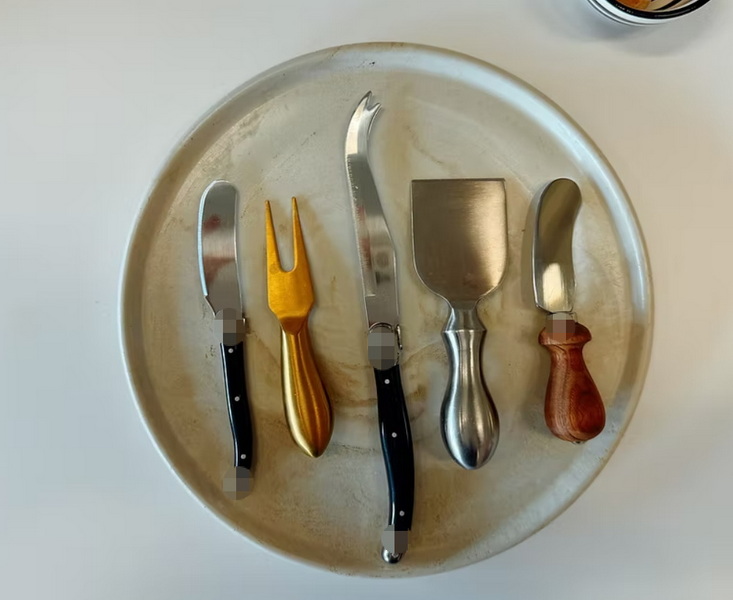
Cheese Knives feature special blade shapes and materials to minimize sticking, crushing, or crumbling, unlike conventional knives.
A balanced set usually contains at least four knives: soft cheese knife, hard cheese knife, spreader, and pronged knife.
Most stainless steel Cheese Knives can be sharpened with whetstones or honing rods; ceramic knives require special tools.
Stainless steel and Damascus steel offer excellent durability, corrosion resistance, and sharpness for chefs.
Use knife blocks, magnetic racks, or dedicated knife sheaths to protect edges and ensure safety.


