- All
- Product Name
- Product Keyword
- Product Model
- Product Summary
- Product Description
- Multi Field Search

Views: 222 Author: Ann Publish Time: 2025-11-09 Origin: Site


Content Menu
● Historical context and evolution
● Design fundamentals: blade geometry, serration style, and edge maintenance
● Designing for OEM and international markets
● Manufacturing considerations for bread knife OEM projects
● End-user education and content strategy
● Case study scenarios for OEM engagement
● Quality assurance and testing recommendations
● Maintenance and care guidance for consumers
● Consumer-facing messaging and branding considerations
● Global market insights and trends
● FAQs
>> 1) Why is a bread knife serrated while a chef's knife is not suitable for bread?
>> 2) What blade materials are best for a bread knife intended for OEM markets?
>> 3) How should consumers care for a serrated bread knife?
>> 4) What blade length suits most bread types?
>> 5) Can a bread knife be used for other tasks beyond bread?
A serrated bread knife is more than a single tool for slicing bread; it is a versatile instrument that enhances efficiency, preserves texture, and elevates the overall dining experience. In a well-curated knife set, the bread knife occupies a pivotal role alongside chef's knives, paring knives, and utility knives. For brands, wholesalers, and manufacturers operating in global markets, the serrated bread knife embodies a blend of tradition, engineering precision, and practical functionality. This article dives into the science, applications, and considerations around the serrated bread knife, with particular attention to bread knife design, materials, and OEM opportunities that Chinese factories can offer to foreign brands and distributors.

The bread knife has a storied past that intersects with advances in metallurgy, industrial design, and domestic cooking habits. Early toothed blades appeared in ancient times, but the modern serrated bread knife emerged in the late 19th and early 20th centuries as bakers and home cooks sought a way to cut crusty loaves without crushing the soft interior. In the United States and Europe, prominent knife makers and patent history contributed to standardized blade geometries, serration patterns, and handle ergonomics. Contemporary iterations of the bread knife retain the core principle—teeth or scallops that grip and saw through crust while sparing the crumb—while incorporating modern steel alloys, coatings, and ergonomic handles designed for extended use in professional kitchens and home settings. For OEM buyers, understanding this evolution helps in selecting blade profiles and production methods that align with international quality expectations and regulatory demands. Bread Knife as a keyword remains central to product pages, marketing materials, and instructional content because it directly communicates the knife's primary function while inviting broader usage scenarios.
The hallmark of a high-performing serrated bread knife lies in its blade geometry and serration design. Several interrelated factors determine cutting performance and user satisfaction:
- Blade length: Typical bread knives range from 8 to 10 inches (about 20 to 25 cm). A longer blade can handle larger loaves with fewer strokes, while a shorter blade offers precision on smaller items and easier control in tight spaces. For OEM programs, offering a range of lengths can accommodate regional bread sizes and consumer preferences.
- Serration pattern: Serrations can be scalloped (rounded), pointed, or a hybrid mix. Scalloped edges tend to slice softer breads with less tearing, while pointed serrations are more aggressive and effective on crusty, dense loaves. A combination serration often provides versatility across bread types and even extends to other foods such as tomatoes or melons.
- Tooth geometry and spacing: The size, shape, and spacing of teeth influence bite, cutting rate, and crumb preservation. Finer teeth engage more gently on delicate items; coarser teeth cut through tougher crusts with less resistance.
- Edge geometry: Serrated knives rely on a saw-like mechanism. The sharpened points and the space between them create micro-saws that grip the crust and then release, reducing deformation of the crumb.
- Handle ergonomics: A comfortable, non-slip handle reduces fatigue and improves control during long cutting sessions. Materials may range from high-grade plastics to wood or composite compounds, with coatings or texturing to enhance grip.
- Blade material and coating: High-carbon stainless steels offer a balance of hardness, corrosion resistance, and edge retention. Some OEM partners explore specialty alloys or coated blades to differentiate products in competitive markets.
A well-chosen serrated bread knife provides value beyond bread cutting:
- Delicate produce: Tomatoes and soft fruits often benefit from the gentle sawing action that minimizes crushing.
- Cakes and pastries: Layer cakes and other soft-baked goods can be sliced cleanly without m crushing.
- Barbecued or roasted crusts: Thick crusts on roasted vegetables or meats can be sliced without tearing.
- General kitchen utility: A serrated edge can perform tasks that require a careful balance of cutting action and teeth engagement, particularly when precision is preferred over brute force.
For Chinese factories supplying foreign brands and distributors, several strategic considerations help ensure successful OEM relationships:
- Customization options: Offer choices in blade length, serration type, blade thickness, tang design, and handle materials. Custom packaging, branding, and color schemes can significantly differentiate products in foreign markets.
- Quality control: Implement rigorous QC measures at each stage of production, including incoming materials inspection, in-process checks, and final functional tests. Documentation such as material certificates, hardness tests, and coating specifications can reassure international buyers.
- Regulatory compliance: Align with relevant food-contact standards and labeling requirements in target regions (e.g., safe use, care instructions, and warranty terms). Clear compliance documentation supports smooth market entry.
- Packaging and content: Market-ready content should emphasize the Bread Knife's dual role in home and professional kitchens, with high-quality product photography and instructional videos demonstrating proper technique and care.
- After-sales support: Provide care guides, sharpening recommendations, and replacement parts to maintain customer satisfaction across markets.
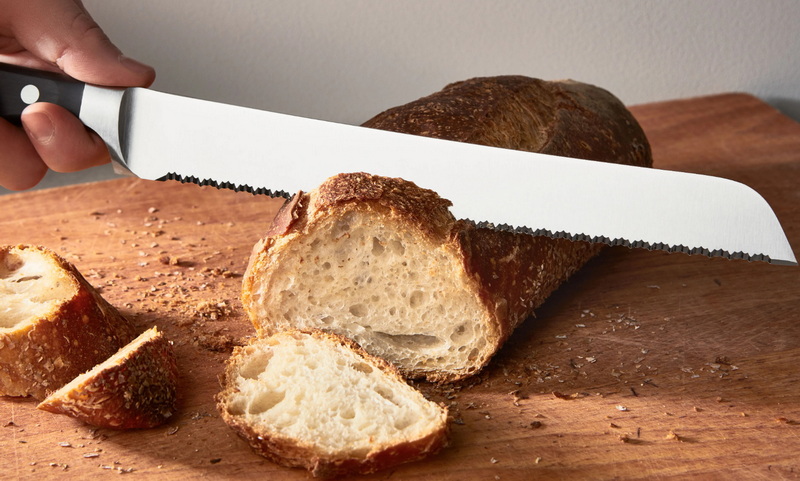
A successful OEM bread knife program depends on precise manufacturing choices:
- Steel selection: Choose alloys that balance hardness, edge retention, corrosion resistance, and ease of sharpening. Stainless or high-carbon stainless steels are common, with options for edge retention refinements or coatings.
- Serration tooling: Precision grinding tools are used to generate the serrated pattern. Consistency across batches ensures uniform performance.
- Heat treatment: Proper heat treatment enhances blade hardness and durability while preserving the blade's microstructure for longer life.
- Handle integration: Secure attachment methods (riveted, hidden tang, or screw-on handles) and ergonomic shaping enhance durability and user comfort.
- Surface finishing: Polishing, satin finishes, or matte coatings influence aesthetics and corrosion resistance, while ensuring safe food-contact surfaces.
Content is a critical bridge between OEM products and consumer adoption. For Bread Knife content, consider:
- Instructional videos: Short clips showing proper slicing technique, bread types, and care routines.
- Image libraries: High-resolution images illustrating bread knife actions on different bread varieties, tomatoes, and delicate baked goods.
- FAQs and care guides: Clear, actionable guidance on sharpening, cleaning, and storage.
- SEO alignment: Integrate Bread Knife with related terms such as serrated knife, bread slicing, crust, crumb preservation, and care tips to improve discoverability.
- Scenario A: A foreign brand seeks a standard 9-inch serrated bread knife with a scalloped edge and wooden handle. Requirements include a logo laser-etched on the blade, a specific packaging design, and a minimum order quantity suitable for an initial market launch.
- Scenario B: A distributor requests a premium bread knife with a hybrid serration pattern, reinforced full-tang handle, and a lifetime warranty. The program would require certification documentation and a marketing plan tailored to a high-end audience.
- Scenario C: An established cookware and kitchen tool brand wants to expand into tomato-and-bread knives using an alternative blade material with a distinct finish for visual branding. This project would involve testing for corrosion resistance, edge retention, and consumer feedback loops.
- Hardness testing: Verify the Rockwell hardness range appropriate for the chosen steel.
- Edge retention tests: Simulate real-world bread-cutting to gauge how long the edge lasts under typical usage.
- Food-contact safety: Confirm compliance with applicable food-contact standards and sanitizeability.
- Packaging integrity: Test packaging for protection during shipping to international destinations.
- Hand washing: To prolong blade life and corrosion resistance, wash by hand with mild soap and warm water, then dry thoroughly.
- Sharpening schedules: Serrated edges should be sharpened by professionals or with specialized tools designed for serrated blades; routine honing can help maintain edge alignment.
- Storage: Store in a dry drawer or on a magnetic strip away from moisture and heat sources to prevent rust and corrosion.
- Use cases and limits: Avoid using bread knives for bones or extremely hard foods that could chip teeth or dull the edge.
- Clarity of purpose: Highlight bread knife capabilities to cut crust without crushing the crumb.
- Versatility: Emphasize adaptability to tomatoes, citrus, and other items requiring careful slicing.
- Durability claims: Focus on corrosion resistance, edge retention, and ergonomic comfort.
- Education: Provide tutorials and tips on optimal bread cutting, cake slicing, and produce preparation to maximize user satisfaction.
Bread knives retain universal relevance across kitchens around the world, with demand tied to bakery culture, home cooking trends, and restaurant-quality equipment needs. In markets emphasizing premium materials and ergonomic design, customers increasingly seek knives with durable coatings, comfortable grips, and branding that communicates quality. For OEM suppliers, this signals opportunities to offer customization, co-branding, and value-added packaging options that resonate with buyers in diverse regions.
In a complete knife set, the serrated bread knife stands out as an indispensable tool. Its ability to slice crusty loaves cleanly while preserving crumb texture translates into superior food quality and user satisfaction. For Chinese factories serving foreign brands and distributors, an OEM program that blends precise blade geometry, reliable steel choices, ergonomic handles, and compelling branding can meet global market expectations. With careful attention to manufacturing quality, product documentation, and marketing content, bread knife offerings can become a cornerstone of international partnerships and long-term business success.
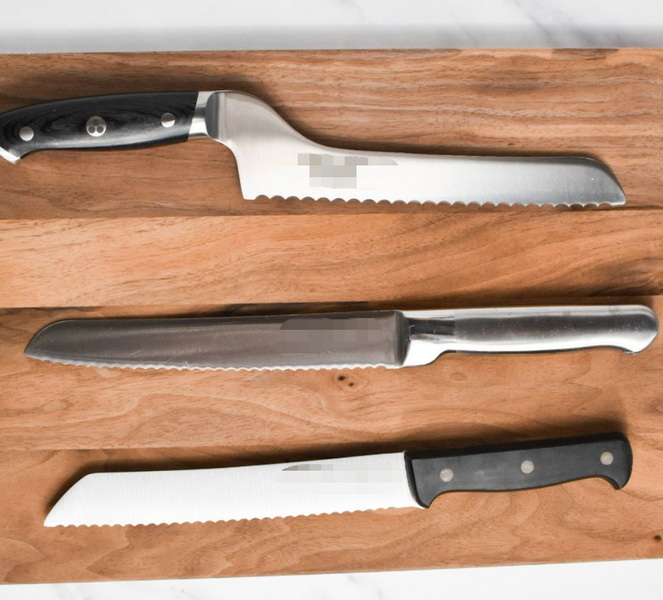
- The serrations grip and saw through crusts without crushing the interior, delivering cleaner slices and fewer crumbs.
- High-carbon stainless steels offer a balance of edge retention, corrosion resistance, and ease of sharpening, with optional coatings for added durability.
- Hand wash, dry promptly, and sharpen professionally when necessary. Avoid harsh conditions that dull or damage teeth.
- A 9-inch blade is a versatile default, accommodating a wide range of bread sizes while maintaining control.
- Yes, it can efficiently slice tomatoes, delicate cakes, and other foods that benefit from a saw-like cutting action.


