- All
- Product Name
- Product Keyword
- Product Model
- Product Summary
- Product Description
- Multi Field Search

Views: 222 Author: Ann Publish Time: 2025-11-10 Origin: Site


Content Menu
● OEM Bread Knife Fundamentals
>> What is an OEM bread knife?
● Design and Engineering Considerations
>> Blade design
>> Materials
>> Ergonomics
● OEM Production Journey—From Concept to Customer
>> 6) Distribution and after-sales support
● Quality Assurance and Compliance
● Value Proposition for Brands
● Market Considerations and Positioning
● Practical Steps to Build Your OEM Bread Knife Program
● Customer Education and Care Guides
● Comparative Landscape—WhyOEM Bread Knives Stand Out
>> Q1: What materials are best for OEM bread knives?
>> Q2: How customizable can an OEM bread knife be?
>> Q3: Are OEM bread knives compliant with international standards?
>> Q4: What production volumes can be supported?
>> Q5: How long does development and delivery take?
Bread knives are a staple in every kitchen, prized for their ability to slice through crusty loaves with precision and ease. For brands seeking to differentiate in a crowded international market, offering high-quality, customizable bread knives through OEM partnerships can be a game changer. By collaborating with a seasoned bread knife manufacturer, brands can deliver consistently excellent products while avoiding the heavy overhead of in-house tooling and production.
In today's global market, consumers value not only performance but also storytelling, sustainability, and brand alignment. An OEM bread knife program provides a reliable path to secure supply, maintain strict quality control, and tailor every detail—from blade geometry to handle material and packaging—to meet regional preferences.

An OEM bread knife is produced by a contract manufacturer to your brand's specifications. The core advantage is shifting manufacturing risk and capital expenditure to a trusted partner while preserving your brand's identity through custom blade profiles, serration patterns, handle styles, and packaging. The result is a branded product that reflects your market strategy rather than an in-house production footprint.
Key elements include:
- Blade length and geometry tailored to typical bread types in target markets
- Serration pattern designed for consistent bite and minimal crumb damage
- Handle ergonomics chosen for comfort during long slicing sessions
- Brand-specific logos, finishes, and packaging that align with marketing campaigns
The blade design must balance slicing performance, edge retention, and ease of manufacturing. Serrations can range from traditional large scallops to finer, more uniform teeth. For dense crusts, a well-engineered serration maintains cutting efficiency without tearing the crumb. The blade's grind, thickness, and weight distribution impact balance and fatigue during repetitive use.
Stainless steels with high corrosion resistance and good edge retention are common choices for bread knives. Premium bread knives may feature higher-carbon stainless steels or specialty alloys, especially for premium market segments. Damascus or layered constructions can be offered for brand differentiation, though they add complexity and cost. The handling choice—wood, plastics, or composites—also communicates brand values, from traditional craftsmanship to modern durability.
Handle shape, grip texture, and balance influence user comfort and control. Ergonomic analysis considers palm sizing, finger grooves, and the angle at which the blade meets the bread. For professional kitchens, a secure, fatigue-free grip is essential; for home users, approachable shapes and tactile textures may be favored.
Surface finishing ranges from polished mirror finishes to satin or brushed textures. Visual branding—engraving, laser etching, and logo placement—must be harmonized with the handle and blade finish. A cohesive aesthetic supports premium positioning and can improve consumer perception of value.
Brand teams specify blade length (typically 8–9 inches for many markets), serration style, handle material, and packaging. Engineers translate these requirements into production-ready drawings and tolerances.
Prototype blades are manufactured for performance testing, including edge retention, cutting tests on common bread types, and user testing for grip comfort. Feedback informs refinements before full-scale production.
Custom dies or molds are prepared for stamping, grinding, and finishing processes. Tooling quality directly affects consistency across hundreds or thousands of units.
Production runs scale according to demand, with strict process controls to ensure uniform blade geometry, serration sharpness, and handle assembly quality. In-line QC checks monitor critical parameters.
Branding is applied to blades and handles, then packaging is designed to protect the product during transit while conveying brand storytelling. Sustainable packaging options can be integrated to meet regional expectations.
Efficient logistics and clear warranty policies help brands build trust. OEM partners often provide technical support, replacement parts, and guidance on care and maintenance to end users.
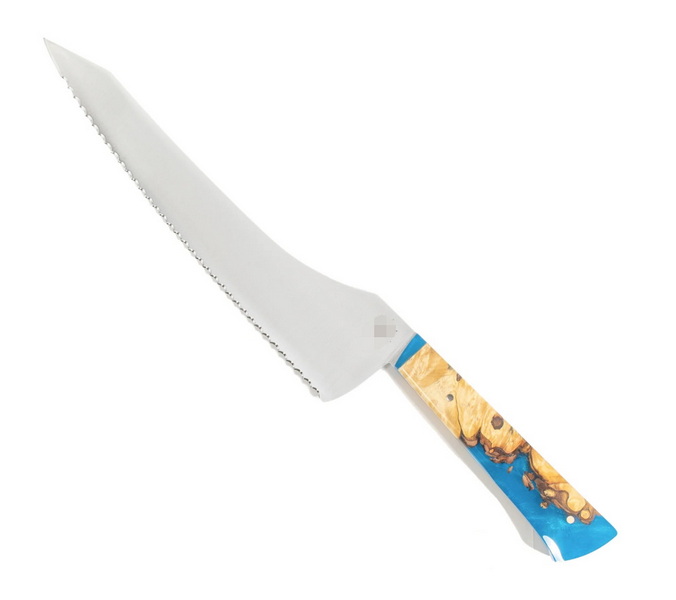
Quality programs are foundational to successful OEM bread knife programs. Key components include:
- Incoming material inspection to verify steel composition, thickness, and flatness
- Process controls for heat treatment, tempering, and hardness verification
- Serration consistency checks and edge geometry verification
- Handle attachment strength and ergonomic integrity
- Final cosmetic finishing, branding accuracy, and packaging integrity
- Food-safety compliance, including FDA, LFGB, and related standards as applicable per market
- Consistent quality across batches, enabling reliable consumer satisfaction
- Faster time-to-market through established OEM channels
- Ability to differentiate with unique designs and branding stories
- Lower capital expenditure and reduced risk compared to in-house manufacturing
- Access to broader distribution by aligning product specs with regional preferences
Bread knives serve diverse segments, from professional kitchens demanding reliability to home cooks seeking joyful experiences. Understanding regional preferences—blade length, serration aggressiveness, and handle style—helps shape a successful OEM strategy. For example, high-end markets may favor premium finishes and engraved logos, while value segments may prioritize durable materials and simple packaging.
- Define target markets and consumer profiles
- Establish clear design requirements and performance criteria
- Develop a sourcing and qualification plan for potential OEM partners
- Create a phased launch schedule with pilot runs and full-scale production
- Invest in compelling packaging and marketing assets to support launch campaigns
- Plan for after-sales support and warranty logistics
Educational content for end users improves satisfaction and reduces misuse. Topics include:
- Proper bread knife use and technique
- Cleaning and drying guidance to prevent corrosion
- Sharpening and maintenance routines to extend blade life
- Storage recommendations to protect the blade edge
Sustainability considerations are increasingly important to buyers and regulators. Brands can emphasize responsibly sourced materials, recyclable packaging, and transparent supply chain practices. OEM partners can help implement sustainable manufacturing steps, such as reducing waste, optimizing energy use, and selecting eco-friendly coatings for blades and handles.
- Customization depth: From blade geometry to packaging, brands can achieve a truly unique product line.
- Speed to market: Established OEM operations shorten lead times for launches and seasonal promotions.
- Cost performance: Lower unit costs at higher volumes, with scalable production plans.
- Quality consistency: Stringent QC processes ensure uniform performance across all units.
- Global compliance: Partner factories often maintain up-to-date certifications and standards, reducing regulatory risk.
OEM bread knives offer a powerful route to deliver high-quality, customizable products under your brand, with the efficiency and reliability of a specialized manufacturing partner. By aligning design, materials, ergonomics, and packaging with market needs, brands can achieve compelling differentiation, faster time to market, and improved consumer trust. A well-executed OEM bread knife program becomes a cornerstone of a strong, globally competitive kitchenware lineup.
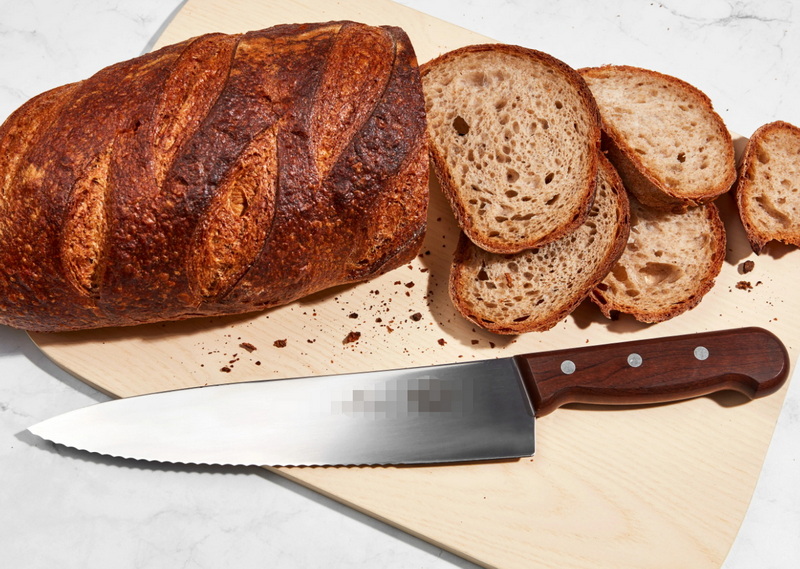
A: Stainless steels with good edge retention and corrosion resistance are common; premium lines may use higher-carbon steels or Damascus-like constructions for luxury segments.
A: Very customizable—blade length, serration pattern, handle material, logo placement, packaging, and even blade engravings can be tailored to brand needs.
A: Yes, reputable manufacturers align with FDA, LFGB, ISO, and other relevant standards to ensure food-contact safety and quality management.
A: OEM partners typically accommodate pilot runs through large-scale production, aligning with brand launch plans and demand forecasts.
A: Prototyping often takes a few weeks, with mass production typically 4–8 weeks depending on complexity and order size, plus transit time.


