- All
- Product Name
- Product Keyword
- Product Model
- Product Summary
- Product Description
- Multi Field Search

Views: 222 Author: Ann Publish Time: 2025-11-10 Origin: Site


Content Menu
● Core ergonomic principles for bread knives
● Blade geometry and materials
● Performance in real-world use
● Design and testing workflow for OEM bread knife programs
● Marketing and educational content for Bread Knife programs
● Global market considerations for Bread Knife OEMs
● Extended practical guidance for product teams
● Content architecture and SEO for OEM articles
● FAQ
>> What determines the ergonomic effectiveness of a Bread Knife?
>> What blade lengths are most versatile for different markets?
>> Which materials balance durability and maintenance for a Bread Knife?
>> How should we structure an OEM program for global markets?
>> What key visuals should accompany marketing content?
Bread knives are essential tools in any kitchen. When designed with ergonomic principles, they transform labor-intensive slicing into a comfortable, precise, and even enjoyable task. For an OEM-focused kitchen knife manufacturer, delivering Bread Knife solutions that combine comfort, performance, and durability can create enduring brand value for foreign brands, wholesalers, and manufacturers. This article delves into what makes a bread knife truly ergonomic, how blade geometry and handle design interact, and how a well-constructed bread knife can meet the diverse needs of international markets. It also outlines practical guidance for product development, testing, and go-to-market strategies that align with global procurement expectations.

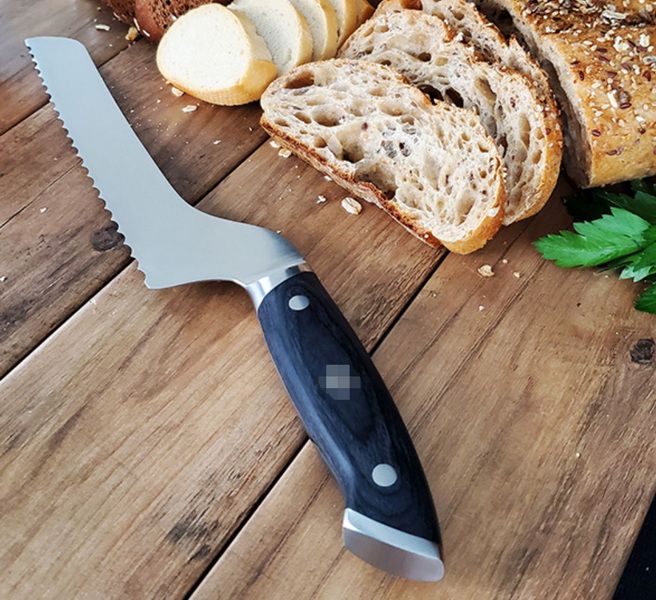
- Handle fit and grip comfort: A handle should accommodate a natural-grip posture, with curves and contours that cradle the hand and minimize slippage. For OEM programs targeting varied hand sizes and climates, offering multiple grip options (pebbled textures, soft-touch inserts, and smooth surfaces) can broaden market appeal.
- Balance and weight distribution: A well-balanced knife feels balanced between the blade and the handle, reducing fatigue and improving control during long slicing sessions. In practice, shifting the center of gravity toward the handle often yields a lighter, more maneuverable feel without sacrificing chopping authority.
- Knuckle clearance and safety: Sufficient knuckle clearance during long slices prevents contact with the cutting board and reduces unintended contact with the blade. A slightly higher blade height or a thoughtfully shaped bolster can aid in keeping knuckles away from the work surface.
- Blade rigidity and flexibility: The blade should be rigid enough to guide a straight slice through crust and crumb, yet sufficiently flexible to navigate uneven loaf shapes. This balance supports consistent cut quality across different bread textures.
- Edge stability and maintenance: An edge that holds its sharpness for a practical duration reduces the frequency of professional sharpening, especially in high-volume commercial kitchens. Consider alloy composition and heat-treating that optimize edge retention without making sharpening impractical for end users or service partners.
- Serration profile: A bread knife typically uses serrations to saw through crust while preserving crumb. A well-engineered serration pattern minimizes tearing and distributes cutting forces evenly along the blade.
- Blade length choices: Common lengths range from 8 to 10 inches (20–25 cm). OEM programs may feature a range of lengths to suit different cultural bread traditions, kitchen sizes, and user preferences.
- Blade thickness and height: Slightly thinner blades reduce friction and improve maneuverability for delicate cuts, while a modest blade height aids in maintaining control and reducing crust tearing on larger loaves.
- Blade material and finish: High-carbon stainless steels offer a balance of hardness, edge retention, and corrosion resistance, which is beneficial for both professional and consumer markets. A polished or satin finish can reduce drag and improve ease of cleaning.
- Edge preparation and maintenance: Designing for straightforward maintenance—whether via user sharpening, service center, or replacement blades—helps sustain performance and user satisfaction across markets.
- Material choices: Durable, grippy handle materials such as POM, PP, or textured composites provide reliable performance in wet or greasy kitchen conditions. For premium lines, wooden veneers or micarta offers a tactile experience with high perceived value.
- Ergonomic shaping: Gentle palm swell, finger grooves, and a comfortable finger guard can contribute to an intuitive grip and reduce strain during extended use. Full tang construction enhances balance and durability.
- Hygiene and cleaning: Seamless, easy-to-clean handle designs with minimal crevices are crucial for sanitation, especially in international markets with strict hygiene expectations. Dishwasher-safe options can be a strong selling point.
- Color and branding opportunities: Handles offer surface areas for branding elements, color accents, or tactile logos, supporting OEM customers' marketing strategies without compromising ergonomics.
- Crust penetration and crumb preservation: The serrated edge should reliably cut through crust without crushing the interior crumb, enabling clean, even slices that display bread quality and texture.
- Long-slice comfort: For bakers and kitchen staff, ergonomic handling translates to reduced fatigue during multi-slice operations, enabling faster service without compromising safety.
- Maintenance lifecycle: A well-chosen blade geometry and material can extend service life, reducing total cost of ownership for end users and improving vendor relationships for OEM partners.
- Cleaning and sanitation: Efficient cleaning is essential given the diverse environments in which bread knives are used—from home kitchens to professional bakeries. Design for quick drying and minimal staining to maintain aesthetics and hygiene.
- Requirements gathering: Collect regional bread types, typical loaf sizes, and preferred blade lengths. Align product specs with brand positioning and price targets.
- Prototype development: Create multiple handle shapes and blade profiles to evaluate ergonomic fit, cutting performance, and manufacturability.
- User testing: Engage professional bakers, culinary students, and home cooks to gather feedback on grip comfort, control, and perceived quality. Use standardized tasks to compare options.
- Quality and reliability testing: Perform hardness tests, corrosion resistance checks, edge retention benchmarking, and drop/impact testing to ensure durability in target environments.
- Documentation and certification: Compile material declarations, care guidelines, and usage instructions in languages appropriate for target markets. Ensure compliance with recognized standards where applicable.
- Clear value propositions: Communicate ergonomic benefits, edge durability, and ease of maintenance. Use quantifiable claims where possible (e.g., “reduces hand fatigue by 25% in a 30-minute test”).
- Visual storytelling: Use close-up imagery of serrations, grip textures, and bread-slicing demonstrations. Embed short videos showing real-world performance, such as crust penetration and crumb preservation.
- Instructional content: Provide a maintenance guide, sharpening tips, and care routines that align with the blade material and serration pattern. This helps international buyers reduce after-sales friction.
- Packaging and manuals: Deliver multilingual packaging and manuals with concise diagrams, troubleshooting tips, and warranty information to support global distribution.
- Regional preferences: Bread knife length, handle shape, and aesthetics vary by region. An adaptable platform approach enabling localized customization can boost market acceptance.
- Regulatory and standards awareness: Align with safety, material, and hygiene standards in target markets. Transparent documentation builds trust with international buyers.
- After-sales ecosystem: Build a robust network for spare blades, replacement parts, and service support to strengthen brand relationships and lifetime value.
- Sustainability expectations: Consider eco-friendly packaging, material recyclability, and production waste reduction to appeal to environmentally conscious markets.
- Supplier relationships and consistency: Work with reputable steel mills and handle-material suppliers to ensure consistent performance across batches, reducing variability for international customers.
- Cost-conscious optimization: Identify opportunities to optimize machining steps, heat treatment cycles, and surface finishing without compromising ergonomics and durability.
- Product family planning: Develop bread knife families with scalable configurations (length, handle style, finishes) to support tiered pricing and regional customization.
- Accessory ecosystems: Offer compatible knife blocks, sharpeners, and maintenance kits as part of a cohesive product ecosystem, improving cross-sell opportunities for OEM clients.
- Structural planning: Use a clear H1 title, followed by H2s and H3s that reflect the article's logical sections. Ensure keyword distribution feels natural and informative, not forced.
- Keyword strategy: Employ Bread Knife as the primary keyword while integrating related terms such as ergonomic handle, serrated blade, edge retention, and maintenance tips to enhance semantic relevance.
- Accessibility and readability: Write in clear, concise sentences with varied sentence lengths and scannable sections. Include bullet points and short paragraphs to aid readability.
A high-quality ergonomic Bread Knife represents more than a cutting tool; it is a carefully engineered product that harmonizes grip, balance, blade geometry, and material science to deliver consistent performance across diverse markets. For OEM manufacturers serving foreign brands, wholesalers, and other manufacturers, the opportunity lies in offering adaptable bread knife platforms with interchangeable handles, standardized blade profiles, and comprehensive maintenance resources. By combining ergonomic design with robust testing, clear educational content, and strong after-sales support, a Bread Knife program can achieve lasting market relevance and client loyalty in global supply chains.
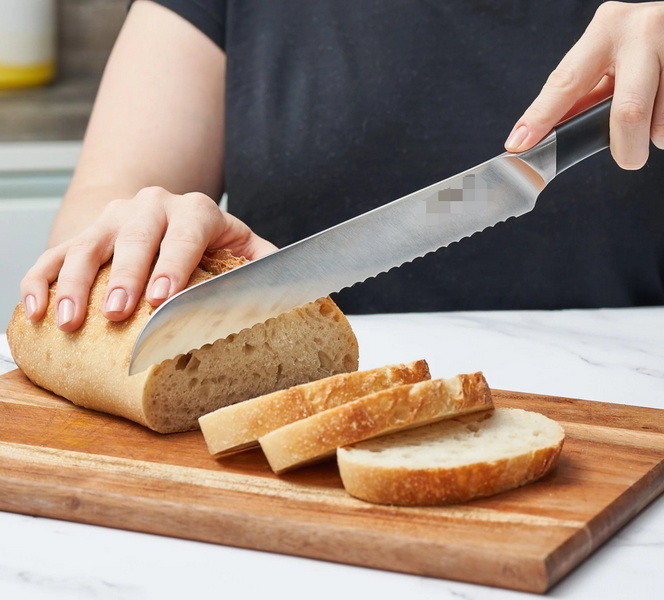
The ergonomic effectiveness hinges on handle fit, grip texture, balance, weight distribution, and safe knuckle clearance. A well-designed knife reduces fatigue and improves control during extended use.
Commonly, 8–10 inches (20–25 cm) cover a wide range of bread sizes. OEM programs can include additional lengths to address regional preferences and loaf varieties.
High-carbon stainless steels offer strong edge retention and corrosion resistance, while handle materials like POM, PP, or micarta provide durable, hygienic grips. Finish choices influence cleaning ease and aesthetics.
Develop a modular bread knife platform with configurable blade lengths, handle styles, finishes, and packaging. Provide multilingual care guides, certification documentation, and a robust after-sales framework.
High-resolution product imagery showing serrations, grip textures, and action shots of slicing bread; short demonstration videos; and infographics comparing blade geometry, weight distribution, and maintenance steps.


