- All
- Product Name
- Product Keyword
- Product Model
- Product Summary
- Product Description
- Multi Field Search

Views: 222 Author: Ann Publish Time: 2025-11-21 Origin: Site


Content Menu
>> Defining Features of a Cheese Knife
>> Butter Knife Characteristics
● Historical Evolution of Cheese and Butter Knives
● Types of Cheese Knives and Their Specific Uses
● Materials Used in Cheese and Butter Knives
● Ergonomics and Handle Design Importance
>> Cheese Knife
>> Butter Knife
● OEM Customization for Cheese and Butter Knives
● Cultural and Culinary Significance
● Frequently Asked Questions (FAQs)
>> 1. Can a Cheese Knife be used as a Butter Knife?
>> 2. Why do Cheese Knives have holes in the blade?
>> 3. What materials make the best Cheese Knives?
>> 4. Are Butter Knives dishwasher safe?
>> 5. How can brands customize Cheese and Butter Knives through OEM?
In the culinary and kitchenware world, the Cheese Knife and Butter Knife are indispensable tools that often cause confusion due to their seemingly similar appearances. However, their functions, designs, and cultural histories are quite distinct, each serving specialized roles in food preparation and dining. This comprehensive guide will explore the differences between these two knives, their types, materials, ergonomics, historical evolution, maintenance, and OEM customization opportunities for brands aiming to deliver quality kitchen products. Understanding these nuances will empower chefs, homemakers, and manufacturers to appreciate and select the right knives for cheese and spreading applications.

A Cheese Knife is a purpose-built cutting tool designed to slice, portion, and serve cheese varieties that range from soft, oozy brie to hard, crumbly parmesan. Unlike typical kitchen knives, the cheese knife incorporates features that reduce sticking, maintain cheese texture integrity, and allow easy handling of difficult-to-cut cheeses.
- Blade Design: The blade is usually thin, often with holes or perforations to minimize surface contact and reduce suction that causes soft cheese to stick.
- Sharpness and Serration: Edges may be smooth or serrated to handle different cheese textures. Some cheese knives have forked tips to lift and serve slices.
- Handle Ergonomics: Handles are frequently curved or offset to provide leverage, comfort, and control, which is essential when cutting through dense or aged cheeses.
- Variety of Styles: There are several specialized knives within the cheese knife category tailored for specific cheese types, each optimized for texture, moisture content, and hardness.
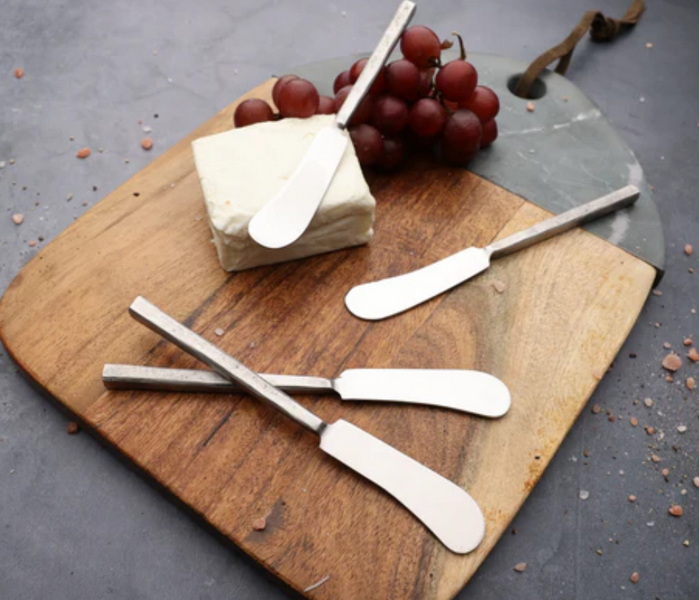
The Butter Knife serves a fundamentally different purpose. It is primarily designed for spreading soft substances—such as butter, jams, and soft cheese spreads—onto breads or crackers without tearing or damaging the underlying surface.
- Blade Shape: Typically features a blunt, rounded edge with a flat, wider blade allowing smooth spreading rather than cutting.
- Safety: Its design prevents accidental cuts, making it safe for family and formal dining use.
- Material and Finish: Usually polished stainless steel or plated metals to facilitate easy gliding and cleaning.
- Versatility: Commonly used at breakfast, brunch, and during events for spreading a variety of soft food items.
The Butter Knife evolved as an integral part of Western dining etiquette in the 18th and 19th centuries when butter became a staple commodity. Designed for refined table settings, it provided a safe and elegant way to spread butter and soft condiments. Early butter knives were simple but gradually became stylistic, reflecting contemporary tableware fashion.
The Cheese Knife concept is rooted in the culinary traditions of regions with rich cheese-making legacies. Early cheese cutting tools were rudimentary, but the modern cheese knife emerged in the 20th century alongside mass-made cheese products like Velveeta. Innovators sought solutions to the problem of cheese sticking to blades and crumbling under pressure. Since then, the cheese knife design has diversified significantly, with specialized models crafted for different cheese types and serving needs.
The variety of cheese types necessitates equally diverse cheese knives, each engineered to optimize cutting or serving for particular textures and consistencies.
- Designed for cheeses like brie, camembert, and other creamy varieties high in moisture.
- Features perforated or hole-punched blades to minimize sticking.
- Blade shape often slightly curved for clean slicing without deforming delicate cheeses.
- Thicker, sturdier blades suitable for cutting aged parmesan, aged gouda, and other hard cheeses.
- Typically heavier with thick handles to provide sturdy leverage.
- May include double-handled designs for added control on large cheese blocks.
- Mini cleaver-like blade used to chunk rather than slice hard cheeses.
- Strong blade with a large handle grip for forceful cutting.
- Long, flat blade used to create thin shavings from semi-hard cheeses such as gouda or emmental.
- Blade often angled upwards to assist slicing motion.
- Forked tip at blade end designed to lift or crumble cheese portions after slicing.
- Useful in serving and presentation of cheese platters.
- Small, blunt, sometimes heart-shaped blade optimized for spreading soft cheeses like goat cheese, mascarpone, or ricotta on crackers.
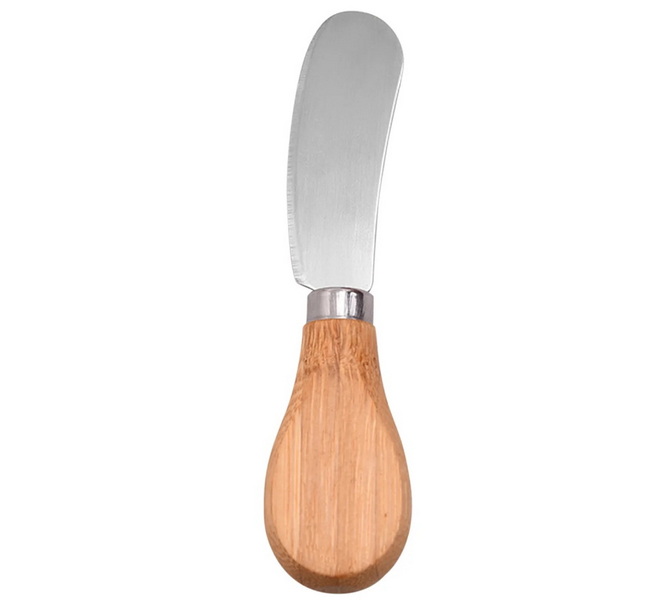
Stainless Steel: Durable, corrosion-resistant, and affordable; ideal for both cheese and butter knives.
Damascus Steel: Offers artistic blade patterns and superior sharpness, mostly for premium cheese knives.
Ceramic: Lightweight and non-reactive; favored for butter knives and some cheese knives designed for spreading or soft cheese.
Wood and Bamboo Handles: Traditional, ergonomic, and eco-friendly handle options for both types of knives.
Plastic and Resin: Used mostly in casual or disposable cutlery sets, including cheese knives for hospitality events.
The handle greatly influences user comfort and knife control:
- Cheese knives tend to have curved or offset handles to allow leverage and reduce wrist strain during cutting.
- Butter knives feature straight or gently rounded handles optimized for controlled spreading motions.
- Handle materials vary from natural wood to polished metal and synthetic materials, with tactile grips focused on aesthetics and functionality.
- Perfect for slicing different textures of cheese cleanly and presenting gourmet cheese boards.
- Effective in culinary events, wine pairings, and restaurant service.
- Enables cutting through rinds and friable cheese textures without crumbling.
- Ideal for smooth spreading of butter, jams, cream cheese, or other soft spreads during breakfast, brunch, or casual meals.
- Ensures even application without tearing bread or delicate crackers.
- Hand wash promptly to avoid cheese residue hardening on blades.
- Avoid dishwashers for delicate Damascus and wooden handle knives.
- Dry thoroughly to prevent rust and maintain blade sharpness.
- Commonly dishwasher safe but gentle cleaning methods maintain finishes.
- Avoid abrasives to protect polished surfaces.
- Regular polishing maintains aesthetic appeal for hospitality use.
For kitchenware brands, offering customizable cheese and butter knives provides significant market advantages. Chinese OEM factories specializing in knife production can deliver:
- Blade customization: shape, thickness, engraving, and materials including Damascus steel.
- Handle options: wood species, resin colors, and ergonomic designs.
- Packaging: branded boxes, multi-piece sets, eco-friendly materials.
- Accessory integration: cheese boards, forks, and spreaders in coordinated sets.
Custom products support brand differentiation and meet diverse market needs from high-end retailers to wholesale distributors.
The Cheese Knife is emblematic of gourmet culture, especially linked to European traditions, cheese artistry, and wine pairings, symbolizing fine dining and culinary precision.
The Butter Knife reflects traditions of hospitable and refined table manners, elevating a simple act of spreading into an elegant part of the meal.
Understanding these roles deepens consumer appreciation and supports marketing strategies that celebrate kitchenware as both functional tools and lifestyle accessories.
The Cheese Knife and Butter Knife, while superficially similar, cater to fundamentally different culinary needs. Cheese knives are precision tools designed to cut and serve cheese with care and grace, employing sharp blades, perforations, and ergonomic handles. Butter knives prioritize safe, even spreading with blunt edges and smooth curves. Recognizing and valuing the differences between these knives enhances both culinary technique and dining experience. For manufacturers and brands, leveraging OEM customization options of these knives can create unique, high-quality products that distinguish their offering in the competitive kitchenware market.
It is not advisable due to the sharpness of cheese knives making them unsafe and inefficient for spreading purposes.
Holes minimize sticking by reducing blade surface contact with soft cheeses, allowing cleaner slicing.
High-carbon stainless steel and Damascus steel are preferred for their sharpness, durability, and aesthetic appeal.
Most stainless steel butter knives are dishwasher safe, but care depends on manufacturer guidelines.
Options include engraved blades, handle materials and designs, packaging, and multi-piece set configurations tailored to brand identity.


