- All
- Product Name
- Product Keyword
- Product Model
- Product Summary
- Product Description
- Multi Field Search

Views: 222 Author: Ann Publish Time: 2025-11-22 Origin: Site


Content Menu
● Cheese Knife vs. Cheese Fork: Key Differences
● Choosing the Perfect Cheese Knife and Fork
>> Materials
● Popular Cheese Knife Variations and Their Uses
● OEM Opportunities in Cheese Knife and Fork Sets
● Proper Care and Maintenance Tips
● Frequently Asked Questions (FAQs)
>> 1. Can I use regular kitchen knives instead of cheese knives?
>> 2. How do the holes in cheese knives help?
>> 3. What's the best material for cheese knives?
>> 4. Are cheese forks sharp enough for cutting?
>> 5. Can I get customized cheese knife sets for my brand?
Cheese isn't just a snack—it's an experience. For cheese lovers and professionals alike, the right tools elevate this experience from simple eating to elegant entertaining. Two indispensable tools for cheese preparation and serving are the Cheese Knife and the Cheese Fork. Understanding their differences, purposes, and proper use is key to mastering the art of cheese serving.
Whether you're stocking your kitchen, retail offering, or customization for OEM brands, this guide dives deep into these essential cheese tools, highlighting their features, types, and benefits.

A Cheese Knife is a specialized knife crafted to handle various cheese textures smoothly. Unlike general kitchen knives, it reduces sticking and incompletely cut pieces through purposeful blade designs such as holes, prongs, or unique shapes tailored to cheese softness or hardness.
Key characteristics include:
- Thin and sharp blades to minimize sticking, especially on soft cheeses like Brie or Camembert.
- Perforated or holed blades to reduce surface contact and prevent cheese from clinging.
- Forked tips or pointed ends to easily lift and serve sliced cheese pieces.
- Variety in blade shape and length tailored to different cheese types.
- Soft Cheese Knife: Features holes or slots and a narrow, sometimes curved blade. Ideal for soft cheeses like Brie, Camembert, or fresh goat cheese.
- Hard Cheese Knife: Usually broader, heavier with a sharp edge or chisel tip to cut through aged cheeses like Parmesan or Cheddar.
- Pronged Knife: A short blade multiple forks or prongs at the tip that can pierce and pick up cheese slices for serving.
- Spreader Knife: Blunt, wide blade designed for spreading soft cheeses or cheese spreads smoothly.
- Chisel Knife (Parmesan Knife): A short, sturdy knife with a pointed tip used to break or crumble hard cheeses.
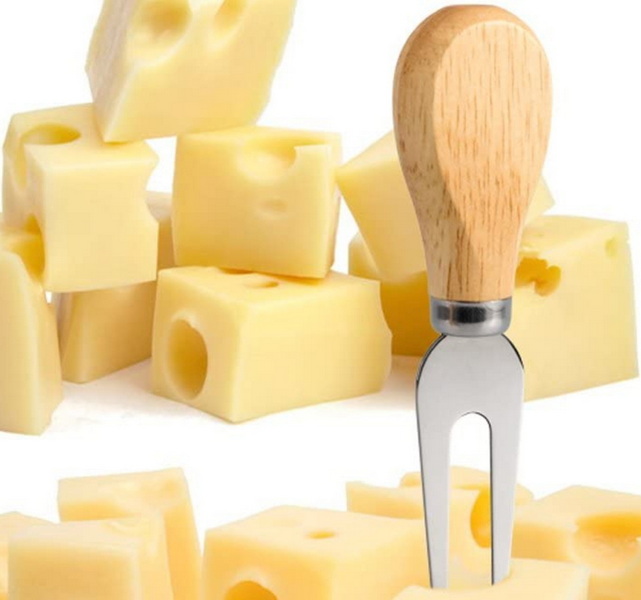
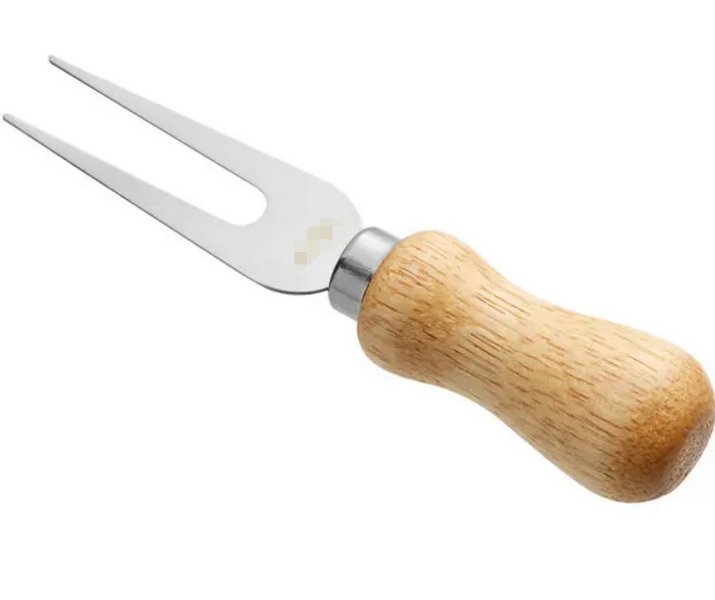
While not a knife, the Cheese Fork is equally vital on your cheese board. This utensils sports two or three long tines perfect for holding cheese steady while cutting or for serving pieces. It prevents cheese from slipping and keeps your hands mess-free.
Main uses:
- Holding or stabilizing firm cheeses during slicing.
- Serving bites of cheese or picking crumbles.
- Breaking apart crumbly or aged cheeses.
- Enhancing presentation with neat, elegant serving.
It complements the cheese knife by providing control and precision, especially with crumbly or dense textures.
| Feature | Cheese Knife | Cheese Fork |
|---|---|---|
| Purpose | Cutting and slicing cheese | Holding and serving cheese |
| Design | Blade with holes, forked tip, or specialized shapes | Two or three sharp prongs |
| Best for | Soft, semi-soft, and hard cheese types | All cheese types, especially crumbly or hard |
| Material | Stainless steel, Damascus steel, ceramic | Stainless steel |
| Functionality | Slicing, crumbling, spreading | Piercing, steadying, serving |
A perfect cheese experience requires precision and presentation. A Cheese Knife alone can't serve pieces neatly without additional help. Meanwhile, a Cheese Fork without a proper knife can't cut cheese cleanly. Together, they deliver a streamlined, hygienic, and elegant cheese serving experience.
Benefits include:
- Cleaner slicing without crushing delicate textures.
- Easier, neater serving of cheese pieces.
- Enhanced hygiene by reducing direct hand contact.
- Preservation of the cheese board's aesthetics.
- Better user control for professional or home use.
When selecting cheese tools, consider materials, blade design, handle comfort, and your target market's needs.
- Stainless Steel: Durable, rust-resistant, and affordable — great for mass production and daily use.
- Damascus Steel: Luxurious, sharp, and visually striking. Perfect for premium brand positioning or gift sets.
- Ceramic: Lightweight and corrosion-free, excellent for soft cheese but more fragile.
Wood, resin, or steel handles affect grip comfort and brand identity. Ergonomic designs reduce fatigue during extended use.
| Knife Type | Description | Ideal Cheese Types |
|---|---|---|
| Soft Cheese Knife | Thin, perforated, sometimes forked tip | Brie, Camembert, Mozzarella |
| Hard Cheese Knife | Wide, sturdy, often with offset handle | Parmesan, Aged Cheddar, Asiago |
| Pronged Knife | Short blade with fork-like prongs at tip | Blue cheese, Semi-hard cheeses |
| Chisel Knife | Short, pointed blade perfect for breaking chunks | Parmesan, Pecorino, hard crumbly cheese |
| Cheese Spreader | Blunt, wide blade for spreading soft cheese | Cream cheese, Boursin, Ricotta |
As a China-based manufacturer specializing in kitchen cutlery OEM, offering custom Cheese Knife and Fork sets can set you apart. Services include:
- Custom logo engraving on blades and handles.
- Tailored packaging options like gift boxes or eco-friendly cartons.
- Various material and handle customization according to client branding.
- Small and large order flexibility for wholesalers, brand owners, and retailers.
To preserve your cheese knives and forks:
- Wash promptly after use with mild soap.
- Avoid soaking wooden handles; dry immediately.
- Sharpen knives regularly using sharpening stones or rods.
- Store in knife blocks or with protective sheaths.
The Cheese Knife and Cheese Fork are indispensable tools for anyone serious about cheese. Whether you're hosting at home, running a restaurant, or building a kitchenware brand, these specialized tools ensure precise cutting, beautiful presentation, and enjoyable serving. For OEM businesses, offering customizable, high-quality cheese knife sets can enhance brand reputation and market value.
Regular knives do not provide clean cuts for soft or hard cheeses and often cause sticking or crumbling, so specialized cheese knives improve precision and presentation.
Holes reduce surface area contact, decreasing sticking especially with soft and semi-soft cheeses.
Stainless steel is versatile and durable; Damascus steel adds premium appeal; ceramic is lightweight but fragile.
No, cheese forks are for holding and serving, not cutting.
Yes, many OEM manufacturers offer logo engraving, packaging design, and handle customization tailored to your branding needs.


