- All
- Product Name
- Product Keyword
- Product Model
- Product Summary
- Product Description
- Multi Field Search

Views: 222 Author: Ann Publish Time: 2025-11-01 Origin: Site


Content Menu
● Forging, Shaping, and Heat Treatment
● Edge Refinement and Sharpening
● Handle Integration and Ergonomics
>> Ergonomics:
● Surface Finishes, Branding, and Packaging
● Quality Control and Certification
>> Dimensional and tolerancing checks:
>> Documentation and traceability:
● Packaging, Logistics, and OEM Delivery
● Frequently Asked Questions (FAQs)
>> What materials are commonly used for steak knife blades, and how do they affect performance?
>> How does blade geometry impact cutting performance for steak knives?
>> What factors influence the feel and balance of a steak knife?
>> What branding options are available for OEM steak knives?
>> How is quality controlled in steak knife manufacturing?
From Factory To Fork traces the meticulous journey of a steak knife from chosen raw materials to the moment it rests in a diner's hand. For an OEM kitchen knife facility serving international brands, the story underscores a disciplined, repeatable process that couples technical precision with creative design. The steak knife is the centerpiece of this narrative: a tool defined by its edge retention, balance, ergonomic handling, and lasting durability.

Our factory operates with a clear mission: to deliver steak knives that consistently meet or exceed brand and end-user expectations across regions. We work with foreign brands, wholesalers, and manufacturers to tailor blade geometry, materials, handle styling, and finishing to each market's preferences and regulatory requirements. The commitment extends beyond the blade to include packaging, labeling, and after-sales support that uphold international standards for safety, warranty, and customer satisfaction.
- Customer-centric OEM approach: We align product development with customer specifications, from blade steel chemistry to handle ergonomics, ensuring that every steak knife aligns with brand identity and end-user expectations.
- Quality as a design principle: Quality is embedded in material selection, forging discipline, heat treatment recipes, and tight tolerances, enabling repeatable performance across large production runs.
- Traceability and compliance: Each knife is traceable from raw material certificates to finished product, with documentation to support food-contact compliance and regional regulations.
The blade is the core determinant of performance, and material science is the foundation for a reliable steak knife. Our OEM projects often choose high-carbon stainless steels or advanced stainless steels with alloying elements that enhance hardness, wear resistance, and corrosion protection while maintaining good toughness.
- Hardness versus toughness: The steel hardness must resist edge dulling while tolerating slight misuses in domestic dishwashing or commercial kitchens.
- Corrosion resistance: Stainless steels with chromium, molybdenum, vanadium, or similar elements deliver corrosion resistance in humid or acidic cleaning environments.
- Edge geometry compatibility: Different end-use scenarios may require varying edge angles and profiles to optimize slicing performance on steak fibers.
- Point and tip design influence precision in deboning or decorative slicing, while a strong tip supports stability during cutting.
- Spine and grind: A balanced grind ensures consistent edge control without excessive weight concentrating at the tip.
- Blade thickness distribution: Slightly thicker in the spine for rigidity, tapering toward a refined edge for clean cuts.
- Material certification: Mill test reports and material certificates accompany each batch, supporting brand claims and consumer safety assurances.
The transformation from rough billet to finished blade is a sequence of controlled steps designed to optimize the blade's microstructure and performance characteristics.
- Forging aligns the grain structure, improving toughness and fatigue resistance.
- Precise profiling defines the final silhouette, balancing stiffness with maneuverability.
- Austenitizing temperature and dwell time set the steel's phase composition.
- Quenching medium selection (air, oil, or water) shapes hardness and brittleness.
- Tempering adjusts hardness downward to reach an optimal balance between edge retention and resilience.
- Post-heat-treatment microstructure checks and hardness testing ensure consistency across lots.
- Controlled cooling rates prevent warping and relieve internal stresses before grinding.
Edge development is paramount to achieving the crisp, clean cuts associated with a steak knife. A multi-stage process yields a burr-free, durable edge.
- Coarse grinding establishes the basic bevel; subsequent finer grits refine the edge geometry.
- Uniform bevel angles on both sides produce symmetric edge performance and predictable slicing behavior.
- Fine polishing reduces surface roughness, aiding knife glide and reducing meat drag.
- Finishes range from satin to mirror, selected to align with brand aesthetics and maintenance expectations.
- Visual and tactile inspection of edge consistency.
- Cut-testing on standardized media to confirm clean shearing through protein fibers.
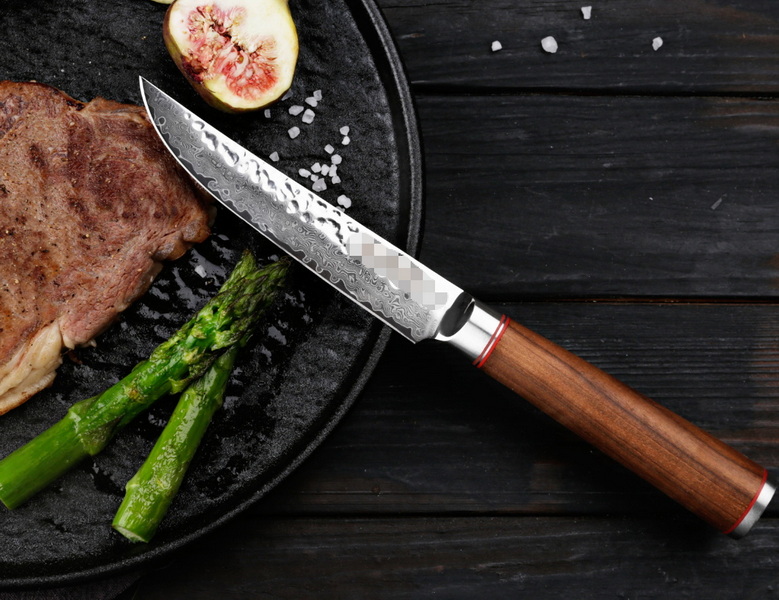
A well-designed handle translates into comfort, control, and long-term user satisfaction. Handles are selected for tactile feel, moisture resistance, and compatibility with industrial cleaning regimes.
- Durable synthetics and composites that resist heat, moisture, and impact.
- Natural or engineered wood laminates for premium aesthetics with improved moisture stability.
- Contoured grips that fit a range of hand sizes, with gentle finger supports and a balanced center of gravity.
- Tang-to-handle connection engineered for durability, with fasteners or epoxy methods chosen to withstand repeated wash cycles.
- Fit between blade and handle is checked under torque loads to ensure no looseness or gaps.
- Finish matching between blade and handle surfaces to prevent irritation and ensure visual harmony.
Finish quality and branding integrity are essential for market-ready products. Finishes affect corrosion resistance, cleaning ease, and consumer perception.
- Satin, brushed, or polished appearances with consistent texture and reflective properties.
- Optional coating layers or protective films for transport and storage, removable before use.
- Laser engraving, etching, or embossing on the blade or handle, chosen for durability under dishwashing and cleaning cycles.
- Branding alignment with product line aesthetics and retailer requirements.
- Primary packaging that protects the knife during transit, with secondary packaging featuring brand storytelling and warranty information.
- Eco-friendly materials and regional packaging preferences can be incorporated to support sustainability goals.
A rigorous multi-stage quality control process ensures that every steak knife meets defined technical and safety standards.
- Blade length, thickness, and flatness are measured to tight tolerances.
- Handle alignment and tang fit are inspected to prevent misfits.
- Edge integrity tests and balance checks to confirm consistent performance.
- Surface finish inspection and corrosion resistance assessments for long-term durability.
- Lot-level certificates and product data sheets accompany shipments.
- Compliance checks for food-contact safety standards, regional regulations, and warranty terms.
Efficient packaging and reliable logistics are critical for delivering a brand-credible product to international markets.
- Protective internal packaging to prevent movement and impact damage.
- Brand-consistent exterior packaging with clear usage and care instructions.
- Compliance with destination country import requirements, labeling, and safety standards.
- Temperature and humidity considerations during storage and shipment, if applicable.
- Clear warranty terms, replacement policies, and customer service access to support brand partners and end users.
A steak knife's journey from raw steel to table-ready performance embodies precision, craftsmanship, and reliability. By orchestrating careful material selection, rigorous forging discipline, precise edge finishing, ergonomic handle integration, and thorough quality control, an OEM kitchen knife factory can deliver steak knives that meet international brand standards and satisfy discerning end-users. The result is a product that blends reliability with refined aesthetics, ready to move seamlessly from factory to fork in diverse culinary settings.
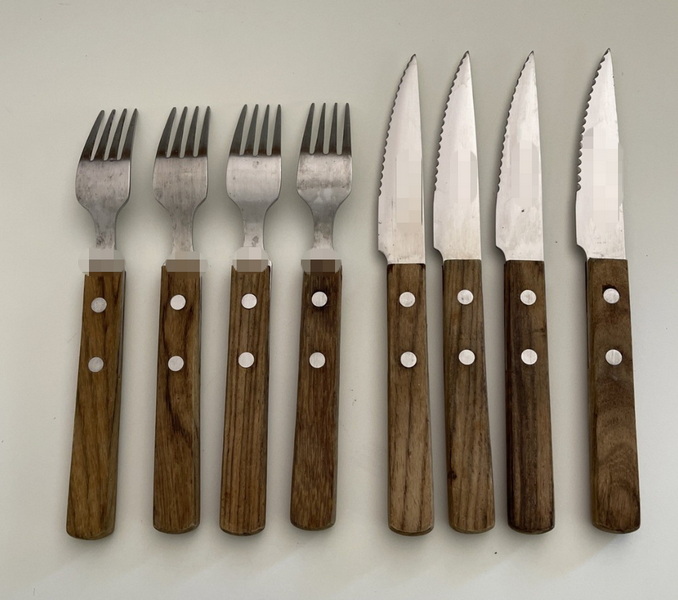
- The common choices balance hardness with toughness and corrosion resistance, such as high-carbon stainless steels and other alloyed stainless steels. This choice influences edge retention, maintenance needs, and long-term durability.
- Blade geometry determines slicing efficiency through meat fibers, with optimized edge angles and controlled thickness contributing to stability, control, and reduced tearing.
- Weight distribution, tang design, handle shape, and grip texture collectively affect perceived balance and user comfort during prolonged use.
- Branding can include laser engraving, etching, or branded handles and blades, selected to endure regular cleaning cycles while remaining visually prominent.
- A multi-stage QC process covers dimensions, edge quality, balance, surface finish, and packaging integrity, with traceability documentation for accountability.


