- All
- Product Name
- Product Keyword
- Product Model
- Product Summary
- Product Description
- Multi Field Search

Views: 222 Author: Ann Publish Time: 2025-11-08 Origin: Site


Content Menu
>> Bread Knife Definition and Purpose
>> Materials and Surface Engineering
● SAAFI Bread Knife Design and Manufacture
>> Blade Geometry and Serration Engineering
>> Materials Selection and Heat Treatment
>> Finish, Aesthetics, and Branding
>> Quality Assurance and Process Control
● OEM Capabilities for Global Brands
>> Compliance and Certifications
>> Production Capacity, Lead Times, and Logistics
>> Brand Value and Differentiation
● Applications and Market Scenarios
>> Bakery and Culinary Education
● Care, Maintenance, and Longevity
● Conclusion with Call to Action
● FAQ
>> What blade materials are best for Bread Knife OEM production?
>> Can we customize the entire Bread Knife set under our brand?
>> What is the typical lead time for an OEM Bread Knife order?
>> What is the minimum order quantity (MOQ) for OEM Bread Knife orders?
>> How does quality control ensure consistency across batches?
Bread Knife performance hinges on a balanced combination of blade geometry, material science, manufacturing discipline, and ergonomic design. For international brands seeking reliable OEM partnerships, SAAFI Bread Knives embody a philosophy where precision engineering meets practical kitchen results. This article expands on the core elements that define Bread Knife excellence—serration patterns, blade hardness, edge retention, corrosion resistance, handle comfort, and the rigorous quality control that underpins scalable production. It also details how our China-based OEM capabilities can align with foreign brands' product families, price structures, packaging concepts, and go-to-market strategies. Throughout, Bread Knife is the central thread, linking technique, process, and product value.

- A Bread Knife is distinguished by a serrated edge and a longer blade designed to slice through crusts without crushing the soft interior. The serrations act like tiny saw teeth that grip crusty crusts while the back of the blade maintains control and reduces tearing. This combination yields consistent slices, crust to crumb ratio, and presentation suitable for professional service or home consumption. Bread Knife capability is tested most rigorously in high-volume bakery environments, where repeatable results across hundreds of loaves matter.
- The geometry of the serrations—pitch, depth, and tooth shape—plays a pivotal role in how the knife engages bread texture and density. A well-tuned serration pattern minimizes crumb damage, enables clean separation of crust from crumb, and extends blade life by distributing cutting forces effectively.
- Blade steel choice determines edge retention, toughness, and corrosion resistance under frequent washdowns. High-carbon stainless steels balance hardness with stain resistance, providing a durable bread-cutting edge that remains sharp through routine kitchen tasks. Our Bread Knife design often leverages steel alloys formulated to resist micro-chipping at the serrated edge while sustaining cutting efficiency.
- Surface finishing, including beveling precision, burr removal, and optional coatings, contributes to hygiene and aesthetics. A burr-free bevel ensures smoother entry into bread while coatings can enhance corrosion resistance and reduce drag on the crumb.
- Edge geometry and finishing influence maintenance needs. A sharper initial edge requires less frequent sharpening for typical bakery workloads, while maintaining a robust tooth structure that withstands frequent use.
- Handle design integrates shape, material, texture, and balance to optimize control and reduce fatigue during long prep sessions. An ergonomic Bread Knife is comfortable in both glove-wearing and dry-hand conditions, with non-slip surfaces that maintain grip when hands are wet or greasy. This is essential for consistent performance across repeated slicing tasks.
- Overall weight and balance affect user confidence and slicing accuracy. A well-balanced Bread Knife reduces wrist strain and enables smoother motion through bread without jagged starts or erratic cuts.
- Precise serration patterns are engineered to slice crusts cleanly while preserving crumb integrity. The tooth shape, spacing, and edge geometry are designed to deliver predictable performance across a range of bread textures, from crusty French baguettes to soft sandwich loaves.
- The blade's primary edge must remain stable through typical kitchen cycles, including dishwasher exposure in some markets. Managing micro-burrs and maintaining a burr-free surface across the serra pattern are essential for longevity of the bread-cutting edge.
- Steel selection is a core differentiator. We optimize for edge retention, corrosion resistance, and ease of maintenance. The bread knife's backbone—blade steel—must endure daily use, resist staining from dough acids, and maintain a clean appearance under commercial kitchen conditions.
- Heat treatment is tuned to balance hardness and toughness. Proper quenching and tempering produce a blade that stays sharp through many slices while resisting chipping at serrations. The resulting Bread Knife can deliver consistent bite across hours of service.
- Polishing, deburring, and laser etching contribute to a professional appearance and brand identity without compromising the serrated edge. These steps also support hygiene and corrosion resistance, aligning with international food-safety expectations.
- Handle attachment and finish must withstand frequent wash cycles and temperature fluctuations typical in global markets. A secure tang and robust handle bond contribute to long-term durability and brand trust.
- In-process inspection checks—dimensional accuracy, serration integrity, and bevel geometry—are performed at multiple stages to ensure_uniform_ quality before final assembly.
- Final functional testing—edge sharpness verification, cut performance on bread analogs, and comprehensive visual inspection—ensures batch-to-batch consistency.
- Traceability and data capture underpin the OEM relationship, enabling brands to monitor yield, defect rates, and corrective actions across production runs.
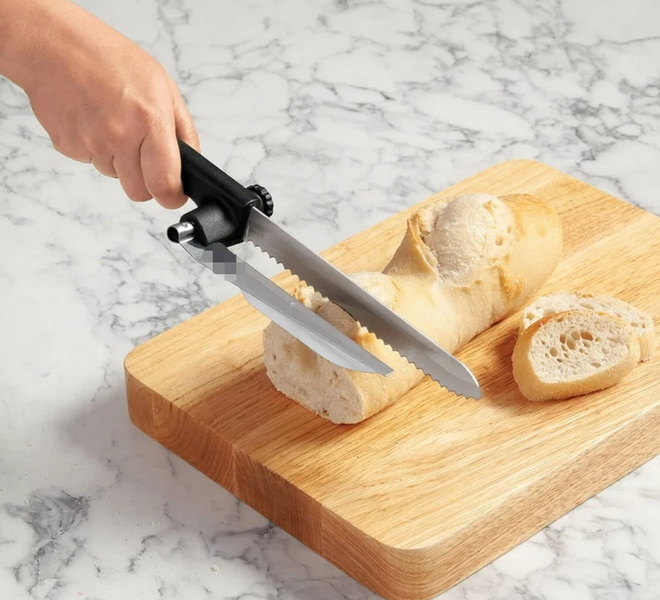
- We offer end-to-end customization across blade length, serration pattern, edge finishing, tang and spine design, handle geometry, and branding, enabling a cohesive Bread Knife family aligned with brand identity.
- Packaging concepts—from retail-ready presentation to bulk professional packaging—can be tailored to regional distribution needs, including bilingual labeling and safety warnings.
- Our Bread Knife production adheres to relevant food-contact safety standards and quality certifications appropriate for target markets, ensuring smooth entry into North American, European, Asian, and Middle Eastern channels.
- Documentation and test reports can be produced to support supplier qualification programs and retailer demand for traceability.
- Flexible MOQs and scalable production footprints support diverse market introductions, from pilot programs to full-scale launches.
- Transparent lead times, coupled with production scheduling aligned to marketing calendars, help brands synchronize campaigns with supply availability.
- A well-engineered Bread Knife from a trusted OEM partner strengthens a brand's credibility by offering consistent performance, reliable delivery, and clear maintenance guidance.
- The ability to customize branding, packaging, and unboxing experiences enhances perceived value and supports differentiation in crowded markets.
- In high-demand kitchens, Bread Knife performance translates into faster service, fewer slice defects, and less waste. Precise serrations reduce crust tearing and preserve crumb integrity, contributing to plating quality and customer satisfaction.
- In bakery settings and culinary schools, uniform knife performance supports training consistency and batch production efficiency. Durable blades reduce downtime for replacements, enabling more continuous learning and production cycles.
- For home cooks, an ergonomically designed Bread Knife with reliable edge retention makes daily bread slicing enjoyable and non-intimidating, encouraging longer engagement with premium kitchen tools.
- Cleaning and drying: Hand-wash preference remains important to preserve coatings and blade geometry; thoroughly dry after washing to prevent corrosion.
- Sharpening: Regular sharpening using manufacturer recommendations maintains edge geometry without over-sharpening, which could shorten blade life.
- Storage and safety: Proper storage, such as blade guards or magnetic strips, protects teeth and preserves edge quality.
- Edge retention and geometry optimization: A Bread Knife with a well-optimized serration pattern and precise bevels provides longer-lasting performance per use and reduces replacement costs.
- Ergonomics and user experience: A comfortable grip lowers fatigue, enabling sustained performance during long prep sessions.
- OEM support and collaboration: A cooperative OEM partner can tailor blade length, serration style, packaging, and branding to fit specific regional markets and brand identities.
Bread Knife performance reflects a blend of engineering excellence, material science, and a robust OEM ecosystem. SAAFI Bread Knives demonstrate how a carefully engineered serration pattern, strategic steel selection, disciplined heat treatment, and ergonomic handling converge to deliver cutting precision and durability. For brands pursuing reliable OEM partnerships, our manufacturing platform, stringent quality controls, and customization capabilities offer a strong foundation for building a Bread Knife family that resonates across global markets. To explore samples, customization options, or full OEM programs, contact the OEM team to discuss blade length, serration profiles, handle materials, packaging concepts, and branding requirements tailored to your market strategy.
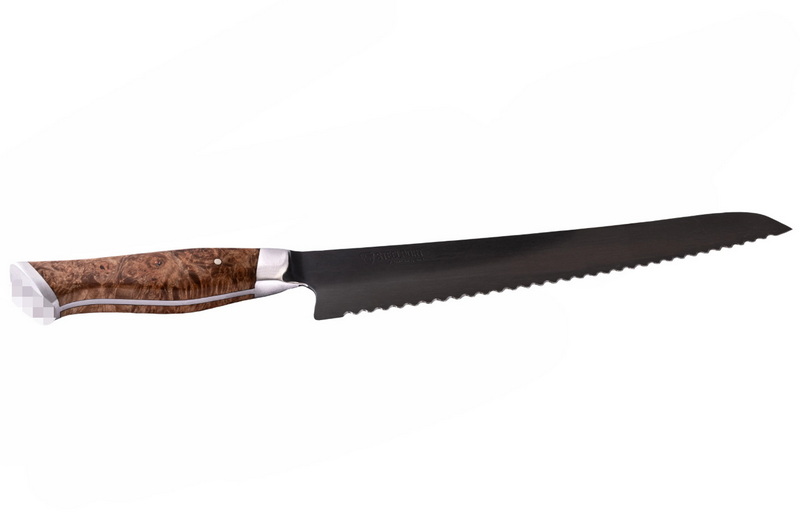
- High-carbon stainless steels with a balance of hardness, toughness, and corrosion resistance are preferred for Bread Knife OEM applications, providing durable serrated edges capable of handling daily kitchen use.
- Yes. We offer extensive customization across blade length, serration geometry, edge finish, handle design, branding, and packaging to align with brand identity and regional preferences.
- Lead times depend on order size and customization level, but scalable production plans and transparent scheduling help minimize time-to-market for global launches.
- MOQs vary by configuration, but flexible MOQs are available to support brand launches with phased production.
- In-process inspections, final bevel verification, and edge geometry checks ensure uniform serration and blade integrity across production lots.


