- All
- Product Name
- Product Keyword
- Product Model
- Product Summary
- Product Description
- Multi Field Search

Views: 222 Author: Ann Publish Time: 2025-11-22 Origin: Site


Content Menu
● What Is Ergonomics in Knife Design?
● Why Ergonomics Matters in Cheese Knife Performance
>> Key ergonomic benefits include:
● Core Ergonomic Factors in Cheese Knife Design
>> 1. Handle Shape and Material
>> 2. Balance Between Blade and Handle
>> 3. Blade Geometry and Function
>> 4. Handle Angle and Wrist Alignment
>> 5. Grip Texture and Slip Resistance
● Ergonomics in Professional OEM Cheese Knife Production
● Ergonomics and Market Appeal
● Ergonomics Balancing Aesthetics and Functionality
● Frequently Asked Questions (FAQ)
>> 1. What makes a cheese knife ergonomic?
>> 2. How does handle material affect comfort?
>> 3. Why do some cheese knives have holes in the blade?
>> 4. Can ergonomic cheese knives reduce wrist fatigue?
>> 5. Can OEM factories customize ergonomic cheese knives?
Every kitchen tool tells a story of function, comfort, and craftsmanship — and the Cheese Knife is no exception. Good knife design is more than just sharpness and aesthetic perfection; it's about how the tool interacts with the user's hand. Ergonomics plays a vital role in transforming an ordinary cheese knife into a precision instrument that ensures comfort, control, and safety during use.
In this article, we'll explore how ergonomic design principles influence cheese knife performance, materials, balance, and usability — and why it matters for both consumers and OEM/ODM brands sourcing from professional factories.

Ergonomics refers to designing products that fit the natural movements and limitations of the human body. In knife design, this concept focuses on grip comfort, wrist alignment, and user fatigue reduction.
When applied to a Cheese Knife, ergonomics seeks to eliminate unnecessary strain caused by repetitive cutting, slicing, or spreading motions. A well-designed ergonomic handle ensures that even long cheeseboard sessions remain effortless.
Cheese is a delicate ingredient that demands precision. Hard cheeses like Parmesan need strength and stability, while soft varieties like Brie or mozzarella require gentle control. A poorly designed handle or blade shape can make cutting uneven, uncomfortable, and even hazardous.
- Enhanced control and stability during slicing.
- Reduced muscle tension in fingers and wrists.
- Improved safety through secure, slip-resistant grip surfaces.
- Efficient motion flow, lowering effort and increasing accuracy.
An ergonomic handle must follow the contour of the hand. Rounded edges, palm-fitting curves, and balanced weight distribution minimize fatigue.
Common materials used by professional Cheese Knife manufacturers include:
- Pakkawood: Durable, moisture-resistant, elegant.
- TPR or PP Plastic: Lightweight, anti-slip, and hygienic.
- Stainless Steel Handles: Provides a professional, sleek appearance.
For example, the "Master Line" cheese knife features a stainless steel blade overmolded with a polypropylene (PP) ergonomic handle, offering an extremely strong bond and comfortable grip suitable for professional heavy use in kitchens.
A well-balanced Cheese Knife ensures smoother control. If the handle is too heavy or too light, users experience wrist discomfort after multiple cuts.
Ergonomically balanced knives centralize their weight near the bolster or pivot point. This reduces effort, allowing effortless push and pull motions through semi-hard cheeses.
Ergonomics extends to blade design too. Cheese knives often feature perforated or hollow blades to minimize sticking, improving slicing efficiency.
Different types of cheese knives are ergonomically designed for their target cheese textures:
- Soft Cheese Knife: Thin blades with large holes reduce adhesion, allowing a clean cut without crushing soft, creamy cheeses like Gorgonzola.
- Hard Cheese Knife: Thick, cleaver-shaped blades handle dense cheeses like Parmesan with ease.
- Parmesan Knife: Drop-shaped blades allow delicate flaking of crumbly cheeses.
- Spreader Knife: Rounded blades for smooth application of soft cheeses or butter.
The angle between handle and blade plays a vital role in wrist health during use. A properly designed Cheese Knife allows the wrist to stay in a neutral position during slicing, preventing repetitive strain injuries.
Some high-end ergonomic cheese knives incorporate slightly offset handles to improve leverage and reduce effort during cutting.
Cheese preparation often involves moisture or oil from soft cheese types. Thus, handle texture and friction are critical ergonomic considerations.
Rubberized or micro-grooved patterns improve grip stability even with wet hands, enhancing precision and safety, especially in professional kitchen or catering environments.
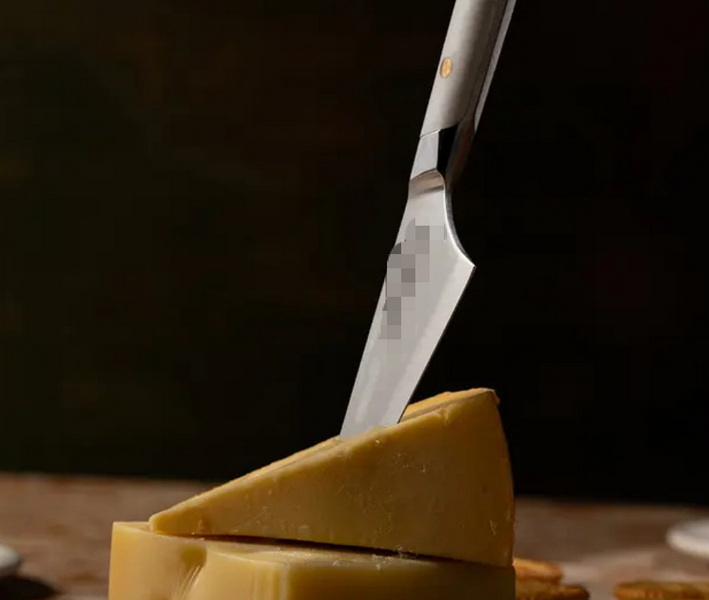
Leading OEM factories treat ergonomics as a crucial design and quality control factor.
Typical ergonomic production practices include:
- User comfort and grip analysis via surveys and simulation tools.
- Fatigue testing with mechanical repetition to simulate extended use.
- 3D modeling and CAD simulations ensuring proper fit for average hand sizes.
- Feedback loops from professional chefs or product testers to refine design details.
These practices ensure that each cheese knife produced meets both functional and ergonomic excellence.
In a competitive market, superior ergonomics establish a Cheese Knife as a premium product. Consumers increasingly seek comfort, control, and safety when purchasing specialty kitchen tools.
For branding and OEM clients, offering ergonomically advanced Cheese Knives adds value by:
- Enhancing customer satisfaction and repeat purchase rates.
- Reducing product returns due to discomfort or poor usability.
- Supporting marketing claims about quality and user-centered design.
Premium cheese knife sets, such as those with riveted wooden handles and hand-sharpened blades, highlight ergonomic craftsmanship and attract discerning buyers.
The finest Cheese Knife designs blend ergonomic efficiency with beautiful aesthetics. Handle materials may range from polished stainless steel to natural woods like pakkawood, chosen not only for durability but for tactile warmth and visual elegance.
Modern ergonomic knives often combine traditional craftsmanship with innovative design, producing visually appealing, highly functional tools ideal for both domestic and professional markets.
The ergonomic design of a Cheese Knife defines the quality of user interaction by prioritizing comfort, control, and safety. From carefully contoured handles and balanced weights to blade shapes specialized for different cheese types, ergonomic features streamline slicing and reduce fatigue and injury risk.
OEM manufacturers who emphasize ergonomics deliver products that stand out for both functionality and user satisfaction, benefiting brands and consumers alike. The pursuit of ergonomic excellence in Cheese Knife design is both a science and an art, continuously evolving to meet modern kitchen demands.
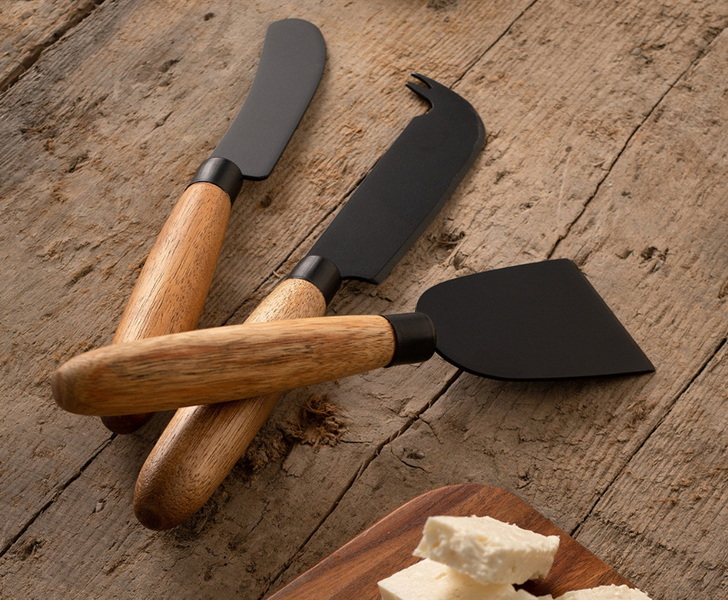
An ergonomic Cheese Knife fits the natural grip of the hand, balances the weight between blade and handle, uses slip-resistant materials, and positions the wrist to avoid strain during cutting.
Soft-touch materials such as thermoplastic rubber (TPR) or pakkawood minimize slipping and increase comfort during repetitive slicing sessions.
These perforations reduce cheese sticking by creating air pockets, enabling smooth, clean cuts especially for soft and creamy cheeses.
Yes, well-balanced, ergonomically angled handles keep the wrist in a natural position, significantly reducing fatigue and risk of repetitive strain injuries.
Absolutely. Professional OEM manufacturers use R&D and ergonomic principles to create tailored cheese knives in various shapes, materials, and branded formats that meet client specifications.


