
Views: 222 Author: Ann Publish Time: 2025-10-31 Origin: Site


Content Menu
● 1: What makes a great steak knife blade?
● 2: Stainless steels—balancing corrosion resistance and care
● 3: Carbon and carbon-rich stainless steels—edge performance and trade-offs
● 4: Market positioning and regional considerations
● 5: Blade geometry and its interaction with steel
● 6: Materials and manufacturing in OEM contexts
● 7: Practical guidance for OEM collaborations
● 8: SEO and content strategy notes
● FAQ
>> 1) What is the best steel for steak knives in a professional kitchen?
>> 2) Are carbon steels suitable for steak knives?
>> 3) Should steak knives be stainless or carbon for mass-market brands?
>> 4) How does blade geometry affect steak knife performance?
>> 5) What maintenance is required for high-end steak knives?
Steak knives are more than mere kitchen tools; they are precision instruments that combine form, function, and reliability. For OEM collaborations with foreign brands, wholesalers, and manufacturers, selecting the right blade steel is a pivotal decision that affects edge retention, corrosion resistance, ease of sharpening, and overall user satisfaction. This comprehensive guide explores the leading blade steel options for steak knives, comparing stainless versus carbon steels, and highlighting steels favored by professional kitchens and serious home cooks alike. Throughout, the focus remains on how material choice translates to performance, durability, and value in steak knife sets marketed under global brands. The guide also demonstrates how to pair steel selection with blade geometry, handle design, and production considerations to optimize OEM offerings.

A steak knife's value proposition rests on several interlocking factors. Edge performance, corrosion resistance, toughness, sharpenability, and maintenance practicality all drive satisfaction and repeat purchases. In a typical kitchen or dining room, a well-designed steak knife should slice through different steak cuts—ribeye, tenderloin, flank—without tearing fibers or shredding. Blade geometry plays a decisive role; a slicer-style profile with a narrow, refined edge reduces cutting resistance and improves bite. The heat-treatment regime determines how long the edge stays sharp under regular use, while the alloy composition governs how the blade resists corrosion in humid or saline environments. For OEM projects, consistency across production lots is essential; thus, specifications must define target hardness, grain structure, surface finish, and defect tolerances to ensure reliable performance across international markets.
Stainless steels are popular for steak knives due to their natural resistance to rust, staining, and moisture. For OEM lines targeting broad consumer bases, stainless options offer predictable maintenance and appealing price points.
- 420 family: An entry-level stainless option with good corrosion resistance and easy sharpening. It serves mass-market brands well where cost containment is a priority, but it may require more frequent sharpening to maintain a fine edge in heavy use.
- 440C: A higher carbon content within the 400-series, delivering stronger edge retention and robust wear resistance along with solid corrosion resistance. This makes 440C a common mid-range choice for brand portfolios seeking dependable performance without premium pricing.
- AUS-8 and AUS-8A: Japanese-made steels known for a balanced mix of toughness and edge stability. They sharpen readily and hold a keen edge, which resonates with home cooks and professional kitchens seeking reliable performance at a reasonable cost.
- VG-10 and VG-10-derived alloys: High-performance stainless steels that combine excellent edge retention, high hardness, and strong corrosion resistance. VG-10 is frequently used in premium steak knives, enabling sharp initial edges and longer-lasting performance under typical kitchen conditions.
- N680 and related chromium-nitride-rich steels: Known for superb corrosion resistance and fine edge geometry, these steels are employed in elevated stainless lines positioned for coastal markets or environments with higher exposure to salt air. They enable premium branding while maintaining corrosion resistance in challenging use scenarios.
Carbon steels, particularly high-carbon non-stainless varieties, are prized for exceptional sharpness and edge retention when properly heat-treated. The trade-off is increased susceptibility to rust and staining if not properly maintained, which can complicate consumer use in humid or salt-heavy environments. OEM programs often mitigate this by applying protective finishes, coatings, or combining carbon cores with corrosion-resistant veneers.
- High-carbon steels: These steels can take extremely fine edges and maintain acute blade geometry, yielding outstanding cutting performance. For professional applications, carbon-steel blades can deliver superior initial sharpness and tactile feedback at the edge, which many chefs value for precise carving tasks.
- Premium alloy families: Some OEM lines utilize advanced stainless or semi-stainless alloys designed to maximize edge retention while maintaining acceptable corrosion resistance. These steels are positioned in higher-end steak knife offerings and are paired with refined heat-treatment schedules and careful finishing to deliver premium performance.
Effective OEM strategies for steak knives require aligning steel choice with brand positioning and regional usage patterns.
- Market positioning: Mass-market brands often lean toward cost-effective stainless steels, balancing durability and affordability. Premium labels emphasize high-performance steels, refined edge retention, and corrosion resistance, with branding that targets professional kitchens and culinary enthusiasts.
- Regional climate and usage: Coastal regions, humid climates, or environments with salt exposure benefit from steels with superior corrosion resistance or protective coatings. Conversely, inland markets with lower humidity may tolerate different steel profiles with a stronger emphasis on edge retention and ease of sharpening.
- Production capabilities: The choice between forging or stamping, heat-treatment regimes, and finishing options (polish vs satin vs bead-blast) influences both performance and appearance. Clear OEM specifications should cover these aspects to ensure consistent results across production lots.
- Packaging and marketing language: Marketing should translate steel attributes into practical kitchen scenarios—carving a ribeye, slicing tenderloin, or trimming fat—while using the Steak Knife keyword prominently in headings and product descriptions to drive SEO.
Edge geometry is as critical as steel type. A razor-thin edge, precise bevel, and the right grind profile work in harmony with the steel's hardness and toughness.
- Edge profile and bevel: A precise bevel and a slicer-style geometry reduce resistance and improve cutting performance. The bevel must be matched to blade thickness and the chosen steel hardness to prevent premature dulling or micro-chipping.
- Grind types: Flat grind, hollow grind, and convex grind each offer distinct advantages. Premium steak knives often pair a refined grind with high-hardness steels to maximize bite, while entry-level lines may use simpler geometries to manage cost.
- Heat treatment: Hardening, tempering, and secondary tempering influence edge stability and wear resistance. OEM clients typically specify a consistent heat-treatment protocol to ensure uniform edge behavior across production lots.
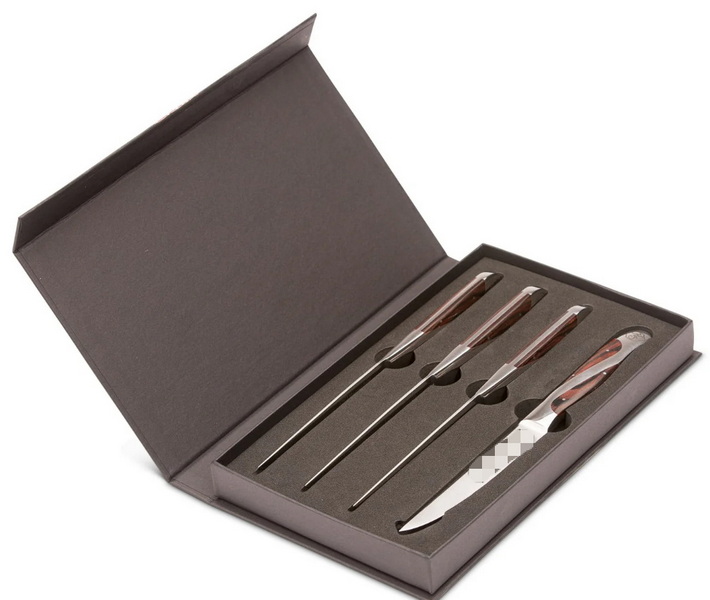
Consistency, finish quality, and compatibility with handle design are central to successful OEM steak knife programs.
- Consistency across lots: Define target hardness, grain structure, surface finish, and defect tolerances. This ensures predictable performance across markets.
- Surface finishing: Finishes (polished, satin, bead-blast) affect aesthetics, corrosion resistance, and edge visibility. Coatings can enhance performance or ease cleaning, particularly in coastal markets where salt exposure is common.
- Handle compatibility: Blade steel should harmonize with handle materials (wood, resin, micarta, composites) and tang design to deliver balanced weight and safe handling. OEM projects should specify how the tang geometry interacts with handle assembly for durability and ergonomics.
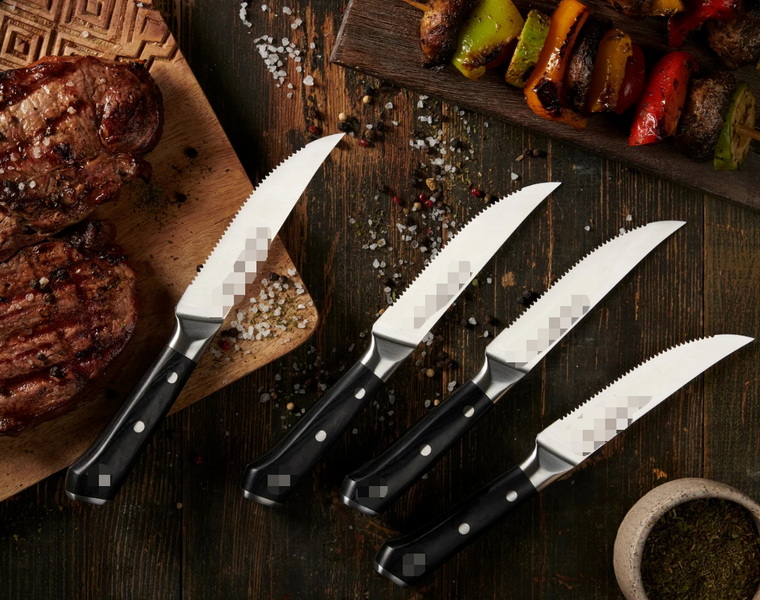
- Packaging and promotional fit: Visuals showing close-ups of edge geometry, cross-sections illustrating microstructure, and lifestyle shots of Steak Knife usage reinforce product positioning in global markets.
To translate material science into market-ready products, consider the following guidelines.
- Define clear specifications: Target hardness (HRC), edge-retention benchmarks, corrosion resistance requirements, and preferred heat-treatment procedures.
- Align with production capabilities: Confirm forging vs stamping, finishing lines, polishing quality, and coating options to meet brand standards.
- QA and testing: Implement standardized edge-retention tests, corrosion panels, and real-world cutting trials to verify consistency across batches before market release.
- Documentation and packaging: Provide multi-language product guides, maintenance tips, and care instructions for global distribution.
A well-structured article with strategic keywords improves discoverability and supports OEM marketing campaigns.
- Primary keyword usage: Steak Knife should appear prominently throughout the article, including headings and subheadings.
- Related terms: Include variations like blade steel, edge retention, corrosion resistance, and heat treatment to capture a broad search intent.
Choosing the best blade steel for steak knives hinges on market segment, usage conditions, and production capabilities. A tiered OEM strategy—entry-level stainless options for broad accessibility, mid-range steels for dependable performance, and premium alloys for high-end offerings—aligns product strategy with customer expectations. When paired with thoughtful blade geometry, calibrated heat treatment, and refined finishing, the steel choice becomes a core driver of edge quality, longevity, and user satisfaction. Coupled with strong visual assets and well-executed care guidance, the marketing narrative around Steak Knife reinforces brand value and drives consumer confidence in global markets.
- The consensus in professional kitchens tends toward high-performance stainless steels such as VG-10 or equivalent for their edge retention and corrosion resistance, with some chefs appreciating carbon-steel variants for ultimate sharpness when maintenance is meticulous. This balance supports OEM programs targeting chefs and serious home cooks.
- Carbon steels can yield exceptionally sharp edges and outstanding edge retention, but they require diligent maintenance to prevent rust and staining. OEM lines often mitigate this with protective coatings or coating-assisted maintenance plans to preserve edge performance without demanding user-intensive care.
- For mass-market brands, stainless steels offering excellent corrosion resistance and ease of care typically perform best, enabling broad consumer adoption and reduced service needs in diverse markets.
- Edge geometry—an appropriately thin, slicer-style edge with a precise bevel—works in concert with the steel hardness to maximize cutting efficiency and edge stability. Geometry and heat treatment should be optimized together to deliver consistent daily performance.
- Regular hand washing, thorough drying, and occasional honing or professional sharpening help preserve edge quality, especially for premium steels. Avoid dishwasher exposure that can degrade finishes and accelerate corrosion in certain alloys.


