- All
- Product Name
- Product Keyword
- Product Model
- Product Summary
- Product Description
- Multi Field Search

Views: 222 Author: Ann Publish Time: 2025-11-23 Origin: Site


Content Menu
● Types of Cheese Knives and Their Functions
● Stainless Steel: The Core of Cheese Knives
>> Stainless Steel Blade Benefits
>> Drawbacks
● High-Carbon and Forged Steel Knives
● Ceramic Cheese Knives: A Modern Alternative
>> What Makes Ceramic Stand Out
● Exploring Handles: Comfort, Safety, and Style
● Cheese Knife Set Composition
● Additional Materials: Carbon Steel and Specialty Coatings
● Ergonomics, Design, and Performance
● Cleaning Tips and Knife Maintenance
● Design Trends and Visual Styling
● Cheese Knife Use in Hospitality and Events
● Environmental and Sustainability Concerns
● FAQ
>> Q: Which cheese knife material is best overall?
>> Q: Are ceramic cheese knives better for soft cheese?
>> Q: How should I maintain wood-handled cheese knives?
>> Q: Should cheese knives be sharpened regularly?
>> Q: What features should I look for in a cheese knife set?
The Cheese Knife is an indispensable tool for cheese lovers worldwide, engineered to elevate the presentation and enjoyment of cheeses of every style. From the heartiness of hard Parmesan to the creaminess of Brie, the right cheese knife—crafted from the best materials—makes all the difference for home entertainers and professionals alike.

Cheese knives are available in multiple shapes and sizes, each tailored to a particular cheese type and serving method:
- Soft Cheese Knife: Slim, sharp blade often with holes or a nonstick coating to prevent sticking—perfect for Brie, Camembert, and goat cheeses.
- Hard Cheese Knife: Sturdy, robust design for tackling firm cheeses like aged cheddar, Parmesan, and Gouda.
- Cheese Plane: Wide, flat blade for creating uniform, thin cheese slices from semi-hard cheeses such as Swiss and Havarti.
- Pronged Cheese Knife: Forked tip for serving, with a flexible blade that handles crumbly cheeses such as blue cheese or Stilton.
- Chisel Knife: Wedge-shaped, ideal for breaking hard and aged cheeses into chunks.
- Highly durable; resists deformation and damage even with hard cheese.
- Exceptionally rust- and corrosion-resistant, increasing product lifespan.
- Wide design and edge options (serrated, micro-serrated, hollow ground) enable precise, effortless cutting for every cheese texture.
- Easy to sanitize, crucial in kitchen and foodservice environments.
- Comes in multiple grades, with high-carbon stainless steel valued for holding a sharper edge even longer.
- Requires periodic sharpening to maintain its maximum effectiveness.
- Lower-end stainless steel knives may not hold an edge as well or may be heavier.
Stainless steel is often chosen for premium, all-purpose cheese knives and professional-grade sets.
- High-carbon stainless steel: Offers even better edge retention than standard stainless steel, but needs a bit more maintenance against corrosion.
- Forged steel: Creates an exceptionally sharp, long-lasting blade; usually more expensive and must be hand-washed to preserve performance.
These specialty steels are found in professional cheese knives for commercial kitchens or serious connoisseurs.
- Made from ultra-hard zirconium oxide, ceramic knives excel at providing a razor-sharp edge that rarely requires sharpening.
- They won't rust, stain, or transfer metallic tastes.
- Lightweight composition makes them easy to handle, especially for frequent use or delicate cheeses.
- Brittle compared to steel, so they can chip or break if dropped or used on hard rinds.
- Challenging to resharpen at home—require diamond sharpening or professional service.
Ceramic cheese knives are ideal as a specialized slicer for softer, fresh cheeses, adding a modern look to cheese boards.
- Wood: Classic craftsmanship, beloved for warmth and natural style. Hardwood handles offer a traditional look suitable for rustic or high-end serving but should be hand-washed and periodically oiled.
- Plastic/Composite: Lightweight, easy to clean, and often ergonomic. Popular for casual environments and dishwasher safety.
- Full Stainless Steel: Seamlessly hygienic, extremely durable—favored in commercial operations for easy maintenance.
A quality handle should offer a balanced grip, comfortable ergonomics, and a finish that matches the overall aesthetic of the cheese board.
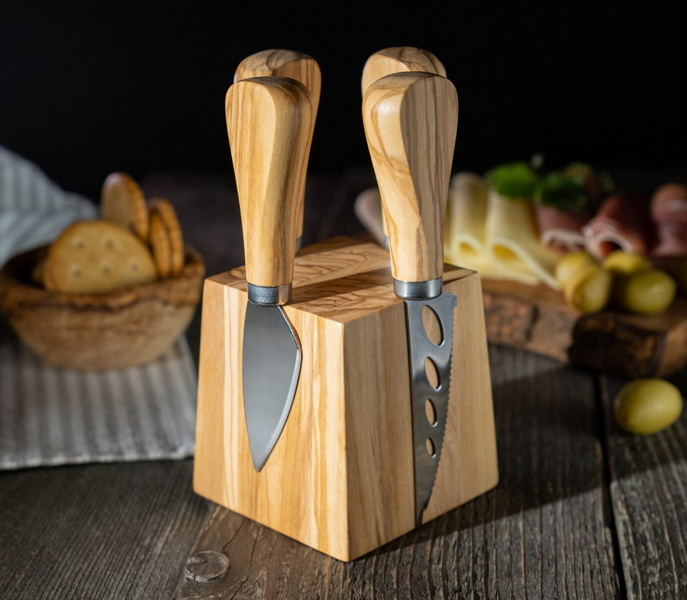
A complete cheese knife set ensures readiness for any cheese-serving scenario:
- 3-piece beginner set: Soft cheese knife, hard cheese knife, spreader.
- Expanded 6-piece set: Adds chisel knife, cheese fork, cheese plane, pronged knife.
- Serving tools: Cheese fork or pronged knives assist with serving and plate arrangement.
| Knife Type | Cheese Style | Ideal Blade Material |
|---|---|---|
| Soft cheese knife | Brie, Camembert | Stainless steel, Ceramic |
| Hard cheese knife | Aged cheddar, Parmesan | High-carbon or forged steel |
| Chisel knife | Blue cheese | Stainless steel, Ceramic |
| Cheese plane | Havarti, Swiss | Stainless steel |
| Spreader | Cream cheese, Chevre | Stainless steel, Plastic |
Cheese knife sets are often elegantly packaged, making them excellent for gifting and hosting.
- Carbon steel: Provides supreme sharpness and edge retention but is more prone to rust; requires regular oiling and careful drying.
- Specialty coatings: Nonstick ceramic or Teflon coatings minimize sticking—especially helpful for soft, sticky cheeses—while adding aesthetic appeal.
- A well-designed cheese knife features a balanced weight and a handle that feels secure—reducing fatigue during long serving periods.
- Choose blade shapes with perforations or hollow edges for softer cheeses to cut down on sticking and promote smooth releases.
- For professional or frequent entertainers, select knives with a bolster (the transition between the blade and handle) for added safety and control.
- Stainless steel and high-carbon steel: Hand-wash after use with mild detergent, dry immediately to avoid water spots or corrosion.
- Ceramic knives: Hand-wash and store in a sheath; avoid contact with very hard cheese or bones to prevent chipping.
- Wood handles: Never soak—dry immediately and oil regularly for longevity; keep out of dishwashers.
- Plastic/composite handles: Typically dishwasher safe but hand-washing may extend life.
Regular honing and occasional sharpening will maintain blade performance. Ceramic knives require either a diamond hone or a professional ceramic sharpening service.
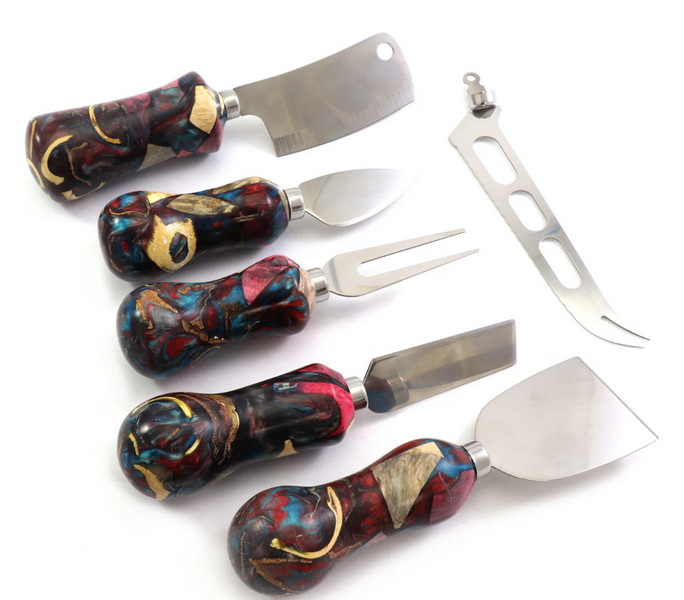
- Innovative cheese knife designs now include multi-material handles, textured steel finishes, and decorative accents such as colored resins or inlays.
- Some modern cheese knives have minimalist all-steel styling for contemporary spaces, while others highlight rustic woodwork or vintage shapes.
- Effective cheese knife selection is essential for catering, restaurant, and hospitality businesses where presentation and speed matter.
- Multi-piece sets enable efficient plating, cutting, and serving for high-volume cheese boards.
- Ergonomically designed knives help staff reduce strain and maintain safety during busy service periods.
- Many brands now source FSC-certified woods or recycled plastics for handles to reduce environmental impact.
- Stainless steel is recyclable and durable, making it a sustainable choice for long-lasting kitchen tools.
Selecting the best cheese knife means considering the material—stainless steel, ceramic, or specialty steel—along with handle comfort and knife design for your cheese-serving needs. With a comprehensive set, careful maintenance, and smart selection, your cheese knife can showcase and slice any cheese perfectly, elevating both casual gatherings and gourmet tastings.
A: Premium stainless steel offers excellent durability and edge retention, making it the most versatile for all cheese types and environments.
A: Yes, ceramic is ideal for soft cheeses due to its sharpness and nonstick surface, but handle with care to avoid chips.
A: Hand-wash quickly, dry immediately, and oil handles regularly to prevent cracking and extend their life.
A: Stainless steel blades should be regularly honed and sharpened for best performance, while ceramics hold their edge much longer but can only be sharpened with special tools.
A: Look for a well-balanced set covering soft, hard, and crumbly cheese types with ergonomic handles made from durable, food-safe materials.


