- All
- Product Name
- Product Keyword
- Product Model
- Product Summary
- Product Description
- Multi Field Search

Views: 222 Author: Ann Publish Time: 2025-11-24 Origin: Site


Content Menu
● Understanding Cheese Knife Manufacturing Processes
>> Materials and Heat Treatment
>> Blade Geometry and Edge Finishing
● Quality Control and Certifications
● Advantages of Chinese Cheese Knife Manufacturers
● Best Practices for Sourcing Reliable OEM Partners
>> 1. Define Product Specifications Clearly
>> 2. Verify Manufacturer Expertise
>> 3. Audit Manufacturing Facilities
>> 4. Request Samples and Prototypes
>> 5. Negotiate Transparent Contracts
>> 6. Maintain Ongoing Quality Monitoring
>> 7. Collaborate on Packaging and Branding
● Enhancing Products with Visual and Functional Features
● Common Challenges and Solutions in Cheese Knife OEM Projects
● Cheese Knife OEM Project Checklist
● Frequently Asked Questions About Cheese Knife OEM Projects
>> Q1: What types of cheese knives are most popular for OEM orders?
>> Q2: How can I reduce MOQ for small brand launches?
>> Q3: What packaging options will delight customers?
>> Q4: What steel grades ensure long-lasting sharpness?
>> Q5: Can manufacturers accommodate private label branding?
A cheese knife is an essential kitchen tool designed specifically to cut various types of cheese with ease and precision. For brands, wholesalers, or producers seeking to create or expand their own product lines, sourcing reliable cheese knife manufacturers is crucial. This comprehensive guide explores how to identify trustworthy OEM partners, the manufacturing processes involved, customization options, quality controls, and industry best practices to ensure successful cheese knife OEM projects.

Cheese knife manufacturing can follow several distinct methods, each influencing the knife's performance, durability, and cost.
Two primary blade production methods are forging and stock-removal. Forging involves heating a solid piece of steel and hammering it into the blade shape. This process aligns the steel's grain structure, enhancing toughness and durability. Forged knives typically require skilled craftsmanship and may command higher prices due to labor intensity.
Stock-removal is a more common method for mass production. It starts by cutting knife shapes from flat steel sheets using laser cutting, stamping, or water-jet cutting. The blanks then undergo grinding and shaping to form the blade edge. While less laborious and more cost-effective, stock-removal knives may lack some toughness compared to forged counterparts but can still be highly functional and attractive.
Cheese knife blades are most commonly made from stainless steel alloys known for corrosion resistance, edge retention, and food safety compliance. High-carbon stainless steels or specialized alloys like damascus steel blends are used for premium lines. Heat treatment involves annealing, quenching, and tempering steps to optimize blade hardness and flexibility, essential for clean, effortless cheese slicing.
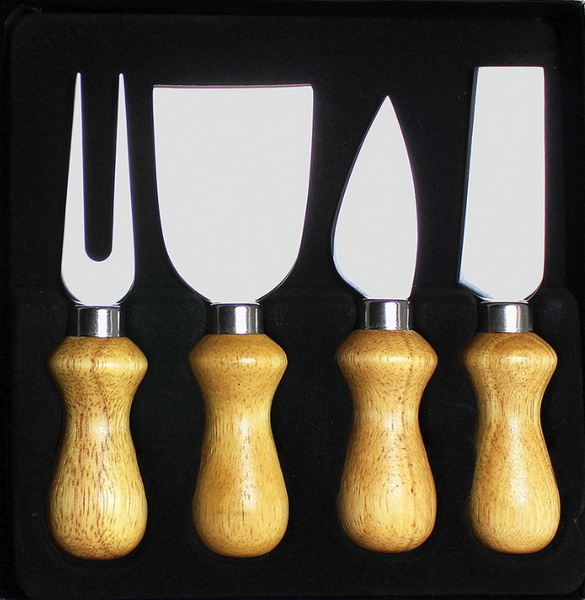
Cheese knives feature specialized blade designs such as narrow prongs, holes to reduce cheese adhesion, or curved edges for spreading soft cheeses. After rough shaping, blades undergo grinding to establish bevel angles, sharpening for edge precision, and polishing to enhance aesthetics and rust resistance.
Handles are crafted from various materials including wood, resin, plastic, stainless steel, or composites. The attachment method—rivets, adhesive bonding, or molded construction—affects longevity and ergonomics. Luxury OEM products may feature custom handle designs, exotic wood veneers, or ergonomic grips tailored to market preferences.
OEM cheese knife manufacturers often offer extensive customization to differentiate client products. Available options include:
- Blade shape and size tailored to specific cheese types.
- Choice of steel grade or finish (matte, mirror polished, etched patterns).
- Handle material, color, texture, and ergonomics.
- Logo laser engraving or embossing on blade or handle.
- Custom packaging solutions including branded boxes or inserts.
Ensuring compliance with international safety standards, particularly for food-contact products, is a priority. Reliable manufacturers maintain certifications such as ISO 9001 for quality management, FDA and LFGB for food safety, and SGS inspection reports validating material and product integrity.
Manufacturers typically enforce multi-stage quality checks including visual examination, hardness testing, edge retention tests, and functional trials on multiple cheese types. Sampling and third-party inspections are recommended for OEM clients to mitigate risks.
China has emerged as a dominant global supplier for kitchen cutlery, offering cost-effective manufacturing paired with increasing technical sophistication. Key benefits include:
- Large-scale production capabilities with quick scalable output.
- Mature supply chains sourcing premium raw materials domestically and internationally.
- Skilled workforce blending traditional metallurgy with modern CNC machining.
- Competitive pricing enabling profitable retail margins.
- OEM specialization with flexible customization and branding services.
- Strong logistics networks facilitating export worldwide.
Many well-established Chinese factories invest in R&D for innovative cheese knife designs and premium steel usage to cater to upscale markets.
Before engagement, detail your target blade dimensions, materials, and handle preferences. Incorporate market research insights on customer desires and trends.
Request portfolios demonstrating experience in OEM kitchen knives, particularly cheese knives. Check client testimonials and country export credentials.
Physical or virtual factory visits help assess production capabilities, quality management systems, and working conditions.
Evaluate blade sharpness, balance, material feel, and finishing. Test knives practically on various cheese types to confirm performance.
Agree on minimum order quantities, pricing tiers, lead times, payment terms, and warranty conditions.
Institute regular inspections during production runs. Consider third-party audits for impartial verification.
Partner with manufacturers experienced in customized packaging to enhance retail appeal.
Modern cheese knives increasingly incorporate design elements that improve user experience and shelf appeal:
- Blades with perforations reduce surface friction preventing cheese from sticking.
- Specialty edge serrations facilitate cutting through tough rinds and soft cheeses.
- Integrated prongs allow picking up sliced cheese conveniently.
- Ergonomic handles improve grip comfort aiding in prolonged use.
Effective OEM manufacturers stay abreast of such trends, offering product development support to clients.
- Lead Time Delays: Mitigated by proactive supply chain coordination and buffer stock planning.
- Quality Variance: Minimized via clear specs, rigorous incoming inspections, and production oversight.
- Communication Barriers: Overcome by employing bilingual account managers and digital collaboration tools.
- Material Sourcing Constraints: Resolved through multiple supplier vetting and alternatives ready for substitution.
- Confirm product conceptual design and technical drawings.
- Identify and qualify potential manufacturers.
- Validate compliance and certification documents.
- Approve prototype samples with fit, finish, and functionality tests.
- Finalize order contracts and payment schedules.
- Initiate production with regular quality audits.
- Plan logistics and customs clearance for timely delivery.
- Implement marketing strategies with product launch coordination.
Sourcing reliable cheese knife manufacturers for OEM projects demands careful evaluation of manufacturing capabilities, quality standards, and service offerings. Chinese manufacturers offer competitive, high-quality solutions with customizable features, ideal for brands seeking to differentiate their products in a crowded market. Clear communication, thorough vetting, and continuous quality monitoring form the foundation of successful OEM partnerships, resulting in superior cheese knives that satisfy customer expectations while maximizing business potential.
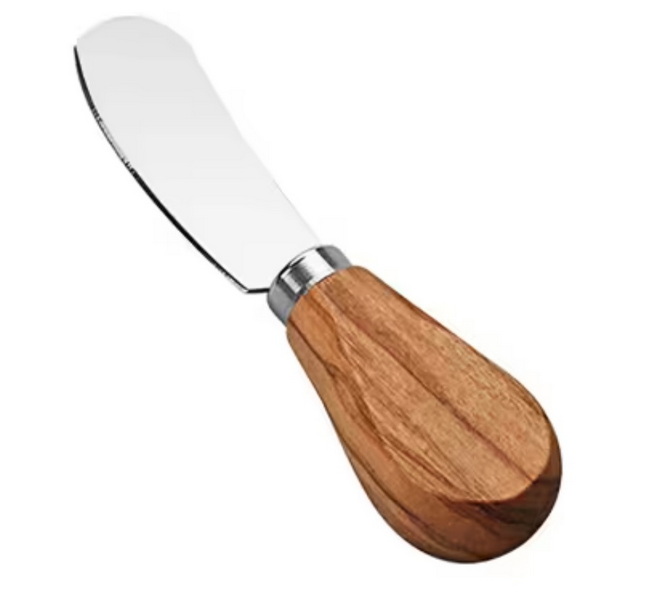
A1: Popular types include soft cheese spreaders, hard cheese narrow blade knives, fork-tipped cutlery, and multi-functional sets.
A2: Negotiate with manufacturers offering tiered pricing or consider grouped orders with complementary products.
A3: Options range from eco-friendly kraft boxes to luxury magnetic closure sets with foam inserts and custom printing.
A4: High-carbon stainless steel such as 440C or VG-10 are widely used for durability and corrosion resistance.
A5: Yes, most OEM suppliers provide private label services including logo engraving and bespoke packaging.


