- All
- Product Name
- Product Keyword
- Product Model
- Product Summary
- Product Description
- Multi Field Search

Views: 222 Author: Ann Publish Time: 2025-11-09 Origin: Site


Content Menu
● Design Elements: Geometry, Length, and Ergonomics
● Materials, Manufacturing, and Hygiene
● From Traditional to Modern: The User Experience
● Market Trends and OEM Opportunities
● Manufacturing Trends: from Hand-Finish to Automation
● Maintenance and Care: Prolonging Life and Performance
● Modern Applications and Design Innovations
● Case for Brand Differentiation
● Maintenance, Safety, and Legal Considerations
● FAQ
>> What defines a high-performing Bread Knife?
>> How do serrations affect bread texture?
>> What materials are best for Bread Knife blades?
>> How should Bread Knife be maintained?
>> What is the difference between forged and stamped Bread Knife blades?
The Bread Knife, as one of the basic kitchen tools, has undergone a century-long evolution, reflecting the joint progress of craftsmanship, material science, and market demands. The initial need for bread cutting originated from the simple efficiency of daily life. Subsequently, through continuous optimization of the blade teeth, the geometry of the blade, the ergonomics of the handle, and the material processing, it has developed into an efficient tool widely used in both home and professional kitchens today. This article will follow the historical thread of the Bread Knife to deeply analyze the transformation from traditional handmade knives to modern industrial design, as well as how design elements affect cutting performance, hygiene, and durability. Additionally, from an OEM professional perspective, this article also explores the customization opportunities for foreign brand manufacturers, wholesalers, and manufacturers, presenting positioning strategies and quality control key points in the global market.

The bread knife's genesis can be traced to late 19th and early 20th century knife development, where serrations first appeared as an adaptation to bread textures. Early patents and prototype designs—often described in shadowy patent drawings—reveal a shift from simple slicing blades toward specialized serrated profiles. This evolution was not merely about sharper teeth; it encompassed how the teeth engaged with moist crumb, how the blade flexed under cutting load, and how the edge preserved the loaf's interior structure. The emergence of commercial serrated bread knives paralleled the rise of mass-produced tableware, enabling households to slice with consistent thickness and minimal tearing.
The early era of serrated blades frequently featured tang-less constructions and distinct handle-to-blade connections, signaling a move toward more economical manufacturing methods without sacrificing performance. Notably, the progression from single-tooth patterns to more complex geometries—such as multi-tooth serrations and variable tooth spacing—addressed diverse bread textures from airy artisan loaves to dense rye and whole-grain varieties. These historical milestones laid the groundwork for modern bread knife families, each calibrated to deliver predictable slices across a broad spectrum of bread types.
Serration geometry is a core determinant of performance. Classic serrations consist of pointed teeth designed to “bite” into crust while the flat, softer crumb is cleanly separated. Over time, designers experimented with variations such as wave or reverse-curved teeth, alternating tooth heights, and staggered patterns to balance initial bite with long-term edge retention. The blade length of Bread Knife typically ranges from 8 inches (20 cm) to roughly 14 inches (35 cm), with professional models tending toward the longer end for large loaves. Longer blades offer a continuous cutting surface that minimizes rocking, while shorter blades provide greater control for precision slicing of smaller loaves or offset bread shapes.
Blade back geometry and tip design also impact cutting comfort and control. A straight-back blade offers predictable alignment and stiffness, while a subtly curved back can help reduce friction and guide the blade through crust without tearing. Handle ergonomics play a critical role in fatigue reduction, especially for prolonged use in busy kitchens. Materials such as polypropylene, POM, wooden scales, or composite composites are chosen not only for grip comfort but also for washability and resistance to knife oils and moisture. In professional settings, a well-balanced Bread Knife reduces wrist strain and enables cleaner, uniform slices across many loaves per service.
The blade material choice directly affects sharpness retention, corrosion resistance, and ease of maintenance. Modern Bread Knives commonly employ high-carbon stainless steels or carbon steel blades with protective coatings or finishes to enhance corrosion resistance and reduce sticking. Heat treatment, tempering, and edge geometry collectively determine edge retention and cutting force requirements. On the manufacturing side, a spectrum exists between stamped blades and forged blades. Forged blades typically offer superior grain structure and rigidity, contributing to durability and edge stability, while stamped blades emphasize production efficiency and cost-effectiveness. For OEM programs, this trade-off informs material selection, coating options, and tolerances aligned with brand positioning and price targets.
Sanitation and hygiene influence design as well. Seamless blade-to-handle transitions, corrosion-resistant fasteners, and easy-to-clean surfaces help prevent residue buildup in food contact zones. Ergonomic considerations extend to edge-case scenarios such as rocking-safe cutting on crusty baguettes or soft sandwich loaves, ensuring consistent results under variable moisture and crumb density.
As the bread knife evolved, the user experience shifted from basic functionality to an integrated kitchen tool that supports diverse culinary tasks. A well-designed Bread Knife not only slices bread but also handles delicate pastries with careful precision, while offering resistance to tearing on crusts and uniform crumb retention. In domestic settings, the knife's weight, balance, and handle texture influence how evenly a loaf is sliced. In professional kitchens, the emphasis centers on repeatable performance, durability under heavy workloads, and ease of sanitation across high-volume use.
Global consumer demand for Bread Knife variations reflects regional preferences. Japanese-inspired knives may emphasize sharper corners and precise edge geometry, while German and other European designs often prioritize robustness and longer blade life. For brands and manufacturers focusing on OEM, the market offers opportunities to tailor serration patterns, blade materials, coating systems, and handle aesthetics to specific buyer profiles or regional standards. OEM cooperation can also address specialized needs such as dishwasher-safe designs, corrosion resistance in humid environments, and customization of packaging for brand differentiation.
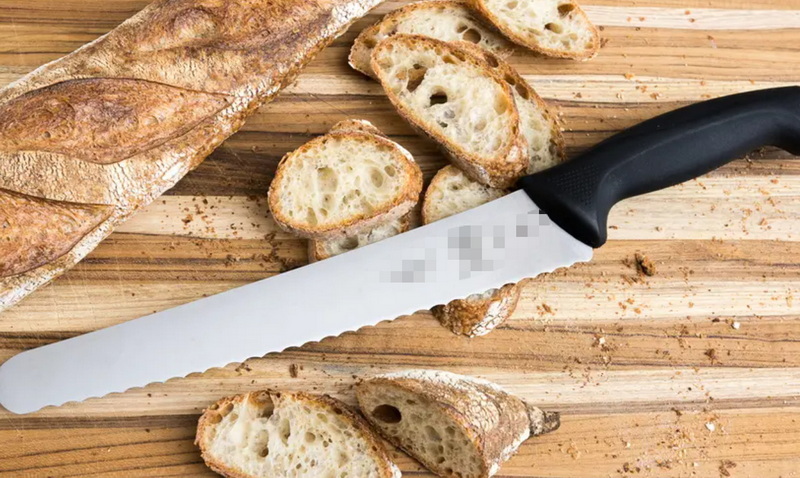
The manufacturing landscape for Bread Knife components has shifted toward automation, precision grinding, and quality control automation. Modern production lines may integrate computer-controlled tooth grinding, automated edge inspection, and vacuum-assisted edge setting to ensure uniform serration quality. The result is a balance between performance and cost, enabling brand clients to offer premium models without sacrificing production efficiency. In OEM programs, consistent quality control pipelines, material traceability, and clear specification sheets are essential to meet international safety and performance standards.
Proper maintenance extends Bread Knife life and maintains cutting performance. Routine cleaning, thorough drying, and correct storage prevent corrosion and handle degradation. Regular honing is typically unnecessary for serrated blades, but occasional professional sharpening restores tooth geometry without removing material excessively. Users should avoid cutting through hard surfaces or frozen foods with a Bread Knife to prevent edge chipping. For professional kitchens, establishing a scheduled maintenance plan and partner calibration with manufacturers ensures consistent performance across batches and service cycles.
Contemporary Bread Knife design continues to push boundaries with innovations such as integrated blade guards, alternative grip materials for cold environments, and color-coded handles to reduce cross-contamination risks in hospital or institutional kitchens. Some models incorporate edge-friendly coatings that reduce crumb adhesion and facilitate smoother slicing through dense artisan loaves. The OEM ecosystem supports collaboration with culinary schools, restaurant chains, and specialty bakeries to co-develop knife families that align with unique baking traditions and regional bread textures.
For foreign brands and distributors, Bread Knife programs present a clear path for differentiation through customization. Tailored serration profiles matched to target bread varieties, branded packaging and colorways, and value-added features such as built-in sharpening guides or maintainability-focused design can elevate market perception. OEM collaboration can also unlock regional compliance advantages, ensuring materials and processes align with local safety and quality standards.
Manufacturers and brand partners should consider safety standards and labeling requirements across markets. Clear usage instructions, recommended maintenance schedules, and explicit cautions help reduce misuse and product liability. Documentation that outlines compliance with food-contact material regulations further strengthens trust with distributors and end-users.
The Bread Knife's evolution—from humble serrations on early kitchen blades to sophisticated, purpose-built tools—encapsulates a history of practical problem-solving, material science, and user-centered design. For OEM partners, the opportunity lies in delivering tailored Bread Knife solutions that honor tradition while embracing modern manufacturing efficiencies, ensuring consistent performance, ease of maintenance, and brand differentiation across global markets. By prioritizing serration geometry, blade materials, handle ergonomics, and rigorous quality control, manufacturers can meet the diverse needs of foreign brands, wholesalers, and professional kitchens alike. If seeking to collaborate on a bespoke Bread Knife program, initiate conversations with clear specifications, sample development plans, and a defined pathway to scale production.
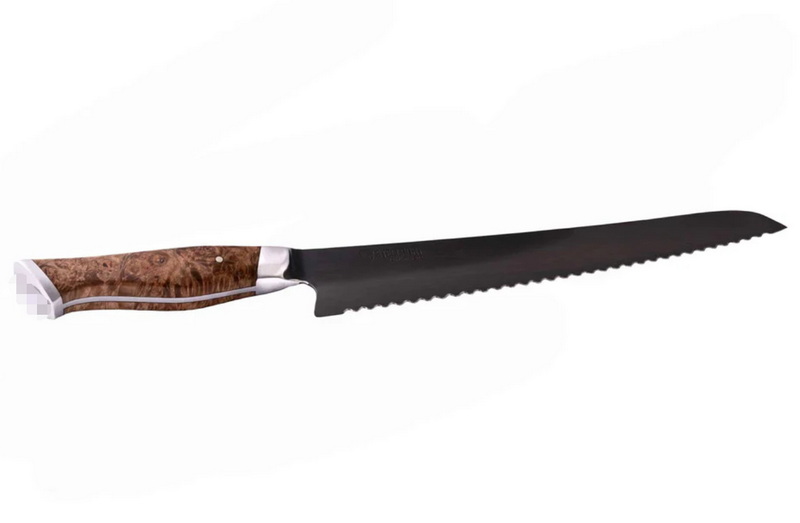
A high-performing Bread Knife provides clean, uniform slices with minimal tearing, achieved through optimized serration geometry, appropriate blade length for the bread type, balanced weight distribution, and materials with good edge retention and corrosion resistance. It should also be easy to maintain and safe in use, with ergonomic handling that reduces fatigue during extended slicing sessions.
Serrations bite into the crust to initiate the cut while allowing the blade to ride on the crumb, preserving loaf structure and minimizing crumb tearing. The tooth geometry and spacing determine bite force distribution and cutting efficiency across different bread textures.
High-carbon stainless steels offer a balance of hardness, corrosion resistance, and ease of maintenance, while some premium models use powder metallurgy steels for superior edge retention. The choice depends on intended use, maintenance willingness, and budget, with forged blades often delivering enhanced rigidity compared with stamped designs.
Regular cleaning and thorough drying after use are essential. Serrated blades typically require less frequent sharpening than flat-edged knives, but periodic professional sharpening helps preserve edge geometry. Avoid cutting hard surfaces or frozen foods with a Bread Knife to prevent chipping.
Forged blades generally offer better grain structure, durability, and edge stability, resulting in longer life under heavy use, whereas stamped blades emphasize cost efficiency and production speed. For OEM programs targeting premium segments, forging is often favored for performance, while stamping suits value-oriented lines.


