- All
- Product Name
- Product Keyword
- Product Model
- Product Summary
- Product Description
- Multi Field Search

Views: 222 Author: Ann Publish Time: 2025-10-31 Origin: Site


Content Menu
● Why Steak Knife Customization Matters
● Materials and Finish Options
● Handle Ergonomics and Balance
● Logo Placement and Visual Identity
● The Production Process: From Design to Delivery
● Quality Assurance in OEM Projects
● Practical Customization Scenarios
● FAQ
>> What branding options are available for steak knives?
>> How does laser engraving compare with chemical etching for logos on steak knives?
>> What materials are suitable for durable steak knife blades in OEM projects?
>> What is the typical lead time for a custom steak knife order?
>> How is quality control managed in OEM steak knife production?
In today's competitive culinary tools market, steak knives are more than just a functional item; they are a banner for a brand's identity and quality. For international brands, wholesalers, and OEM manufacturers, customization of steak knives offers a powerful way to distinguish products, reinforce brand recognition, and add perceived value for end users. This article explains a practical, end-to-end approach to customizing steak knives with your brand logo, covering design options, material choices, branding methods, production workflows, quality controls, and real-world application scenarios. Throughout, the emphasis remains on the steak knife as a premium tool that combines performance, durability, and aesthetics.

Brand differentiation in professional kitchens often hinges on equipment that looks as good as it performs. When a restaurant or retailer selects a steak knife set, visual branding—whether on the blade, handle, or packaging—reinforces trust and consistency across service and display. For OEM partners, customization expands capabilities: it enables you to offer complete branding packages, reduce time-to-market for client brands, and deliver cohesive culinary experiences. The steak knife category, with its high-visibility blade and ergonomic handle options, presents an ideal canvas for logo integration and design language that reflects a brand's ethos. This section outlines the strategic benefits of customization, including improved recognition, smoother marketing campaigns, and stronger buyer confidence in premium kitchenware. The emphasis on steak knife performance remains unwavering: durability, edge retention, balance, and comfort are non-negotiable for long-term customer satisfaction. This combination of form and function makes steak knife customization a high-value proposition for OEM collaborations.
A successful customization project begins with a clear roadmap of options that impact aesthetics, usability, and manufacturing feasibility. The main decision areas include blade geometry, blade material, finish, handle design, bolster integration, logo placement, and packaging. Below, each area is explored with practical implications for OEM workflows and branding outcomes.
Blade geometry and profile
- Straight-edged or serrated edges: Serrations excel for cut consistency under varied conditions, while straight edges deliver precision slicing for tender cuts. Some clients prefer a combination blade with partial serration.
- Full-flat grind vs hollow grind: Grinds affect slicing performance, weight, and maintenance. OEM partners can tailor grind profiles to optimize edge geometry for steak serving and quick maintenance in restaurant environments.
- Tapered spines and weight distribution: Subtle changes in balance influence fatigue during long service periods and overall user comfort. This is especially important in high-volume steakhouses and banquet settings.
Blade material and processing
- Stainless steel families (13-14% chromium alloys, Vanadium/Niobium additions) for corrosion resistance and ease of maintenance.
- Carbon steel options for edge retention and sharper profiles, with appropriate coating strategies to mitigate rust risk in commercial use.
- Damascus or layered steels for aesthetics and performance trade-offs, often paired with premium handle materials to emphasize branding.
- Finishes: mirror polish, satin, bead-blasted, and PVD coatings can convey different brand messages (premium, industrial, or culinary‑focused styling). Each finish influences maintenance needs and user perception.
Handle design and materials
- Material choices: wood, exotic composites, G10, micarta, or full synthetic polymers with textured grips for slip resistance.
- Ergonomics: contoured scales, palm swell, and finger notches can reduce fatigue and improve cutting precision during long service hours.
- Bolster integration: full-profile bolsters or partial bolsters affect balance, weight, and cleaning ease. Branding opportunities exist on the bolster or the handle sides.
Branding methods and logo placement
- Laser engraving on blade or handle: durable, low-profile branding with high legibility.
- Etching or laser-inscribed logos on bolsters: adds visual identity without compromising edge geometry.
- Inlay or accent materials around the handle or tang: offers tactile branding options and can elevate perceived value.
- Packaging branding: printed boxes, sleeves, and labels with consistent branding across the product line. The packaging often carries the first impression for customers.
Packaging and presentation
- Knife blocks, magnetic holders, or display-ready packaging variants can be customized to match brand identity, enabling a cohesive marketing package.
- Instruction manuals and care guides that reinforce brand messaging and proper maintenance for steak knives.
Production scale and lead times
- Minimum order quantities, sample policy, and production ramp-up strategies are defined early to align with client timelines.
- Prototype and sampling cycles should be built into the project timeline to ensure design feasibility before mass production.
The steak knife's performance is heavily influenced by material selection and finishing processes. OEM projects benefit from a well-structured material plan that aligns with end-user environments (restaurant kitchens, home use, or retail displays). Here are practical material categories and finish considerations:
Blade materials
- Stainless steel alloys for corrosion resistance and ease of maintenance in busy kitchens.
- High-carbon stainless steels for superior edge retention with improved rust resistance over traditional carbon steels.
- Damascus steel or layered constructions for distinctive aesthetics and multi-layer performance profiles, often accompanied by premium branding narratives.
Handle materials
- Wood handles (with stabilized finishes) for traditional look and warmth.
- Micarta, G10, and other composite materials for durability and slip resistance in wet environments.
- Resin-impregnated options and color-fast composites to support vibrant brand themes.
Surface finishes
- Polished, satin, or brushed blade finishes to reflect different branding aesthetics.
- Coatings (e.g., PVD) to enhance wear resistance and add color accents that reinforce brand identity.
- Bead-blasting or stone-washing textures for tactile feel and reduced glare in service settings.
A steak knife's usability is tied to its ergonomics and balance. Custom projects should include an assessment of grip comfort, weight distribution, and edge geometry that complement the intended kitchen or dining environment. Designers often prototype handle shapes that fit most hand sizes, then refine through feedback loops with pilot users. Good ergonomics reduce fatigue during long prep sessions and improve control during precise slicing tasks.
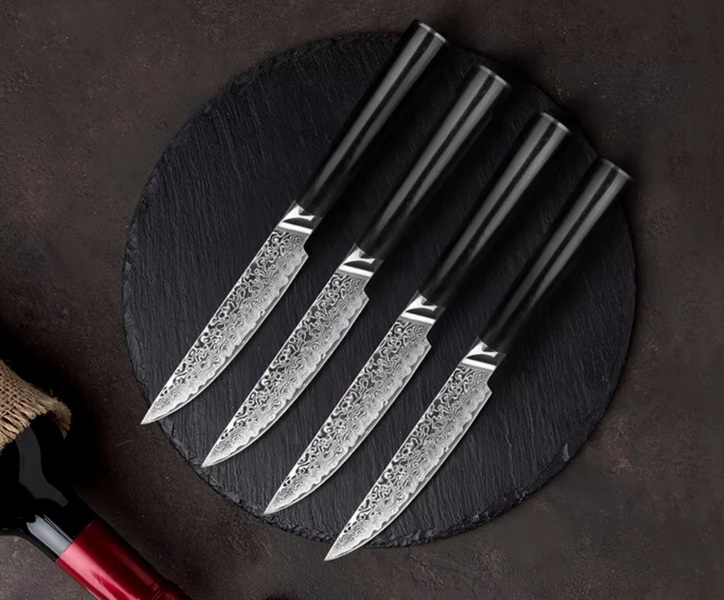
Brand logos can be integrated in harmonious, durable ways that do not interfere with cutting performance or blade integrity. Common placements include:
- On the blade spine or flat near the tang (laser engraving with high contrast).
- On the handle or bolster (debossed or engraved panels, color accents to reflect brand colors).
- On packaging components (boxes, sheaths, and blister cards) for consistent branding when displayed. These placements should consider cleaning, sanitization protocols, and routine kitchen use.
A well-structured production process ensures that a customized steak knife project stays on track from concept to delivery. The typical workflow includes: design brief intake, CAD modeling, material selection, prototype fabrication, performance testing, final adjustments, mass production, quality control, packaging, and logistics. Here's a practical breakdown:
Design brief and concept validation
- Gather client branding guidelines, target price, use-case scenarios, and required certifications (e.g., food-grade materials, nickel release concerns). The design phase includes creating multiple concept sketches and selecting the most viable option based on ergonomic assessment and branding fit.
CAD modeling and technical specifications
- Translate approved concept into precise CAD models, specifying blade geometry, tang type, handle mold design, and branding areas. Clear tolerances, weight targets, and balance points are defined to guide tool paths and production settings.
Prototyping and sample evaluation
- Produce functional prototypes for real-world testing in kitchen conditions. Gather feedback on cut quality, balance, grip comfort, and branding visibility.
Tooling and production setup
- Prepare the required tooling for mass production, including dies, molds, and laser engraving fixtures. This stage ensures consistent branding placement and repeatable mechanical performance.
Manufacturing and finishing
- Execute heat treatment, grinding, edge sharpening, and final surface finishing. Branding treatments (engraving, inlays, or coatings) are applied according to the agreed method.
Quality assurance and certifications
- Implement batch testing for hardness, corrosion resistance, edge retention, and visual branding accuracy. Ensure compliance with applicable safety and food-contact standards.
Packaging and logistics
- Finalize packaging design, insert care instructions, and coordinate shipping arrangements. Provide branding-ready collateral and labeling for distribution across regions.
Quality is non-negotiable for premium steak knives. OEM programs typically implement a multi-layer QA approach:
- Incoming material inspection: verify material grades, chemical composition, and surface defects.
- In-process monitoring: track grind parameters, heat treatment temperatures, and alignment tolerances during production.
- Final inspection: assess edge geometry, balance, handle fit, branding legibility, and packaging integrity.
- Post-market feedback loop: establish channels to capture user feedback on edge retention, corrosion performance, and branding durability to drive continuous improvement. A robust QA program reduces returns and enhances long-term brand loyalty.
Real-world cases illustrate how customization translates into market-ready products:
- Scenario A: A premium restaurant chain wants a full branding package including a stainless-steel blade with laser-engraved logo on the blade spine, a black G10 handle with brown wood inlays, and matching packaging. The project emphasizes film-quality photos and a short demonstration video showing slicing performance on a standard steak.
- Scenario B: A global distributor requests a cost-effective line of steak knives featuring a matte-finished blade, color-accented resin handles, and a holographic logo on the packaging. This setup prioritizes fast lead times and scalable production without compromising brand visibility.
- Scenario C: A luxury brand seeks Damascus-pattern blades with laser-engraved logos and inlaid handles made of stabilized wood, paired with premium presentation boxes. This approach targets retailers and high-end culinary institutions seeking distinct aesthetic appeal. Each scenario demonstrates how branding choices influence price, production complexity, and market positioning.
Brand-aligned customization of steak knives empowers OEM partners to deliver distinctive, durable, and visually compelling products that resonate in global markets. By combining thoughtful blade geometry, material selection, ergonomic handle design, durable branding methods, and a rigorous production and QA framework, a kitchen knife program can achieve consistent quality while reflecting a brand's unique story. This approach not only elevates product aesthetics but also reinforces performance, reliability, and trust in professional kitchens and home settings alike. Ready to start a tailored steak knife customization program that aligns with your brand identity and market goals.
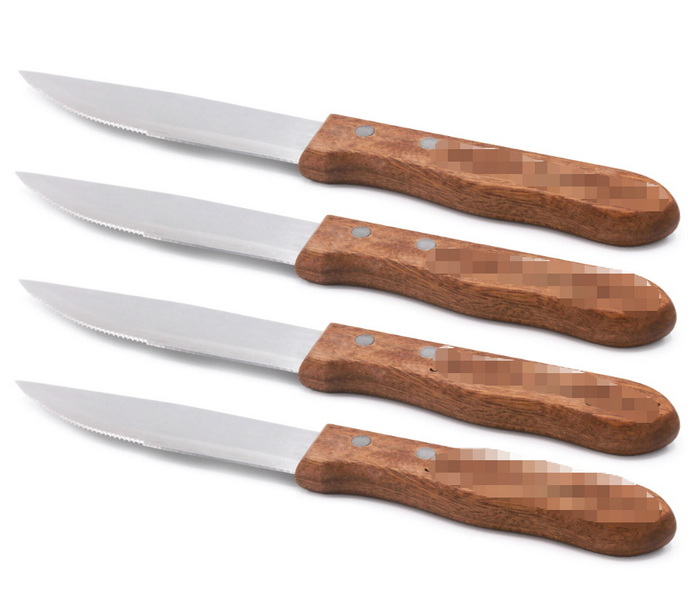
- Options include laser engraving on blade or handle, debossed or engraved logos on bolsters, inlays, and branded packaging. Each option balances durability, aesthetics, and cost.
- Laser engraving provides durable, heat-resistant branding with high contrast and long-term legibility; chemical etching can be a lower-cost alternative but may wear more readily with heavy use. Consider application environment and maintenance when selecting between methods.
- Stainless stainless alloys and high-carbon stainless steels offer good corrosion resistance and edge retention; Damascus or layered steels provide distinctive aesthetics along with performance trade-offs that require careful QA and maintenance guidance.
- Lead times depend on design approvals, prototype cycles, tooling requirements, and volume. A typical OEM project includes a defined prototyping window followed by staged production runs to align with delivery schedules.
- QA spans incoming materials, in-process checks (grind accuracy, heat treatment), final inspection of edge geometry and branding, and post-delivery feedback loops for continuous improvement.


