- All
- Product Name
- Product Keyword
- Product Model
- Product Summary
- Product Description
- Multi Field Search

Views: 222 Author: Ann Publish Time: 2025-11-17 Origin: Site


Content Menu
>> Understanding the Pizza Cutter Market
>> Why Order Pizza Cutters Directly From Manufacturers?
>> From Design to Delivery: The Step-by-Step Process
>>> 1. Defining Your Pizza Cutter Specifications
>>> 2. Researching and Selecting a Manufacturer
>>> 3. Requesting and Reviewing Samples
>>> 4. Finalizing Technical and Design Details
>>> 5. Agreement on Pricing, MOQ, and Timeline
>>> 6. Approving the Pre-Production “Golden Sample”
>>> 7. Production, Quality Control, and Logistics
>> Manufacturing Insights: How Pizza Cutters Are Made
>> Customization Trends: Making Your Pizza Cutter Stand Out
>> Packaging, Compliance, and Global Logistics
>> Best Practices for a Smooth OEM Pizza Cutter Order
>> Real-World Example: Bringing a Custom Pizza Cutter to Life
>> Q1: How do I select an OEM manufacturer for pizza cutters?
>> Q2: What's the expected lead time for production?
>> Q3: Can I order a small batch or sample run?
>> Q4: What are my blade material options?
>> Q5: How is my logo added to the pizza cutter?
Ordering customized pizza cutters from manufacturers is an excellent strategy for brands, retailers, and kitchen tool wholesalers aiming to differentiate their product lines and meet specific market needs. This article offers a detailed, step-by-step guide to the process, from design and manufacturer selection to production, packaging, and delivery, alongside practical tips.
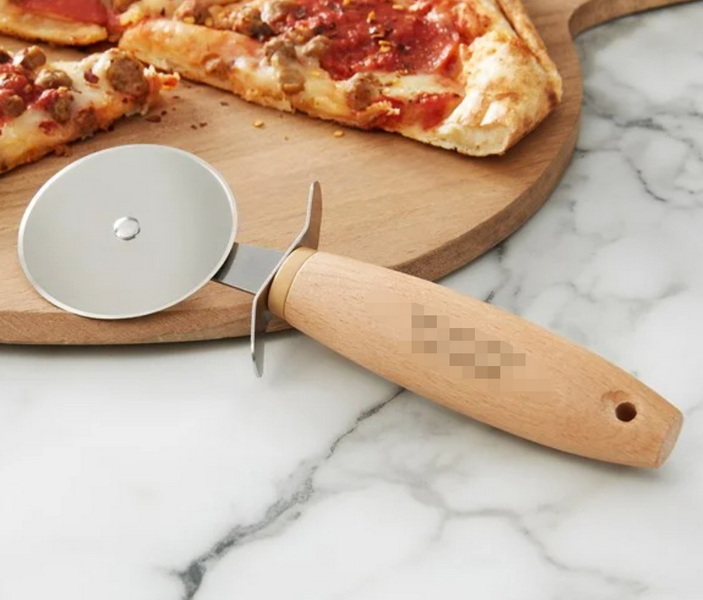
Pizza cutters have evolved from simple kitchen tools into highly branded, customized, and collectable products. Modern buyers demand both functionality—easy, sharp slicing—and standout appearance. Whether you want a classic wheel design, a rocker style, or a specialty model, understanding the types and key features is essential.
- Cost savings: Direct factory pricing, especially for bulk orders
- Customization: Flexibility in blade material, handle ergonomics, logo application, and finishes
- Branding: Add custom logos, colors, and exclusive packaging for enhanced brand presence
- Quality control: Oversee specifications, materials, and manufacturing standards
- Scalability: Match order size, frequency, and variety to your business goals
Develop a clear and comprehensive specification sheet covering:
- Blade type: Stainless steel, ceramic, non-stick coated, specialty shapes
- Blade size and thickness for cutting performance
- Handle material: ABS, PP, wood, metal, resin, eco-materials
- Ergonomic comfort features and anti-slip textures
- Color schemes, finishes, and branding (logo placement, laser marking)
- Safety guards, thumb rests, and additional design touches
- Packaging: Blister cards, color boxes, eco-friendly bags, gift boxes
Begin by shortlisting OEM factories that specialize in pizza cutter production. Evaluate:
- Experience with kitchen tools and international markets
- Production certifications (ISO, LFGB, FDA)
- Customization case studies or images in their catalog
- Minimum order quantity (MOQ)
- Customer feedback and ability to provide samples
Sampling is crucial before confirming large orders. Evaluate:
- Blade sharpness, spinning action, and cutting ease
- Handle feel: comfort, sturdiness, balance
- Accuracy and resolution of printed or engraved logos
- Durability of coatings and finishes
- Consistency with submitted technical drawings and color requests
Direct communication with the manufacturer's engineering team helps to:
- Approve final 3D renderings and assembly methods
- Select surface treatment (polished, sandblasted, PVD, ceramic coatings)
- Confirm printing specifications, color matching codes (Pantone/RAL)
- Confirm packaging style and artwork
- Set production standards and tolerances
Discuss:
- Final unit price based on material, customization, and order volume
- Minimum order quantity (typically from 500–5000 units, but may vary depending on design complexity)
- Tooling/mold costs for new or unique handles or logos
- Production lead time (commonly 25–60 days for bulk orders)
- Payment terms: typical split is 30% deposit, 70% before shipment
Prompt and open negotiation at this stage ensures transparency and clear delivery expectations.
Before mass production, the manufacturer produces a “golden sample” meeting all agreed specs. Check:
- Blade fit and function
- Logo and color accuracy
- Packaging details (artwork, inserts, barcodes)
Full production follows sample approval. Key steps include:
- Blade and handle fabrication: Automated stamping or machining, handle turning or molding, surface finishing
- Assembly: Manual, semi-automated, or automated assembly methods depending on order scale
- Branding: Printing or laser marking of logos
- Quality control: Visual inspection, blade sharpness testing, mechanical durability checks
- Packaging: Final assembly with retail or bulk packaging as specified
- Shipping: Export packing, labeling, and international freight support
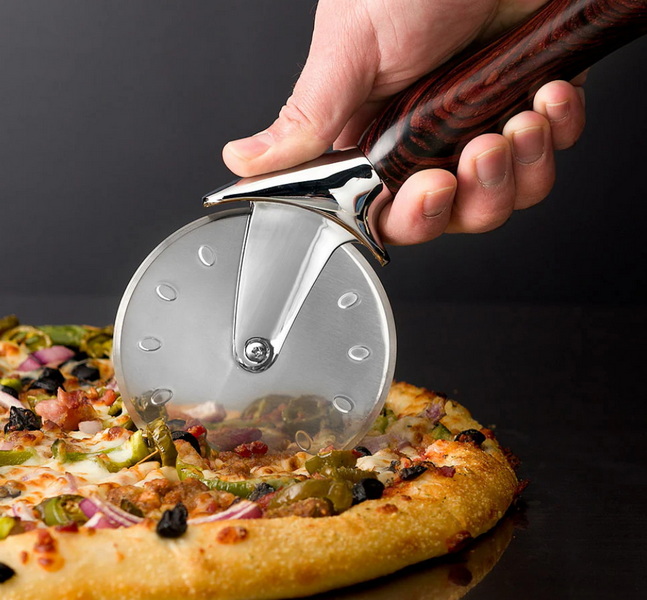
Pizza cutter production involves both metalworking and handle manufacturing.
- Blade: Cut from stainless steel or ceramic sheets, stamped into circles (typically 2"–5" diameter), sharpened on rolling machines, holes for axles punched, and edges deburred.
- Handle: Injection-molded for plastic or resin options; turned and hand-finished for wooden or premium models.
- Assembly: Blade is attached to handle via axle or screw-in fitting, often with a secure locking washer, and engineered to rotate freely without wobble.
- Branding and Finish: Final logo application (laser, pad, or silk-screen printing); coating/finishing as needed.
- Testing and Packaging: Each unit checked for smooth rotation, cutting performance, and finish before being boxed or carded for shipment.
Modern brands use the following strategies:
- Unique handle shapes and materials (bamboo, acrylic, soft-touch grip)
- Themed or seasonal designs for holidays, pizza restaurants, or sports events
- Full-color print or laser engraving for eye-catching logos
- Bundling with other pizza accessories (cutting boards, serving utensils)
- Upgraded packaging for premium product positioning
Effective pizza cutter OEM projects take into account:
- Packaging solutions: Retail-friendly blister packs, display boxes, eco-conscious packaging
- Compliance: EU (LFGB), US (FDA), Canada (Health Canada) food contact certifications for all materials and coatings
- Labeling: Clear inclusion of product info, safety directions, washing instructions, and country of origin
- Global shipping: Coordination of Incoterms (FOB, CIF, DDP), documentation, and HS codes for smooth customs clearance
- Provide a detailed specification sheet upfront to avoid miscommunication and production errors
- Insist on high-res samples and thorough testing (preferably with video proof)
- Maintain close communication with the manufacturer's sales and technical teams
- Consider a small pilot run before launching a large order
- Document all agreements (drawings, pricing, QC criteria, timeframes) in the final contract
An Australian startup recently launched a “designer” pizza cutter, carefully documenting their journey:
- Started with concept sketches inspired by Italian kitchen aesthetics
- Chose high-carbon stainless steel for the blade and FSC-certified wood for the handle
- Created 3D models for precise feedback and fast sample iterations
- Visited the OEM factory for on-site quality checks and staff training videos
- Integrated unique packaging and eco-labels to appeal to environmentally minded customers
- Result: a premium pizza cutter line now stocked by gourmet kitchen stores and online retailers
Ordering customized pizza cutters from manufacturers offers unmatched opportunities for brands to showcase innovation, reinforce identity, and deliver true kitchen value. A methodical approach—starting from clear specification through to global logistics and compliance—guarantees that what reaches your customer is not just a tool, but a statement of quality and brand character. By working closely with experienced manufacturers and leveraging diverse customization options, your brand's pizza cutter can achieve both utility and market distinction.
A1: Prioritize experience with food tools, international certifications, responsive communication, and a robust sampling process for pizza cutter OEM orders.
A2: Lead times usually range from 25 to 60 days from sample approval, depending on complexity and order size.
A3: Many factories will negotiate lower MOQs for test orders or prototyping, especially for long-term clients.
A4: Most pizza cutter blades are made of stainless steel, but ceramic and custom-coated options are available for differentiation.
A5: Manufacturers offer laser engraving, pad or silk-screen printing, and custom color handles to showcase your brand.


